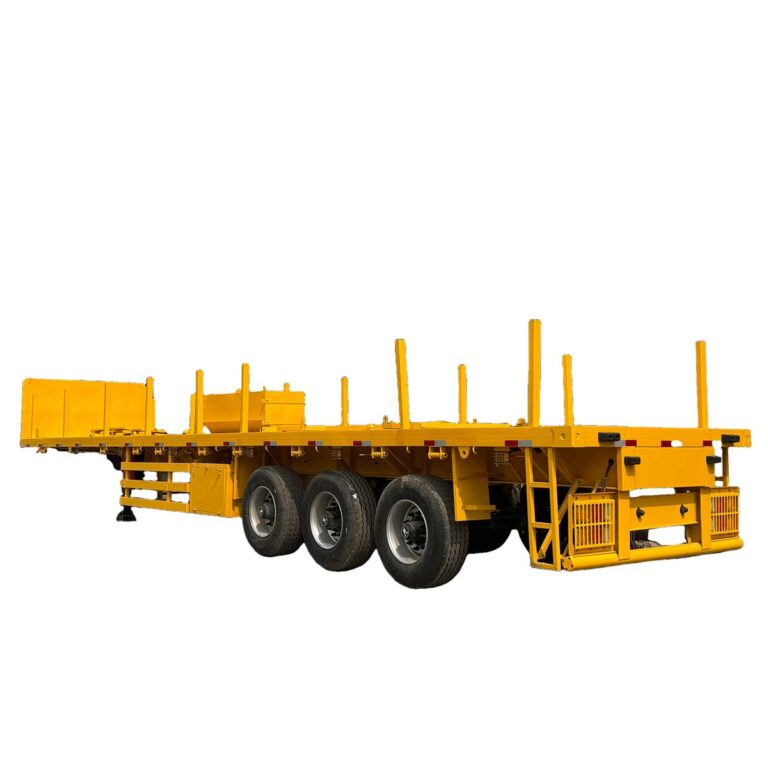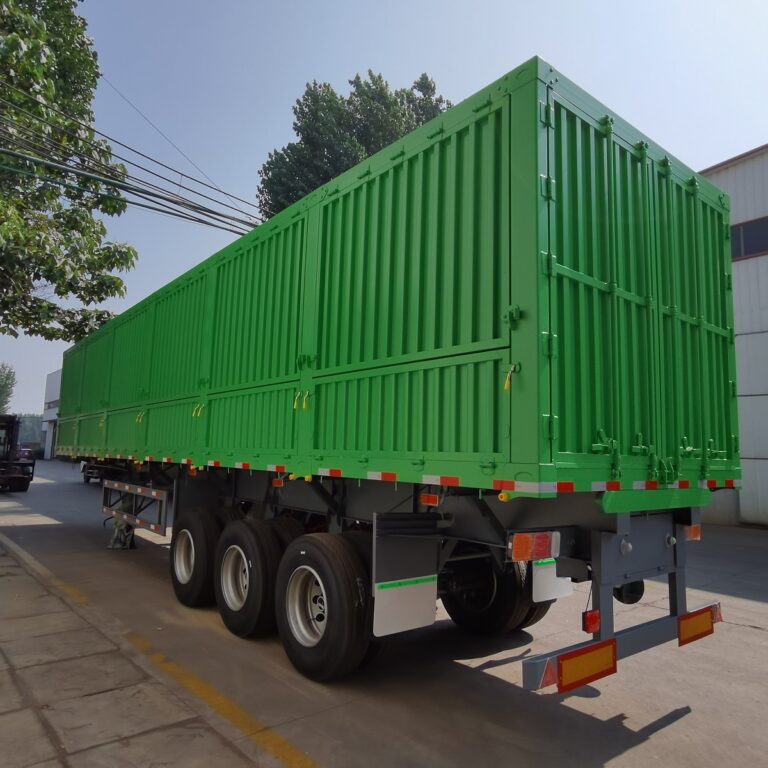


Heavy Haul Trailer Buying Guide 2026: How to Choose the Right Special Transport Trailer for Oversized & Heavy-Duty Cargo
Heavy Haul Trailer Buying Guide 2026: How to Choose the Right Special Transport Trailer for Oversized & Heavy-Duty Cargo
The global heavy haul trailer market is experiencing an unprecedented surge in 2026. Driven by reshoring manufacturing booms, massive infrastructure investment across Africa and South America, and the rapid expansion of renewable energy projects worldwide, demand for specialized transport solutions has never been higher. According to Strategic Market Research, the global modular trailer market alone was valued at USD 8.04 billion in 2025 and is projected to reach USD 11.93 billion by 2032, growing at a CAGR of 5.8%.
For procurement managers, logistics directors, and engineering contractors, choosing the right heavy haul trailer is one of the most consequential equipment decisions you will make this year. This buying guide breaks down everything you need to know — from trailer types and specifications to global regulations and sourcing strategy.
Why Heavy Haul Transport Demand Is Surging in 2026
Several converging forces are driving the current boom in heavy haul and special transport capacity:
The Reshoring Freight Boom. Trade policy shifts, particularly in North America, have fundamentally altered freight composition. With Section 232 tariffs on steel and aluminum doubled to 50%, domestic manufacturing is generating exponentially more freight volume. Industry analysis shows that domestic production generates up to 400 truckloads for every 1 truckload of imports, creating massive demand for specialized transport equipment.
Infrastructure Investment Worldwide. Guyana allocated over $196 billion for transport infrastructure in its 2026 national budget, covering new highways and bridges. Vietnam is accelerating deep-sea port, expressway, and logistics corridor development. Across Africa, at least 10 mega-projects are reshaping the mining landscape, each requiring heavy equipment mobilization.
Renewable Energy Expansion. Wind turbine components are growing larger every year, and the clean energy segment is the fastest-growing application for modular trailers, registering an 8.88% CAGR according to market analysts. Transporting turbine blades, nacelles, and tower sections demands specialized trailers with hydraulic steering and load-leveling capabilities.
Capacity Constraints. Heavy haul trailers cost 2 to 5 times more than standard 53-foot dry vans, and manufacturer lead times currently run 6 to 18 months. This creates a significant planning challenge for buyers who need equipment on tight project timelines.
Types of Heavy Haul & Special Transport Trailers
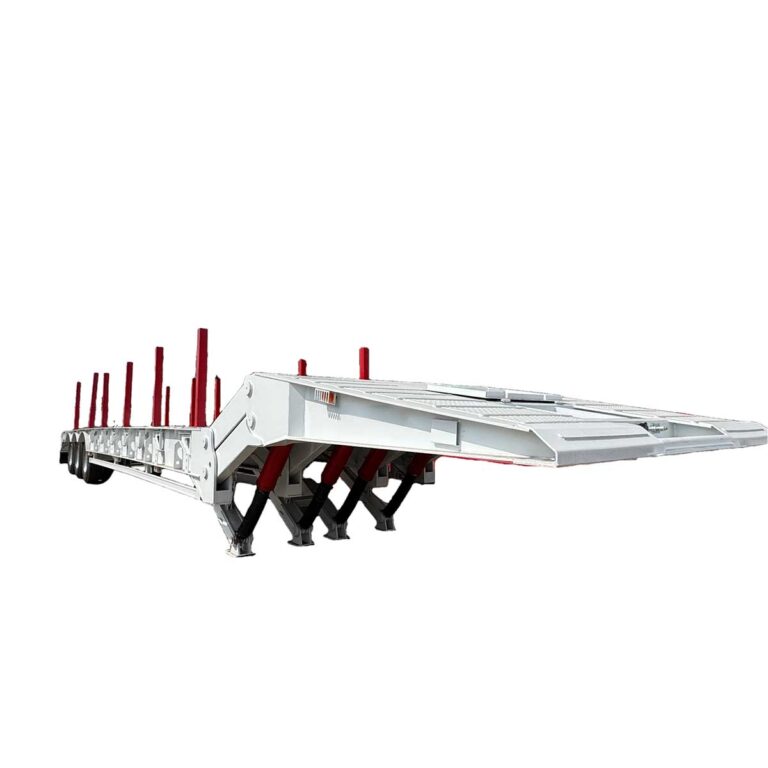
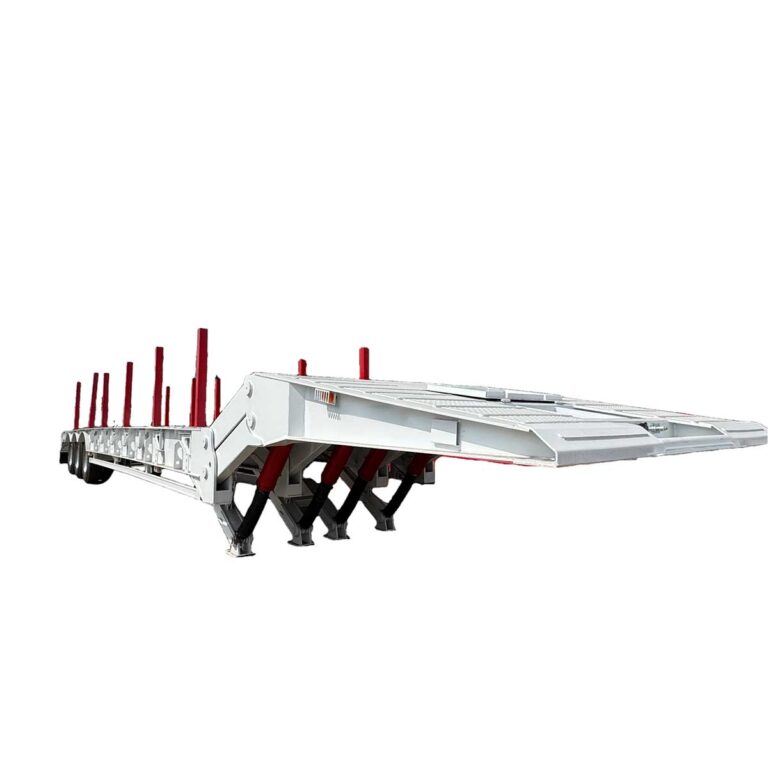
Understanding which trailer type matches your cargo profile is the first critical decision. Here is a comparison of the most common heavy haul trailer configurations:
| Trailer Type | Typical Payload | Key Features | Best Applications | Price Range (FOB China) |
|---|---|---|---|---|
| Lowbed / Lowboy Trailer (2-6 axles) | 40–120 tons | Low deck height (850–1,100mm), detachable gooseneck, hydraulic ramps | Excavators, bulldozers, cranes, transformers | $18,000–$65,000 |
| Extendable Flatbed Trailer | 30–80 tons | Telescopic deck (13m–22m extendable), twist locks, side rails | Long steel beams, wind turbine blades, precast concrete | $22,000–$55,000 |
| Multi-Axle Modular Trailer (SPMT type) | 100–5,000+ tons | Hydraulic suspension, electronic multi-axis steering, combinable modules | Power plant modules, bridge sections, offshore platforms | $45,000–$200,000+ |
| Heavy-Duty Dump Trailer | 40–100 tons | Reinforced U-shape body, high-lift hydraulic cylinder, Hardox steel | Mining overburden, quarry rock, demolition waste | $20,000–$58,000 |
| Special Purpose Trailer (custom-built) | Varies | Custom deck configurations, crane mounts, specialized tie-down systems | Industrial machinery, military equipment, oversized generators | $30,000–$150,000+ |
Nanou Engineering Team Insight: “For most international buyers entering heavy haul for the first time, a 3-axle or 4-axle lowbed trailer with a detachable gooseneck offers the best balance of versatility and cost. It handles 80% of common oversized cargo profiles while remaining road-legal in most jurisdictions without special permits.”
Key Specifications to Evaluate When Buying a Heavy Haul Trailer
1. Payload Capacity and Axle Configuration
Match your trailer’s rated capacity to your heaviest expected load plus a 15–20% safety margin. A 3-axle lowbed typically handles 60–80 tons, while 4-axle configurations push to 100–120 tons. For loads exceeding 120 tons, modular SPMT-type trailers are the standard choice.
2. Deck Dimensions and Ground Clearance
Standard deck heights range from 850mm to 1,100mm. Lower decks provide better stability for tall cargo but limit ground clearance on uneven terrain. Nanou’s engineering team recommends 900mm deck height as the optimal starting point for most export markets, balancing clearance with center-of-gravity concerns.
3. Suspension Type
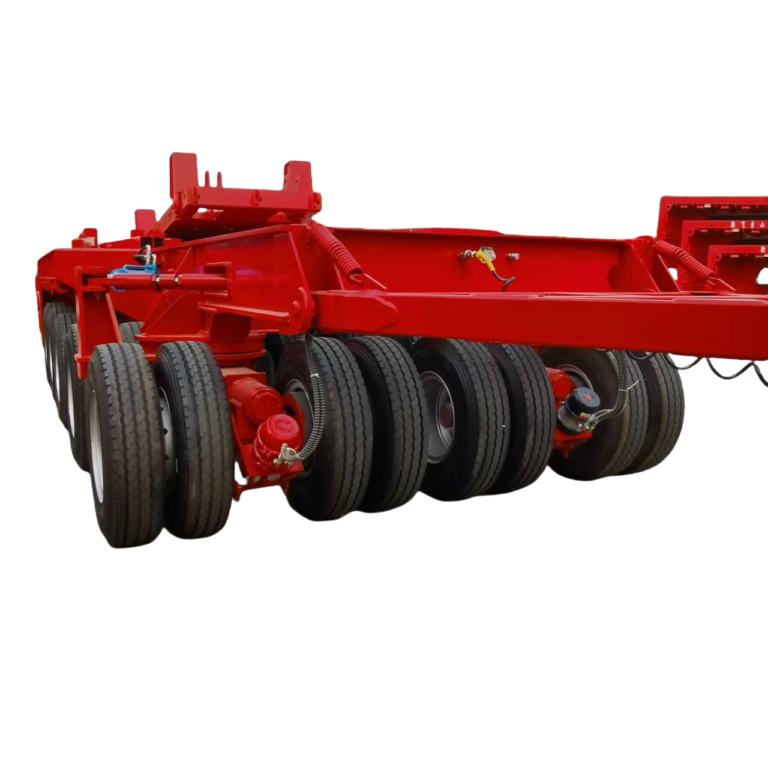
Three main suspension systems are available: mechanical leaf spring (most economical, suitable for paved roads), air suspension (better ride quality, adjustable height, ideal for mixed terrain), and hydraulic pendulum suspension (used on modular trailers for extreme loads, offering individual axle articulation).
4. Steering System
For trailers with 3+ axles, rear-axle steering significantly reduces tire wear and improves maneuverability on tight project sites. Options include mechanical self-steering, hydraulic forced steering, and electronic remote-controlled steering for SPMT configurations.
5. Steel Grade and Construction Quality
Look for trailers built with high-strength low-alloy steel (Q345B or equivalent) for the main frame, and Hardox or equivalent wear-resistant steel for dump bodies. Weld quality should meet AWS D1.1 or ISO 3834 standards — always request weld inspection certificates before shipment.
Global Oversize Load Regulations: What Buyers Must Know
Regulations governing oversized and overweight loads vary dramatically by country, and non-compliance can result in fines, impounded equipment, or voided insurance. Here are key considerations by major market:
North America: Maximum legal width is 8.5 feet (2.59m) without permits. Overweight permits typically take 1–5 business days under normal conditions, but can stretch to 5–10 days during high-volume periods. Route surveys for non-standard loads take 3–10 business days. Actual lead time from order to execution: 14–30 days.
European Union: Standard maximum weight is 40 tons for 5-axle combinations, with member states issuing individual special transport permits. Germany and the Netherlands have well-established permit corridors for heavy haul routes.
Middle East & Africa: Many countries operate more flexible limits — Saudi Arabia allows up to 55 tons for 6-axle configurations, while many African nations follow the SADC (Southern African Development Community) axle load limits. However, enforcement varies, and road conditions often dictate practical limits more than legal ones.
Southeast Asia: Vietnam and Indonesia are actively modernizing heavy transport regulations to support their infrastructure buildout. Buyers should verify local axle load limits and bridge weight restrictions before specifying trailer configurations.
Expert Tip: When ordering a heavy haul trailer from China for export, always specify the target country’s legal limits upfront. Nanou Auto’s engineering team provides country-specific configuration packages that ensure road-legal compliance upon arrival, avoiding costly modifications after delivery.
Sourcing Strategy: How to Buy Smart in 2026
With manufacturer lead times running 6 to 18 months, timing your purchase is critical. Here is a practical sourcing framework:
Plan 90 days ahead minimum. Industry experts recommend securing carrier and equipment commitments 30–90 days before your project start date. For custom-configured trailers, add the manufacturing lead time on top.
Request a complete compliance package. Your trailer supplier should provide: type-approval certificates (DOT, ECE, or local equivalent), axle load distribution calculations, and a recommended maintenance schedule. Nanou Auto provides all three as standard with every heavy haul trailer order.
Evaluate total cost of ownership (TCO), not just purchase price. A trailer that costs 10% more upfront but uses standardized axles and suspension components will save significantly on maintenance over a 10–15 year service life. Chinese manufacturers like Nanou Auto use globally sourced components (BPW, FUWA, JOST) that are serviceable worldwide.
Inspect before shipment. Always arrange a pre-shipment inspection — either in person or via third-party services. Key inspection points include: weld quality on the main frame, axle alignment (tolerance within ±2mm), brake system pressure test, and hydraulic system leak test.
For a detailed walkthrough of the import process from China, see our guide: How to Import a Semi Trailer from China.
Frequently Asked Questions (FAQ)
Q1: What is the difference between a heavy haul trailer and a standard semi-trailer?
Heavy haul trailers are engineered for loads that exceed standard legal weight and dimension limits. They feature reinforced frames, multi-axle configurations, specialized suspensions, and often hydraulic systems for loading and steering. Standard semi-trailers are designed for general freight within normal highway limits.
Q2: How much does a heavy haul trailer cost from China?
Prices vary widely based on configuration. A 3-axle lowbed trailer starts around $18,000–$25,000 FOB. A 4-axle heavy-duty lowbed runs $35,000–$65,000. Modular SPMT-type trailers start at $45,000+ and can exceed $200,000 for large multi-module combinations. Custom special-purpose trailers are quoted based on specifications.
Q3: What permits do I need to operate a heavy haul trailer?
Permit requirements depend on your country and the load dimensions/weight. Most jurisdictions require oversize/overweight permits for loads exceeding standard highway limits. Some countries issue annual blanket permits for fleet operators, while others require individual trip permits. Always consult your local transport authority and plan permits as part of your project timeline.
Q4: Can I use a lowbed trailer for both heavy equipment transport and general cargo?
Yes, many lowbed trailers can be configured with removable side rails and flat deck sections to handle both heavy machinery and general cargo. However, this dual-purpose configuration typically costs 10–15% more than a dedicated lowbed. For fleet operators running mixed cargo profiles, the versatility often justifies the investment.
Q5: How long does it take to manufacture and deliver a heavy haul trailer from China?
Standard configurations typically require 30–45 days for manufacturing. Custom or modular trailers may take 60–90 days. Sea freight adds 25–45 days depending on destination (Africa: ~30 days, Middle East: ~20 days, South America: ~35 days, Southeast Asia: ~15 days). Plan for 60–120 days total from order to port delivery.
Q6: What maintenance does a heavy haul trailer require?
Key maintenance items include: axle bearing inspection every 20,000 km, suspension bushing replacement every 100,000 km, hydraulic system fluid change annually, brake chamber inspection every 50,000 km, and structural weld inspection every 2 years. Nanou Auto provides a detailed maintenance manual and spare parts list with every trailer, and offers remote technical support via WhatsApp.
Related Reading
- Low Flatbed Semi-Trailer Buying Guide 2026: How to Choose the Right Lowbed Trailer
- Flatbed Semi-Trailer Buying Guide 2026: Container, Steel & Bulk Cargo Transport
- How to Import a Semi Trailer from China: Complete Guide (2026)
About Shandong Nanou Automobile Co., Ltd.
Nanou Auto, headquartered in Liangshan County, Shandong Province — China’s trailer manufacturing capital — produces over 230 types of semi-trailers including heavy haul lowbeds, modular transport trailers, extendable flatbeds, and custom-built special-purpose transport vehicles. With 15+ years of export experience to over 60 countries, Nanou Auto provides end-to-end solutions from trailer design and manufacturing to shipping logistics and after-sales technical support.
Our heavy haul trailer range covers 2–10 axle configurations with payloads from 40 to 500+ tons, built with internationally sourced components (BPW, FUWA, JOST, WABCO) for global serviceability.
Ready to spec your next heavy haul trailer? Contact our engineering team today:
- Email: nanou-automobile@nanou-trailer.com
- WhatsApp: +86 159 7063 7777
- Phone: +86 153 1547 7956 / +86 159 7063 7777
- Address: Jiezhuang Village Industrial Park, Liangshan County, Shandong Province, China
- Website: www.nanou-trailer.com
Tags: heavy haul trailer for sale, special transport trailer, heavy haul semi-trailer buying guide, oversized load trailer, modular trailer manufacturer, lowbed heavy haul trailer China, heavy equipment transport trailer, SPMT modular trailer 2026