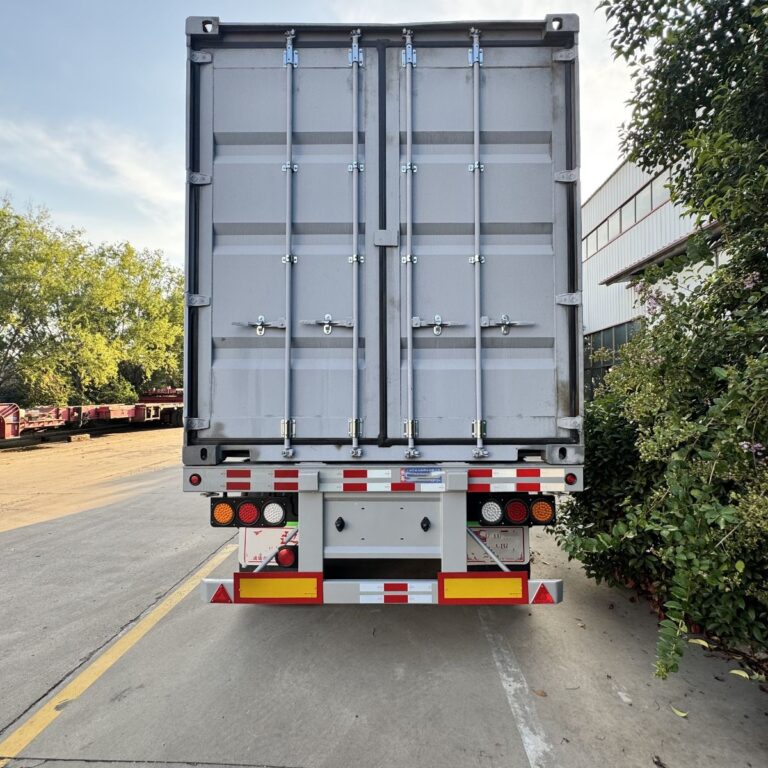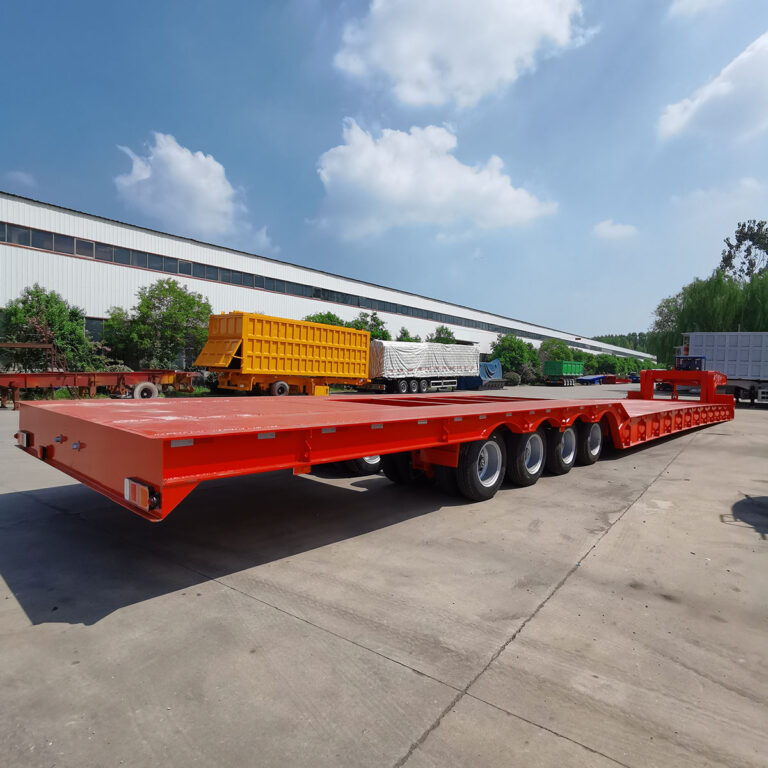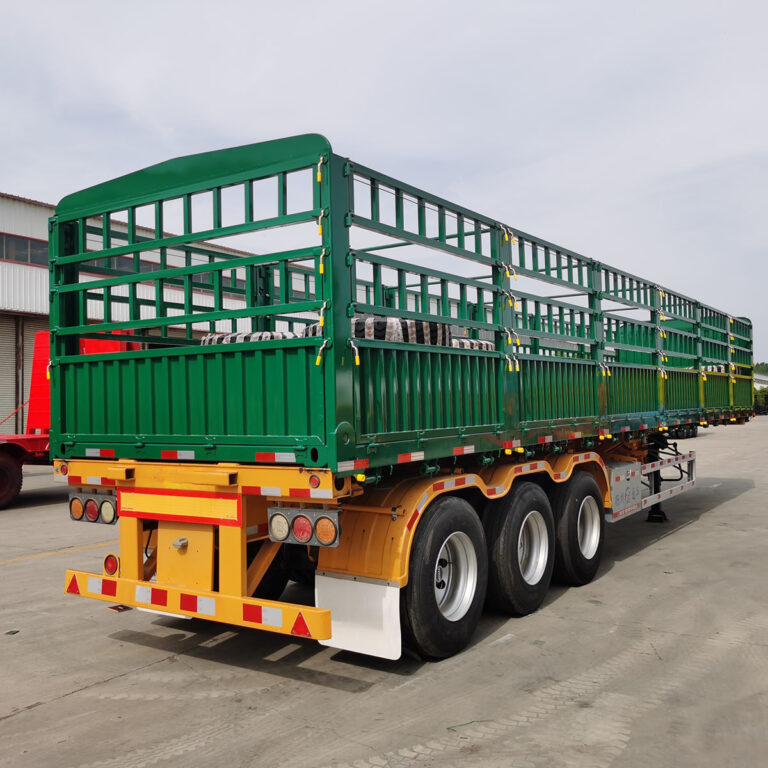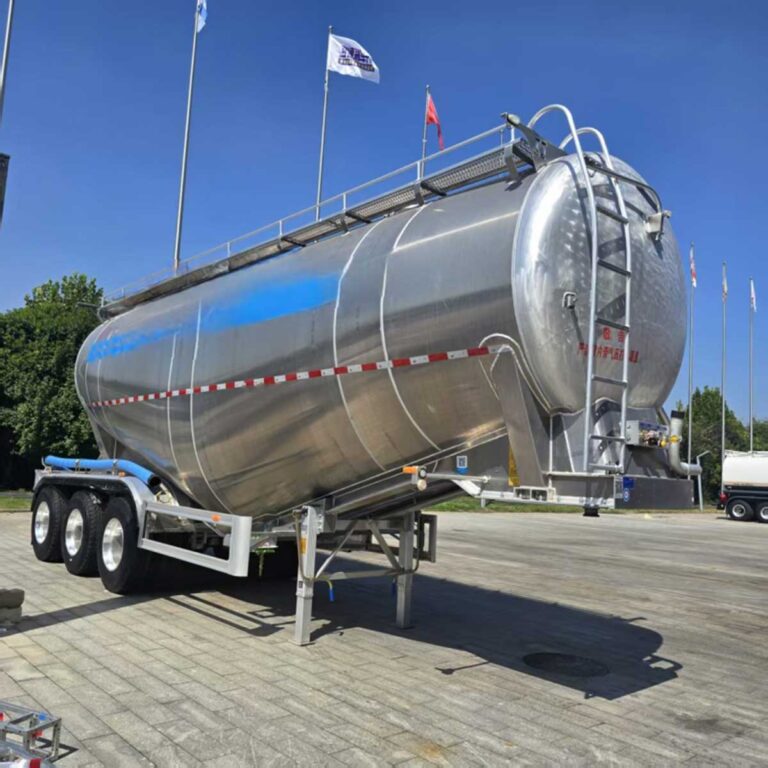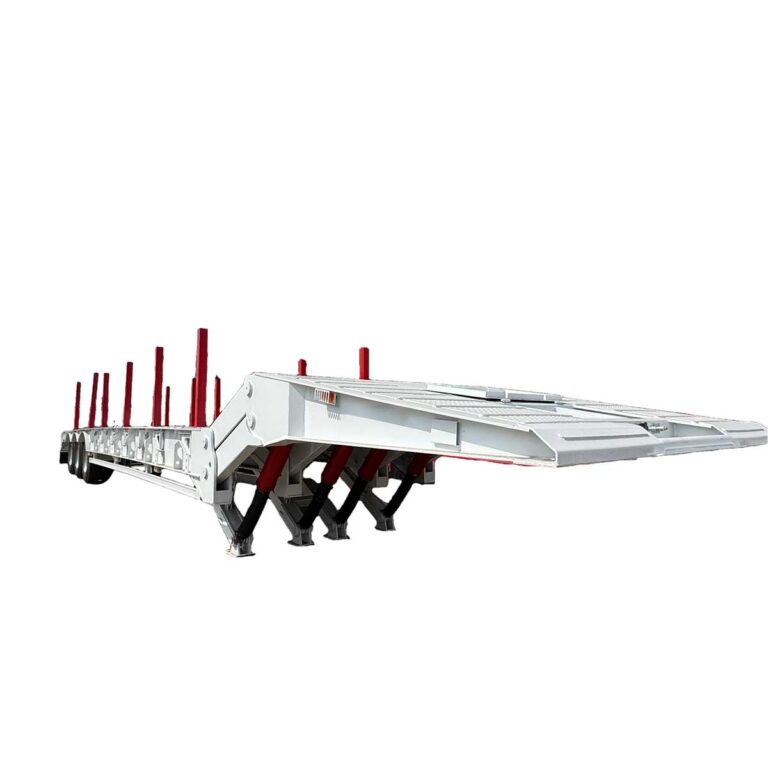


Low Flatbed Semi-Trailer Buying Guide 2026: How to Choose the Right Lowbed Trailer for Construction Equipment Transport
The global semi-trailer market is experiencing a seismic shift. According to recent industry reports, Western Europe’s heavy trailer market is projected to grow 6% in 2026 (trans.info), while aging trailer fleets across North America and the Middle East are fueling what analysts call a “replacement boom” (SemiTrailerNews). Meanwhile, Africa’s infrastructure boom continues to drive unprecedented demand for heavy equipment transport solutions (MOCA Africa).
For procurement managers and contractors, these market dynamics create both urgency and opportunity. Whether you’re transporting excavators to a mining site in Zambia, moving bulldozers to a highway project in Saudi Arabia, or hauling cranes for wind farm construction in Southeast Asia, the low flatbed semi-trailer remains the workhorse of choice.
This guide cuts through the noise. We’ll walk you through axle configurations, deck specifications, payload capacities, and pricing factors — backed by real-world engineering data from Nanou Automobile’s production of over 230 semi-trailer models at our Shandong, China manufacturing facility.
Industry Data: The 2026 Low Flatbed Trailer Market at a Glance
Three macro trends are shaping buyer decisions this year:
1. Fleet Replacement Cycles
The average age of heavy-haul trailers in established markets has reached 8–12 years. Regulatory pressure on emissions and road safety is accelerating retirements. Buyers replacing older units are prioritizing lighter tare weights, higher payload ratings, and ABS/EBS braking systems — features that were optional a decade ago but are now baseline expectations.
2. Infrastructure Spending in Emerging Markets
Africa’s construction sector is projected to sustain double-digit growth through 2027, with road, rail, and energy projects requiring constant movement of heavy plant equipment. South Africa’s construction forecast specifically highlights infrastructure as a key driver. Low flatbed trailers with 3–5 axle configurations are the most requested specification for these projects.
3. Western European Recovery
After a soft 2024–2025, Western European trailer orders are rebounding. The 6% growth forecast is driven by logistics companies upgrading fleets to meet new EU safety regulations and driver shortage pressures — lighter, more efficient trailers help maximize payload per trip.
Low Flatbed Semi-Trailer Comparison Table: 2-Axle vs 3-Axle vs 4-Axle Configurations
Choosing the right axle configuration is the single most important decision when buying a low flatbed semi-trailer. The table below compares the most common configurations for construction equipment transport:
| Specification | 2-Axle Lowbed | 3-Axle Lowbed | 4-Axle Lowbed | 5-6 Axle Lowbed |
|---|---|---|---|---|
| Typical Payload | 30–45 tons | 50–70 tons | 70–90 tons | 90–130 tons |
| Deck Length | 8.5–10m | 10–12m | 11–13m | 12–16m (extendable) |
| Deck Height (loaded) | 1,050–1,200mm | 950–1,100mm | 900–1,050mm | 850–1,000mm |
| Tare Weight | 8.5–11 tons | 11–14 tons | 14–18 tons | 18–25 tons |
| Best For | Mini excavators, skid steers | Standard excavators, loaders, bulldozers | Large excavators, cranes, drilling rigs | Heavy mining equipment, transformers |
| Approx. FOB Price (China) | $12,000–$18,000 | $18,000–$28,000 | $28,000–$42,000 | $42,000–$75,000+ |
| Lead Time | 15–20 days | 20–25 days | 25–35 days | 35–50 days |
Prices are indicative FOB Qingdao, based on Q3 2026 market data. Final pricing depends on specifications, axle brand (BPW/FUWA/YORK), and optional features.
Deep Dive: 5 Critical Factors When Choosing a Low Flatbed Semi-Trailer
1. Deck Height and Ground Clearance
The defining feature of a “low” flatbed is its reduced deck height compared to standard flatbed trailers. A lower deck means a lower center of gravity, which translates to better stability when carrying tall equipment like excavators with booms or cranes with counterweights.
For most construction equipment transport, a deck height of 950–1,100mm (3-axle configuration) is the sweet spot. If you’re transporting equipment taller than 3.5m, consider a drop-deck or step-deck lowbed that can achieve deck heights as low as 600–800mm in the well area.
Nanou Engineering Tip: Always measure your tallest equipment piece before specifying deck height. A common mistake is ordering a trailer with a deck too high for your load, resulting in over-height violations on route.
2. Axle Configuration and Suspension Type
Axle count directly determines payload capacity and road legality. Most countries enforce axle load limits — typically 10 tons per axle for standard roads, with higher allowances for designated heavy-haul routes.
- Mechanical suspension (leaf spring): Most common, lowest maintenance, suitable for paved and graded roads. Standard on 80% of Nanou’s lowbed exports.
- Air suspension: Better ride quality, adjustable ride height, preferred for precision equipment and European market requirements. Adds approximately $3,000–$5,000 to trailer cost.
- Hydraulic suspension: Used on multi-axle heavy-haul configurations (5+ axles) for load leveling and steering assistance. Essential for loads exceeding 80 tons.
3. Main Beam and Frame Construction
The main beam is the structural backbone of any lowbed trailer. Look for:
- Material: Q345B or T700 high-strength low-alloy steel. Avoid trailers using Q235 mild steel for the main beam — it’s cheaper but significantly weaker.
- Beam height: 500–550mm for 3-axle, 550–650mm for 4+ axle configurations.
- Welding quality: Submerged arc welding (SAW) is the industry standard for main beam fabrication. Hand-welded beams are a red flag.
4. Loading Mechanism: Ramp vs Hydraulic Neck
How does your equipment get onto the trailer?
- Spring-assisted manual ramps: Most economical, suitable for tracked equipment (excavators, bulldozers). Requires ground personnel to operate.
- Hydraulic fold-down ramps: Faster, safer, can be operated from the cab. Adds $2,000–$4,000.
- Hydraulic detachable neck (lowboy style): Equipment drives on from the front at ground level. Ideal for wheeled loaders and tall equipment. Premium option, adds $8,000–$15,000.
For African and Middle Eastern markets where operators often load equipment in remote areas without ground support, hydraulic ramps are increasingly the specification of choice.
5. Braking System and Safety Features
Modern lowbed trailers should include:
- ABS (Anti-lock Braking System): Mandatory in EU, increasingly required in African and Middle Eastern markets. Prevents wheel lockup during emergency braking.
- EBS (Electronic Braking System): Advanced version of ABS with brake-by-wire technology. Standard on European-spec trailers.
- Load-sensing brake valves: Automatically adjust braking force based on payload — critical for lowbed trailers that often run empty on return trips.
- LED lighting: More durable and visible than incandescent bulbs. Nanou includes full LED lighting packages as standard on all export lowbed trailers.
Frequently Asked Questions (FAQ)
Q1: What is the difference between a low flatbed semi-trailer and a lowboy trailer?
A low flatbed semi-trailer (lowbed) has a continuous low deck from the gooseneck to the rear, while a traditional “lowboy” typically features a drop-deck or well section in the middle. In practice, the terms are often used interchangeably in international trade. The key distinction is deck height: lowbeds typically have 900–1,200mm deck height, while drop-deck lowboys can achieve 600–800mm in the well area.
Q2: How many axles do I need for a 60-ton excavator?
For a 60-ton excavator (plus approximately 3-ton bucket and attachments), you need a trailer rated for at least 65–70 tons payload. A 3-axle lowbed with BPW or FUWA axles rated at 13–16 tons each is the minimum. For road legality in most jurisdictions, a 4-axle configuration is recommended to stay within per-axle weight limits.
Q3: What’s the typical delivery time from China for a low flatbed semi-trailer?
Standard 2-3 axle lowbed trailers typically ship in 20–30 days from order confirmation. Custom configurations (extendable decks, hydraulic necks, special axle brands) may require 35–50 days. Shipping to African ports (Dar es Salaam, Mombasa, Lagos) adds 25–40 days transit time.
Q4: Should I choose BPW or FUWA axles for my lowbed trailer?
BPW (German) axles are the premium choice — higher initial cost ($1,500–$2,500 more per axle) but superior durability and global parts availability. FUWA (Chinese) axles offer excellent value, are the most widely used brand on Chinese export trailers, and have adequate parts support in most markets. For trailers operating in remote areas of Africa, FUWA’s simpler mechanical design can actually be an advantage for local repair shops.
Q5: Can I extend the deck length of a low flatbed trailer after purchase?
Some lowbed trailers are designed with an extendable (telescopic) deck section, typically adding 2–4 meters. This must be specified at the time of manufacture — it cannot be retrofitted to a standard fixed-deck trailer. If you anticipate needing to transport longer loads in the future (e.g., wind turbine blades, precast concrete beams), specify an extendable deck from the outset.
Q6: What certifications should a low flatbed semi-trailer from China have?
For most export markets, look for: DOT certification (North America), ECE/E-mark (Europe), SASO (Saudi Arabia), or PVOC (Kenya/Tanzania). Reputable Chinese manufacturers like Nanou Automobile provide full certification documentation and can assist with destination-country homologation requirements.
Related Reading
- Multi-Axle Lowbed Trailer Buying Guide 2026: Wind Energy, Mining & Infrastructure Projects — Deep dive into 5-10 axle configurations for extreme heavy-haul applications.
- Container Transport Trailer for Sale: Types, Specs & Prices (2026) — If your fleet also handles containerized cargo, this guide covers skeleton and flatbed container chassis.
- Bulk Cement Trailer for Sale: Types, Specs & Prices from China (2026) — For construction projects requiring bulk cement delivery alongside equipment transport.
About Shandong Nanou Automobile Co., Ltd.
Shandong Nanou Automobile Co., Ltd. is a leading manufacturer of semi-trailers and special transport vehicles, based in Liangshan County, Shandong Province — China’s trailer manufacturing hub. With over 230 product models spanning 2–10 axle configurations, Nanou serves construction contractors, mining operators, and logistics companies across Africa, the Middle East, Southeast Asia, and South America.
Our low flatbed semi-trailer range includes standard 2–4 axle models, extendable deck variants, and custom-engineered heavy-haul solutions. All trailers undergo rigorous quality testing including load simulation, braking performance validation, and structural fatigue analysis before shipment.
Ready to specify your next low flatbed semi-trailer? Our engineering team can provide a detailed quotation with CAD drawings within 24 hours.
- Email: nanou-automobile@nanou-trailer.com
- WhatsApp: +86 159 7063 7777
- Phone: +86 153 1547 7956 / +86 159 7063 7777
- Address: Jiezhuang Village Industrial Park, Liangshan County, Shandong Province, China
Article updated August 5, 2026. Market data reflects Q3 2026 conditions. Contact our sales team for current pricing and availability.