

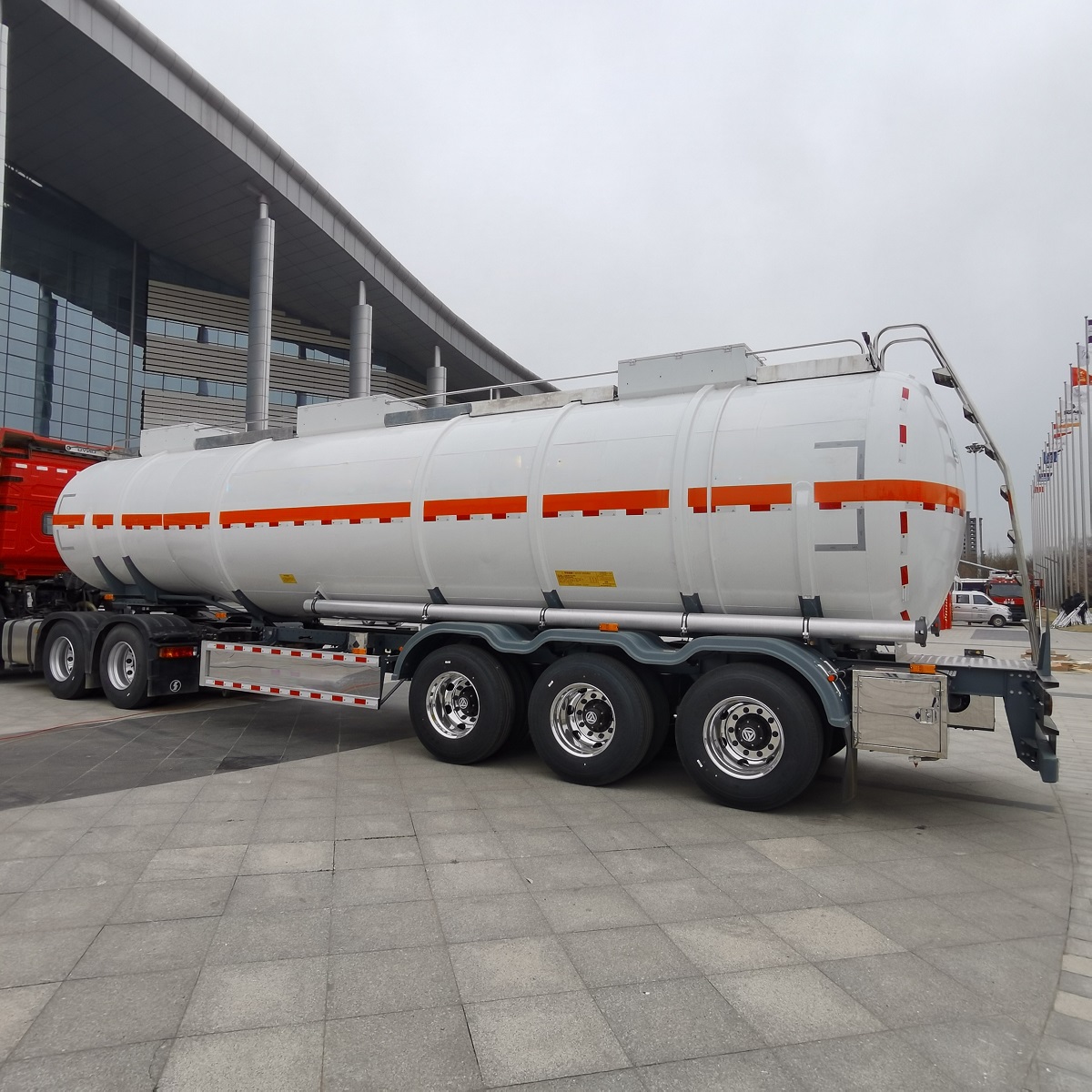
The key components of a liquefied gas tanker are five systems that form a safety chain
The liquefied gas tanker is essentially a “mobile pressure vessel that can run”. Its reliability does not depend on its horsepower or appearance, but on whether the five systems of tank, discharge and cut-off, metering and monitoring, loading and unloading, static electricity and walking are fully interconnected.
1、 Tank body: the main body that bears pressure
Composed of a cylinder and a head, Q345R and Q420R pressure vessel specific steel plates are commonly used; A shock-absorbing plate is installed inside the tank to suppress the impact caused by liquid shaking during driving; There are also manholes and inspection holes on the tank for internal inspection and cleaning; The tank body is permanently connected to the chassis or semi-trailer mechanism through a support.
When selecting a car and conducting annual inspections, three key factors should be considered: wall thickness and corrosion allowance (not less than 1.0 mm), weld quality and non-destructive testing records, and the number and opening rate of anti wave plates. The most common and concealed hidden dangers are the thinning of wall thickness and insufficient anti wave plates.
2、 Safe Release and Emergency Cut off: The Last Gate
-Safety valve: Automatic release when overpressure occurs, which is the ultimate means to prevent the tank from breaking due to overpressure. It must be regularly calibrated and the lead seal must be kept intact.
-Emergency shut-off device: It is installed separately on the liquid and gas pipelines, and automatically shuts off within seconds when the loading and unloading hoses are pulled, the vehicle accidentally moves, or remotely or manually triggered. It is the most critical device to prevent large leaks.
-Flame arrester and exhaust pipe fireproof cover: block the backflow of external fire sources.
This set of components belongs to the type of “not moving normally, saving lives when moving”, and it depends not only on whether they are present, but also on whether they are functioning properly.
3、 Measurement and Monitoring: Visible is the key to effective management
Including level gauges, pressure gauges, thermometers, as well as high level alarms and anti overflow devices.
There is an easily overlooked rule here: LPG tankers cannot determine the loading capacity based on whether the tank is full or not, but rather control the filling volume per unit volume – propane does not exceed 0.42 t/m ³, butane does not exceed 0.49 t/m ³, and gas phase space must be reserved for temperature rise. If the liquid level gauge is inaccurate, it means that this rule is invalid.
4、 Loading and unloading system: a high-risk area for accidents
Includes loading and unloading ball/globe valves, quick couplings, loading and unloading hoses, unloading pumps or compressors, double-sided valve boxes, and upper/lower mounting interfaces.
Three hard requirements:
a. The liquid phase interface and gas phase interface cannot be plugged into each other, and preventing misconnection is the design red line;
b. The hose should be regularly pressure tested and replaced upon expiration, as it is the most susceptible pressure bearing component to aging and failure on the entire vehicle;
c. The pull off protection must be effective, and the emergency shut-off valve must be closed when the hose is pulled off.
5、 Static electricity and walking safety: the easiest part to avoid
Static conductive towing belt and tank grounding (static electricity accumulation during LPG loading and unloading is a real ignition source), collision barriers, dangerous goods signs and reflective tape, on-board fire extinguishers, ABS/ABS and support legs. These components have low unit prices and weak presence, but they directly determine whether the vehicle can pass inspection and admission.