

How to Choose a Fuel Oil Tanker Trailer: Complete Buyer’s Guide (2026)
How to Choose a Fuel Oil Tanker Trailer: Complete Buyer’s Guide (2026)
Summary: Buying a fuel tanker trailer is not like buying a flatbed. You are moving flammable liquids across long distances, often through hot climates and rough roads. The wrong tank material, compartment layout, or certification can turn a $25,000 purchase into a customs detention or roadside fine. In this guide, you will learn how to match an oil tank semi trailer to your cargo, route, and local regulations, see real 2026 FOB prices from China, and get a 6-step import checklist you can use today.
What Is a Fuel Oil Tanker Trailer and When Do You Need One?
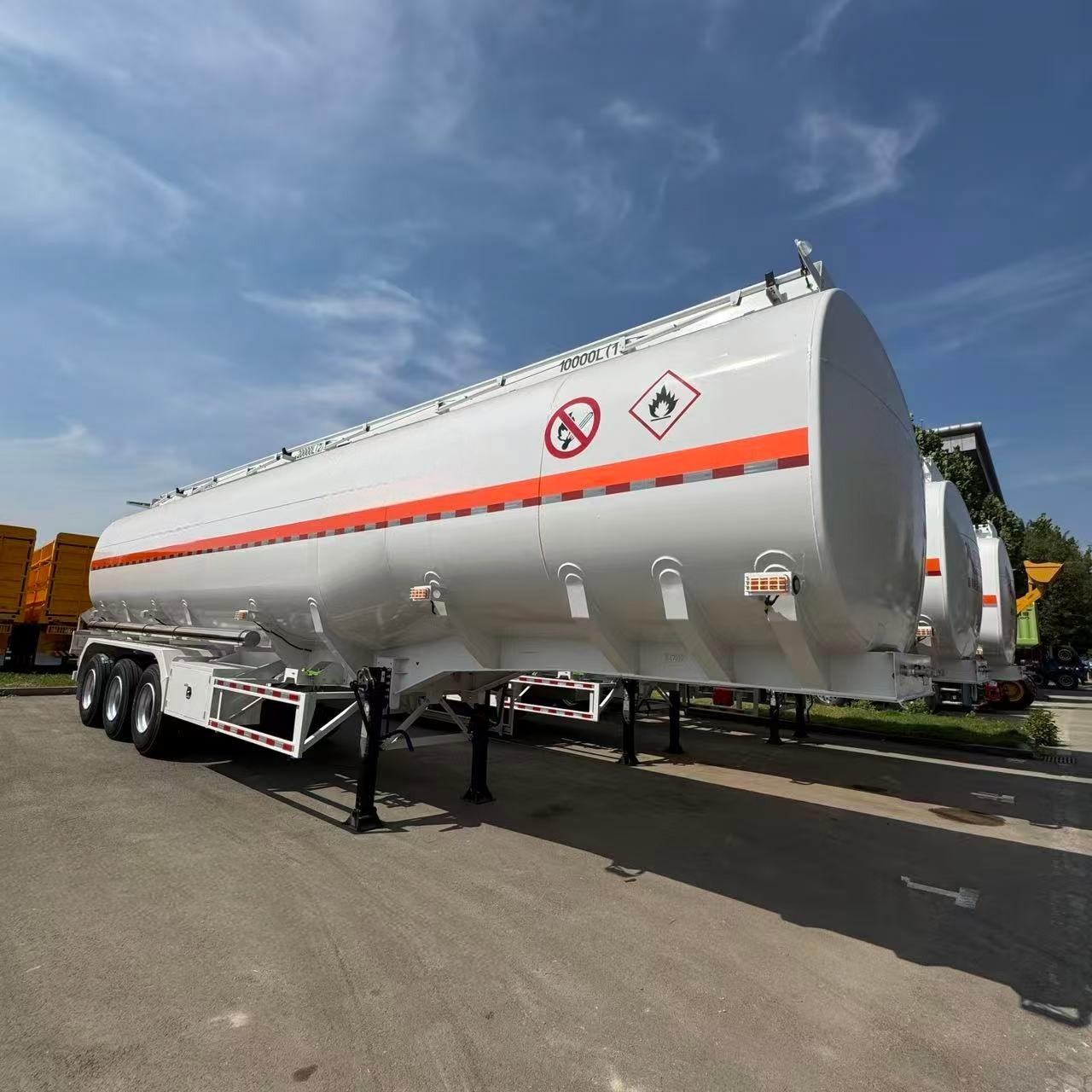
A fuel tanker trailer is a semi-trailer built to transport liquid petroleum products — diesel, gasoline, kerosene, crude oil, and some edible or industrial oils — in a cylindrical or oval tank mounted over a chassis. Unlike a rigid tank truck, the trailer detaches from the tractor, so one cab can pull different tank bodies across shifts.
You need an oil tank semi trailer when:
- You haul fuel from ports or refineries to filling stations, mines, or construction sites.
- You want to move 30,000 to 60,000 liters per trip — roughly 2 to 4 times the capacity of a local tank truck.
- You operate across borders where ADR, ASME, or local petroleum authority rules apply.
- You need multiple products (diesel + gasoline + kerosene) in one convoy without cross-contamination.
One detail buyers often miss: a tank trailer’s usable capacity is lower than its total volume. A 45,000-liter tank is typically filled to about 95% to leave expansion space. That means real payload per compartment is closer to 42,750 liters.
Types of Fuel Oil Tanker Trailers — Which One Fits Your Business?
Not every fuel tanker trailer is a simple carbon-steel cylinder. Here are the four main families Nanou Trailer builds, with the trade-offs that matter on the ground.
1. Carbon Steel Fuel Tanker Trailer
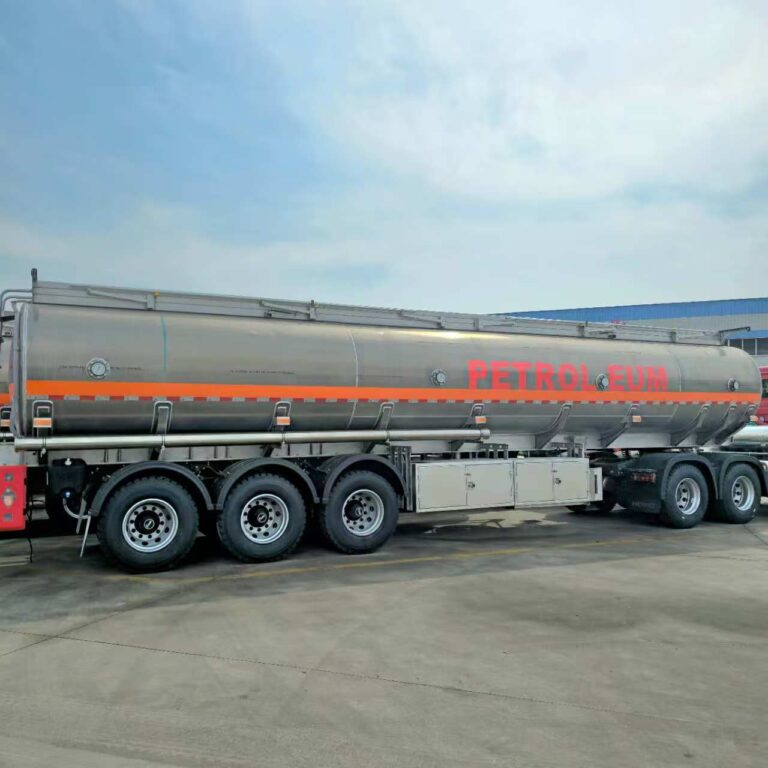
Carbon steel (Q345 or Q235) is the most common construction. It handles impact from gravel roads well and is easy to repair in local workshops. A 3-axle 45,000-liter carbon steel oil tank semi trailer usually weighs about 9,000 to 10,500 kg empty. The downside is corrosion: without internal anti-rust coating, steel tanks need cleaning and inspection every 12 to 18 months in coastal or humid regions.
2. Aluminum Alloy Fuel Tanker Trailer
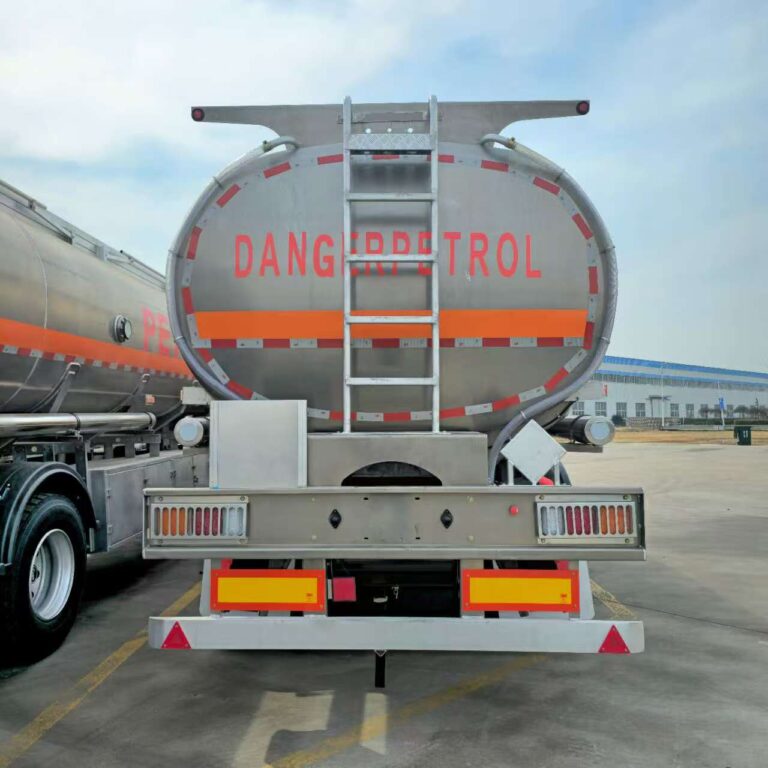
Aluminum alloy tanks cut tare weight by roughly 30% compared with steel. That extra payload allowance can pay back the higher purchase price within two to three years if you run high-volume fuel routes. Aluminum also resists corrosion better, which is why it is preferred in Middle East and African coastal markets. Expect a 3-axle 45,000-liter aluminum fuel tanker trailer to weigh 6,500 to 7,500 kg empty.
3. Stainless Steel Oil Tank Semi Trailer
Stainless steel is chosen when the cargo includes corrosive liquids, biofuels, or chemicals alongside fuel. It costs more but lasts longer and reduces contamination risk. If your route includes palm oil, ethanol blends, or sulfur-heavy diesel, stainless pays for itself in lower cleaning and maintenance costs.
4. Multi-Compartment Fuel Tanker Trailer
A multi-compartment oil tank semi trailer carries two to seven separate products in one tank body. Each compartment has its own manhole, discharge valve, and sometimes its own pump. This is the standard configuration for fuel distributors who deliver gasoline, diesel, and kerosene to rural stations in one trip.
Key Specifications & What to Look For
These numbers determine whether your trailer passes inspection, survives the road, and makes money.
| Spec | Light-Duty | Standard | Heavy-Duty |
|---|---|---|---|
| Axle config | 2 axles | 3 axles | 4 axles |
| Tank volume | 30,000 L | 45,000 L | 60,000 L |
| Material | Carbon steel, 5 mm | Carbon / aluminum alloy | Aluminum / stainless steel |
| Compartments | 1-2 | 3-5 | 5-7 |
| Axle brand | FUWA 13T | FUWA / BPW 13T | BPW 13T-16T |
| Suspension | Mechanical spring | Mechanical / air bag | Air bag with lifting |
| Discharge | Bottom valve + hose | API valve + pump | API + gravity + pump |
| Typical tare weight | 7,000-8,500 kg | 9,000-11,000 kg | 11,500-14,000 kg |
Choose BPW axles if your routes include steep gradients or you plan to keep the trailer beyond eight years. FUWA axles are a solid cost-saving choice for paved highways and moderate loads. Air-bag suspension protects the tank welds on rough roads and is now the default for most Middle East and African orders.
Price Guide — Fuel Oil Tanker Trailer Costs from China (2026)
Prices below are FOB China reference ranges based on Nanou Trailer’s 2026 production batch quotes. Final cost depends on material thickness, compartment count, axle brand, and optional equipment like flow meters or bottom-loading systems.
| Configuration | Volume | Material | 2026 FOB Range |
|---|---|---|---|
| 2-axle fuel tanker trailer | 30,000 L | Carbon steel | $16,000 – $19,000 |
| 3-axle oil tank semi trailer | 45,000 L | Carbon steel | $20,000 – $25,000 |
| 3-axle aluminum fuel tanker trailer | 45,000 L | Aluminum alloy | $28,000 – $35,000 |
| 4-axle heavy-duty oil tank semi trailer | 60,000 L | Carbon steel | $30,000 – $38,000 |
| Stainless steel chemical/oil trailer | 30,000 – 45,000 L | SS304 / SS316 | $35,000 – $50,000 |
| Add-on: extra compartment | Per compartment | — | +$1,200 – $1,800 |
| Add-on: API bottom-loading | System | — | +$1,500 – $2,500 |
Landed cost usually adds 15% to 35% on top of FOB, depending on sea freight rates, destination port charges, and import duty. For example, shipping a 45,000-liter carbon steel fuel tanker trailer to Lagos or Jeddah often adds $2,500 to $4,500 in ocean freight alone.
🚛 Get Your Fuel Oil Tanker Trailer Quote Today
Tell us your fuel type, route, and target country. You’ll get a custom spec sheet and FOB price within 24 hours.
💬 WhatsApp: +86 15315477956
📋 Online Inquiry Form
📱 WeChat: +86 15315477956
How to Buy a Fuel Oil Tanker Trailer from China — 6-Step Checklist
- Define your cargo and route. List fuel types, yearly volume, average trip distance, road condition, and climate. These decide material, compartments, and suspension.
- Match local regulations. Ask your petroleum authority or customs broker which certifications are mandatory. ADR is common for Europe and many African transit corridors; ASME applies to pressure-vessel designs; some Middle East countries accept DOT or GCC-type approval.
- Request a detailed spec sheet. A serious supplier will send tank dimensions, material thickness, axle model, discharge valve brand, and welding standard. If those details are missing, keep asking.
- Check the factory, not just the price. Ask for photos of the welding shop, pressure-test records, and a video of the leak test. Nanou Trailer conducts hydrostatic testing at 0.4 to 0.6 MPa before shipment.
- Confirm packaging and shipping. Tank trailers are usually shipped as knock-down units or fully assembled on a roll-on/roll-off vessel. A fully assembled trailer saves local labor but costs more to ship.
- Plan for after-sales support. Spare parts like manhole covers, bottom valves, and seals should be available locally or shipped fast from China. Nanou keeps common consumables in stock for export customers.
Frequently Asked Questions
What is the difference between a fuel tanker trailer and an oil tank semi trailer?
There is no functional difference. “Fuel tanker trailer” is the common search term for trailers that carry gasoline, diesel, and kerosene. “Oil tank semi trailer” is often used by buyers in Asia, Africa, and the Middle East as a broader term for liquid cargo tanks. Both refer to the same vehicle type.
How many compartments should a fuel tanker trailer have?
A single-compartment fuel tanker trailer is fine if you only haul one product. For fuel distributors, three to five compartments are standard because they let you deliver gasoline, diesel, and kerosene to different stations without blending. Each compartment adds roughly $1,200 to $1,800 to the price.
Which is better: carbon steel or aluminum alloy?
Carbon steel is cheaper and tougher on rough roads but heavier and more corrosion-prone. Aluminum alloy cuts tare weight by about 30%, increases payload, and resists corrosion, which is why it dominates high-volume routes in coastal Middle East and African markets. Choose steel for low purchase cost; choose aluminum for long-term payload economics.
What certifications does a fuel tanker trailer need?
Required certifications vary by country. ADR is widely accepted in Europe and many African transit corridors. ASME applies if the tank is classified as a pressure vessel. DOT is used in North America. Several Gulf countries require GCC-type approval or a local petroleum authority inspection. Always confirm with your customs broker before ordering.
How long does it take to manufacture and ship a fuel tanker trailer from China?
Production lead time at Nanou Trailer is typically 25 to 35 days after deposit and drawing confirmation. Sea freight to West Africa is 30 to 45 days; to the Middle East, 20 to 30 days; to Southeast Asia, 10 to 18 days. Total delivery time ranges from 55 to 80 days depending on the destination.
Can I order a custom tank size or compartment layout?
Yes. Most Chinese manufacturers, including Nanou Trailer, build to order. Common custom requests include 20,000-liter to 60,000-liter volumes, 2 to 7 compartments, insulation for hot climates, and API bottom-loading kits. Custom drawings are usually confirmed within 5 to 7 working days.
Why Choose Nanou Trailer for Your Fuel Oil Tanker Trailer?
- Tank specialization: Nanou Trailer builds carbon steel, aluminum alloy, and stainless steel tank bodies with hydrostatic leak testing before shipment.
- Export experience: Trailers have been shipped to Nigeria, Kenya, Saudi Arabia, UAE, Tanzania, and other fuel-transport markets.
- Flexible specs: Choose from 2 to 4 axles, 30,000 to 60,000 liters, and 1 to 7 compartments to match your route and regulations.
- Transparent pricing: You receive an itemized quote covering tank material, axles, valves, pumps, and optional certifications.
Browse our fuel oil tanker trailer category to see current models, including the 3-axis oil tanker truck and the 3-axis aluminum alloy oil tank.
🚛 Ready to Move Fuel Safely and Efficiently?
Send your fuel type, required volume, and destination country. We will reply with a spec sheet, FOB quote, and certification guidance within 24 hours.
💬 WhatsApp: +86 15315477956
📋 Online Inquiry Form
📱 WeChat: +86 15315477956