

LPG Tank Trailer for Sale: Types, Specs & Prices from China Manufacturer (2026)
LPG Tank Trailer for Sale: Types, Specs & Prices from China Manufacturer (2026)
📌 What This Guide Covers
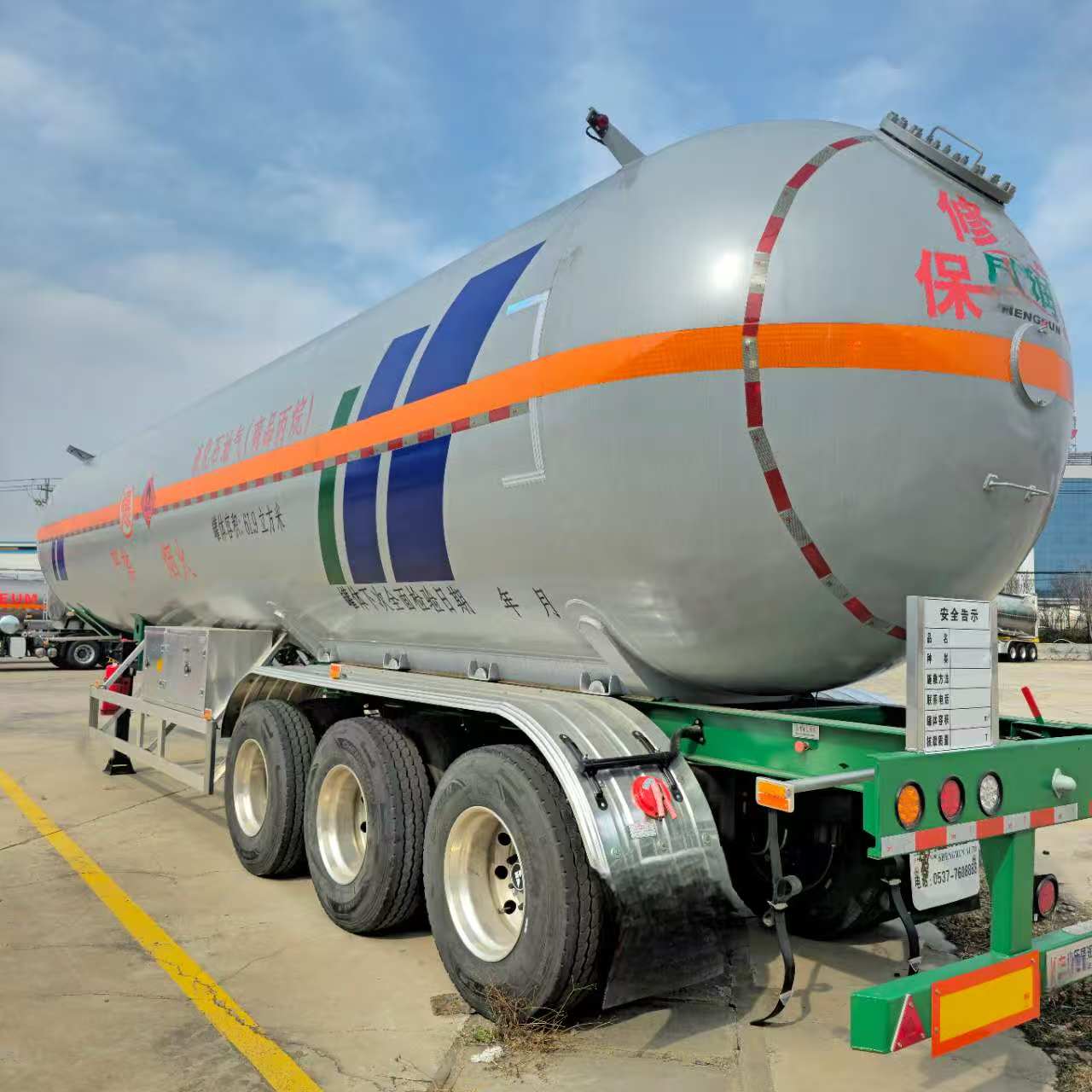
An LPG tank trailer is a pressurized cylinder-on-chassis unit built to haul liquefied petroleum gas — propane, butane, or a mix — at roughly 1.7 MPa design pressure. This guide explains the four main configurations Chinese factories build, how to read a spec sheet (volume, filling coefficient, design pressure, valve train), what a 3-axle unit actually costs FOB in 2026 ($24,000–$48,000), and the six steps to import one without surprises. Everything here is based on how these trailers are actually built and priced in Shandong — not catalog fluff.
A LPG tank trailer is not a fuel tanker with a different sticker. It is a pressure vessel first and a trailer second — the tank is a code-built cylindrical drum rated for the vapor pressure of propane at 50°C, and every valve, gauge, and mounting bracket on it exists for a reason. Buyers who treat it like a normal tanker end up either overpaying for capacity they can’t legally fill, or receiving a unit their local regulator won’t register.
This guide walks through the decisions that matter: which configuration fits your route, how to verify the pressure vessel paperwork before it ships, and where the real price differences come from between a $25,000 unit and a $45,000 one.
What Is an LPG Tank Trailer and When Do You Need One?
An LPG tank trailer (also called a gas tanker semi trailer or propane trailer) carries liquefied petroleum gas under pressure. At ambient temperature, propane sits in the tank as a liquid at roughly 1.4–1.8 MPa — that’s why the vessel is a smooth cylinder with dished ends instead of a rectangular tanker body. There are no baffles, no internal structures: just a sealed pressure drum with a liquid-phase outlet, a vapor-phase outlet, safety valves, and an emergency shut-off system.
You need one if your business does any of the following:
- Bottled gas distribution — hauling LPG from an import terminal or refinery to filling plants that decant into 12.5 kg or 50 kg cylinders.
- Industrial supply — feeding propane to ceramics kilns, glass furnaces, metal cutting, or grain drying operations.
- Autogas networks — supplying retail dispensing stations where LPG sells as vehicle fuel.
- Seasonal heating — regions where winter demand spikes and bulk delivery is cheaper than cylinder exchange.
Two numbers define everything about these trailers. The first is design pressure: Chinese LPG semi trailers are typically built to 1.77 MPa, which covers propane vapor pressure at 50°C with the required margin. The second is the filling coefficient — LPG is loaded to no more than about 0.42 t/m³ of vessel volume, because the liquid expands significantly as temperature rises and the vapor space must absorb that. This is why a “61.9 m³” trailer carries roughly 26 tonnes of propane, not 61.9 tonnes. Anyone quoting you capacity in tonnes against full volume either doesn’t understand the product or is hiding a spec problem.
Types of LPG Tank Trailers — Which One Fits Your Business?
Chinese factories build four configurations that cover nearly all export demand:
1. Standard 3-Axle Pressure Vessel Trailer (49.6–54.6 m³)
The workhorse. A Q345R or Q370R steel vessel mounted on a three-axle chassis with 13-ton FUWA or BPW axles. Fill weight lands around 20–23 tonnes of propane depending on volume, which pairs correctly with a standard 3-axle tractor in most African, Southeast Asian, and Middle Eastern markets. This is the configuration for cylinder-filling plants and regional distribution.
2. High-Capacity 3-Axle (56.9–61.9 m³)
Same axle count, larger diameter vessel (typically 2.5 m+ outer diameter) and thicker shell in places. Carries roughly 24–26 tonnes. Useful where road weight limits allow it and terminal-to-plant runs justify bigger batches. Verify your local gross combination weight limit before ordering — the trailer is capable, but your roads decide.
3. 2-Axle Compact (around 35–40 m³)
For markets with tighter weight rules, mountain routes, or smaller filling operations. Lower tare weight, lower price, and easier maneuverability in dense urban cylinder networks. Common in parts of Southeast Asia and for island distribution.
4. Skid-Mounted / Exchangeable Tank Units
The pressure vessel is built as a skid that mounts onto a chassis frame, allowing tank swaps for maintenance without taking the running gear out of service. Some buyers also use this format for static storage at filling plants. Less common, but worth considering if your fleet runs continuous schedules.
Key Specifications & What to Look For
When comparing quotes, these are the lines on the spec sheet that actually change what you receive:
| Specification | 2-Axle Compact | Standard 3-Axle | High-Capacity 3-Axle |
|---|---|---|---|
| Vessel volume | 35–40 m³ | 49.6–54.6 m³ | 56.9–61.9 m³ |
| ضغط التصميم | 1.77 MPa | 1.77 MPa | 1.77 MPa |
| Shell material | Q345R steel | Q345R / Q370R steel | Q370R steel |
| LPG fill weight (approx.) | 15–17 t | 20–23 t | 24–26 t |
| Axles | 2 × 13 t FUWA/BPW | 3 × 13 t FUWA/BPW | 3 × 13–16 t |
| Tare weight | ~12–14 t | ~15–17 t | ~17–19 t |
| Safety valve train | 2 × spring-loaded full-lift | 2 × spring-loaded full-lift | 2 × spring-loaded full-lift |
| Emergency shut-off | Pneumatic, bottom + top | Pneumatic, bottom + top | Pneumatic, bottom + top |
Three things worth pressing a supplier on:
- Valve brand. The safety valve and emergency shut-off valves are the components where failure costs the most. Ask for named brands on the quote (a Chinese brand like a pressure-valve specialist is fine; “standard valve” is not an answer).
- Weld records. The longitudinal and circumferential welds on the shell must have 100% radiographic inspection records. Ask to see them with the vessel serial number — a factory that can’t produce them didn’t do them.
- Water test certificate. Every vessel gets a hydrostatic pressure test before painting. The certificate should match the tank’s serial number and your order.
Price Guide — LPG Tank Trailer Costs from China (2026)
LPG trailers cost more than atmospheric tankers of the same size because pressure vessel steel, full radiographic weld inspection, and the valve train add real cost. Current FOB price ranges from Chinese manufacturers:
| Configuration | FOB Price Range (USD) | Notes |
|---|---|---|
| 2-axle, ~35–40 m³ | $24,000 – $29,000 | Entry config for tight weight markets |
| 3-axle, 49.6 m³ | $27,000 – $33,000 | Most-ordered export configuration |
| 3-axle, 52.6–54.6 m³ | $30,000 – $36,000 | Standard for cylinder-plant distribution |
| 3-axle, 61.9 m³ | $35,000 – $42,000 | Thicker shell, heavier chassis |
| ASME-code vessel option | +$6,000 – $10,000 | Add to base price; required in some markets |
| BPW axles + air suspension upgrade | +$2,500 – $4,500 | vs. FUWA mechanical baseline |
What moves the price: steel plate grade and thickness (Q370R costs more than Q345R), valve brand, whether the buyer needs ASME stamping for their jurisdiction, and axle brand. A quote dramatically below these ranges usually means thinner shell, unbranded valves, or skipped NDT — on a pressure vessel, none of those are savings.
🚛 Get Your LPG Tank Trailer Quote Today
Tell us your cargo, route, and country. You’ll get a custom spec sheet and FOB price within 24 hours.
💬 WhatsApp: +86 15315477956
📋 Online Inquiry Form
📱 WeChat: +86 15315477956
How to Buy an LPG Tank Trailer from China — 6-Step Checklist
Step 1: Confirm your local registration requirements
Before choosing specs, find out what your national pressure-equipment authority requires: ASME with U-stamp, CE/PED, or national equivalents. This single answer determines the vessel code, and changing it after production starts is not possible. Nanou Trailer builds both GB-standard and ASME-code vessels depending on destination.
Step 2: Lock the volume against your weight limits
Work backwards from your legal gross combination weight and typical tractor. For a standard 3-axle tractor pulling ~28–30 t GCW, the 49.6–52.6 m³ range is the practical sweet spot. Larger volumes only pay off where the road law allows heavier combinations.
Step 3: Specify the valve train by name
Put the safety valve brand, emergency shut-off type, pressure gauge range, and level gauge type directly in the contract. These are the parts inspectors in your country will look at first, and they’re the parts you’ll service for the next 15 years.
Step 4: Verify pressure vessel documentation before shipment
Request copies of: material certificates for the shell plate, 100% RT weld inspection reports, the hydrostatic test report, and (if applicable) the ASME data report. Check serial numbers against your order. Do this before the vessel leaves the factory, not at the port.
Step 5: Book third-party inspection
SGS, BV, or TÜV pre-shipment inspection costs a few hundred dollars and gives you an independent set of eyes on welds, valve installation, and chassis work. For a pressurized product, this is cheap insurance and most serious factories welcome it.
Step 6: Plan the first fill safely
On arrival, have a qualified local technician verify the safety valve set pressure matches your altitude and ambient conditions, do the first leak check with inert gas if possible, and register the vessel locally if required. Keep the factory documentation package with the vehicle file — periodic inspections in your jurisdiction will need it.
Frequently Asked Questions
How much LPG can a 3-axle tank trailer carry?
A 3-axle LPG semi trailer with a 49.6–54.6 m³ vessel carries roughly 20–23 tonnes of propane, based on the standard filling coefficient of about 0.42 t/m³. A larger 61.9 m³ unit reaches about 26 tonnes. The fill limit exists because LPG expands with temperature — the vapor space protects against hydraulic overfill on a hot afternoon. Never accept a spec sheet quoting tonnage against full vessel volume.
What pressure is an LPG tank trailer designed for?
Chinese-built LPG semi trailers are typically designed to 1.77 MPa working pressure, which covers propane vapor pressure at 50°C plus the code-required margin. The design temperature matters: if your market regularly exceeds 45°C ambient (Gulf states, Sahel), confirm the vessel was calculated at 50°C — nearly all are, but it should be stated in the data sheet. Never move butane-rich product in a trailer rated only for lower vapor-pressure service without checking.
What certifications do I need to import an LPG trailer?
It depends on your country. Many markets outside North America and Europe accept vessels built to China’s GB pressure vessel standard with full documentation (material certs, RT reports, hydro test). Others — particularly those following American practice — require ASME VIII Div. 1 with a U-stamp and data report, which adds roughly $6,000–$10,000. Some African and Middle Eastern registries also want third-party inspection (SGS/BV) before customs clearance. Confirm with your local authority before ordering; retrofitting compliance is impossible after the vessel is built.
What is the lead time for an LPG tank trailer from China?
Expect 30–45 days for production: vessel plate procurement, rolling and welding, 100% radiographic inspection, hydro test, painting, and chassis assembly. ASME-code builds run longer because of third-party authorized-inspector involvement during fabrication. Add 25–40 days of ocean transit to most destinations. Total realistic door timeline: two to three months. Any factory promising a pressure vessel in two weeks is skipping the inspection steps.
Can the trailer haul both propane and butane?
Yes, with conditions. The vessel rated at 1.77 MPa handles both products, and many operators switch seasonally. Two things to manage: butane has higher vapor pressure than propane at the same temperature in some ranges — actually propane is the higher — so the practical constraints are filling coefficient (butane’s is slightly different) and product contamination between batches. Drain and purge between product changes, and confirm the gaskets and seals in the liquid line are compatible with the richer product.
How often does the vessel need inspection after purchase?
That’s set by your jurisdiction, not the factory. Most countries require periodic safety valve recalibration (often annually) and a comprehensive internal or hydrostatic inspection at multi-year intervals for mobile pressure vessels. Your regulator’s schedule governs. What the factory owes you is the complete documentation package — material certs, weld reports, hydro test — because your local inspector will want to see the vessel’s build records at the first periodic inspection.
Why Choose Nanou Trailer?
- Pressure vessel experience, not just tanker experience. Nanou Trailer (Shandong) builds LPG and other pressurized gas trailers as a dedicated line — the RT weld inspection records, hydro test certificates, and material traceability that pressure service demands are standard procedure, not add-ons. The company exports to 40+ countries.
- GB-standard and ASME-code options. Depending on your destination’s registration rules, vessels can be built and stamped to the code your authority requires, with the corresponding data report.
- Named-component specification. Axles (FUWA/BPW), safety valves, and shut-off systems are quoted by brand, so what you approve on paper is what arrives — and what your local technician can service.
- Direct factory pricing with inspection access. You buy from the fabrication floor, not through a trading layer, and third-party inspection (SGS/BV/TÜV) is welcome at any stage of build.
🚛 Get Your LPG Tank Trailer Quote Today
Tell us your cargo, route, and country. You’ll get a custom spec sheet and FOB price within 24 hours.
💬 WhatsApp: +86 15315477956
📋 Online Inquiry Form
📱 WeChat: +86 15315477956
Related Articles
- LPG Tank Truck Product Category — all available models
- Liquefied Petroleum Gas Tanker — 3-axle pressure vessel trailer
- Liquefied Gas Tank Truck — specification details
- How to Choose a Fuel Oil Tanker Trailer — Complete Buyer’s Guide
- Tank Trailer for Sale: Types, Specs & Prices from China Manufacturer
- Semi Trailer Price Guide 2026: Landed Costs & Negotiation