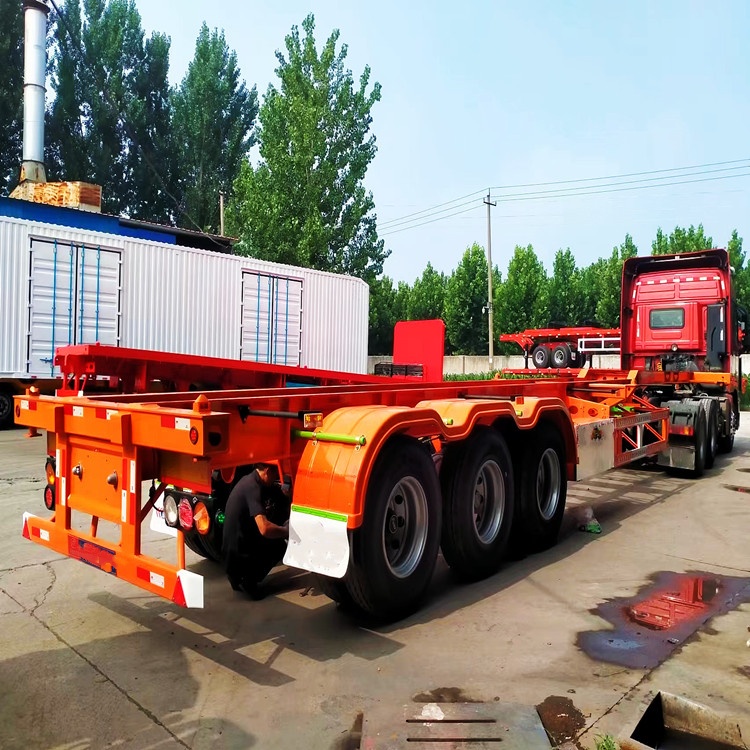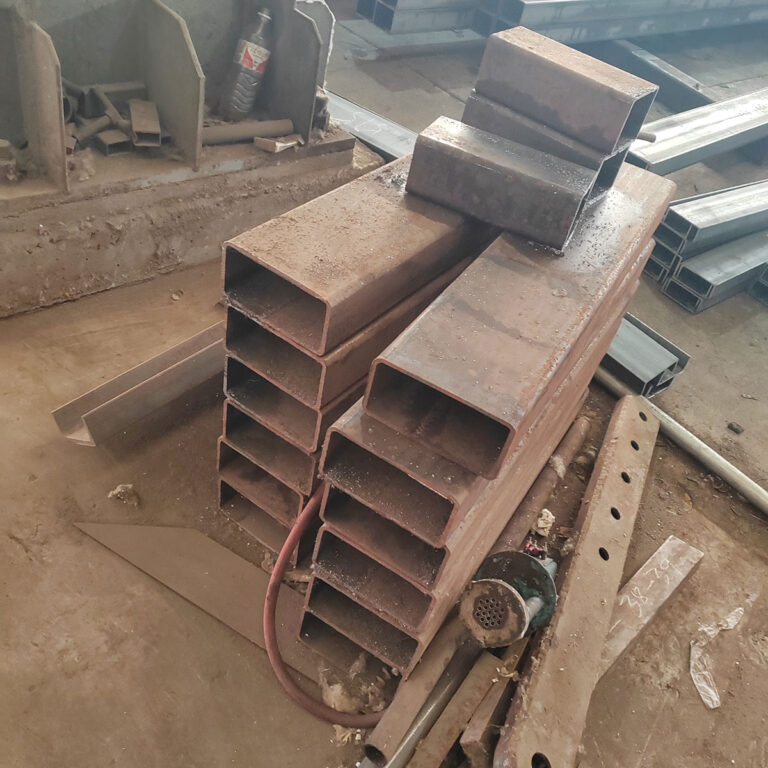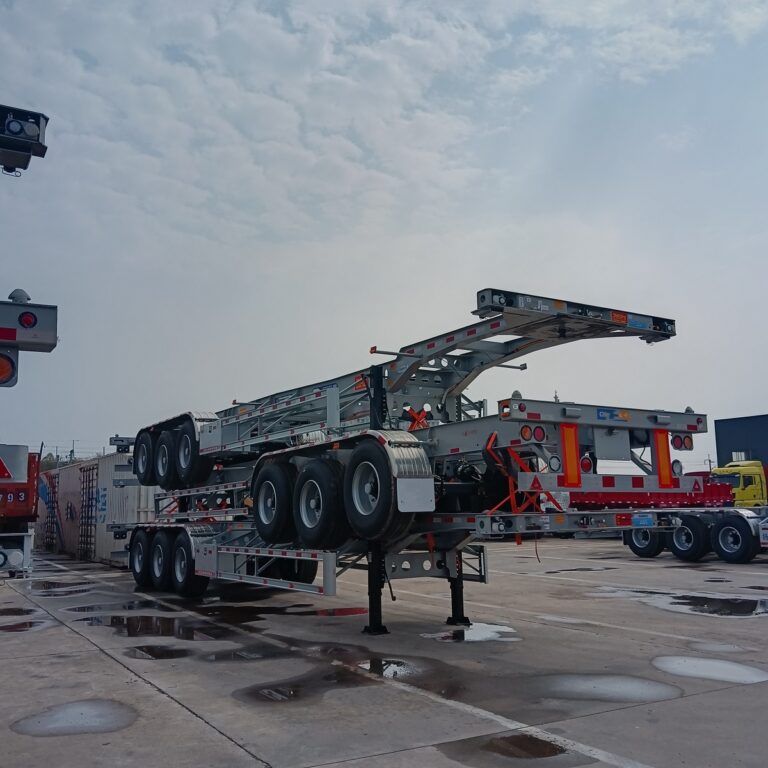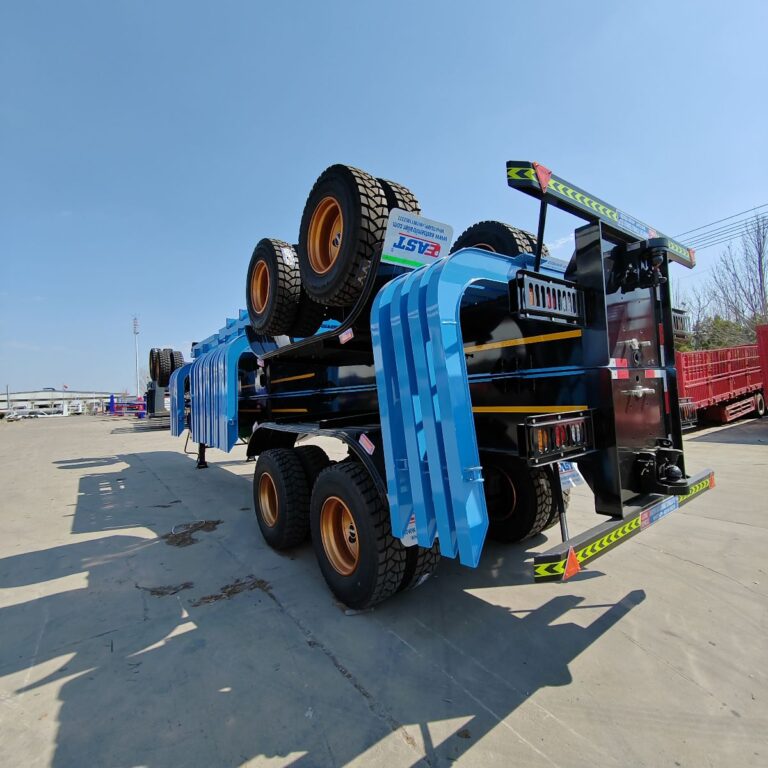


Semi Trailers for Middle East Markets: Complete Buying Guide from China (2026)
📌 In this guide: You’ll learn which semi trailer types sell best across Middle East markets, what specs to demand for 50°C desert heat and dusty job sites, realistic 2026 FOB prices from China, and a step-by-step import checklist covering Jebel Ali, Jeddah, and Dammam ports. Whether you’re a fleet manager in Riyadh or a contractor in Doha, this article gives you the data to buy with confidence.
The Middle East runs on heavy machinery. From the NEOM megaproject in Saudi Arabia to the Dubai 2040 Urban Master Plan, billions of dollars in infrastructure spending are driving demand for commercial trailers that can haul aggregate, fuel, steel, and equipment across harsh desert terrain. For fleet operators and procurement managers across the GCC, buying a semi trailer from China has become the standard play — you get factory-direct pricing, customization for regional conditions, and production capacity that local dealers simply can’t match.
This guide walks you through everything you need to know about sourcing semi trailers for Middle East operations in 2026: which trailer types fit which applications, what specifications matter most in Gulf conditions, what you’ll actually pay (with real FOB numbers), and how to navigate the import process end to end.
Why Middle East Buyers Source Semi Trailers from China
Three factors push Middle East buyers toward Chinese manufacturers:
1. Price gap of 30–55%. A 3-axle dump semi trailer that costs $28,000–$35,000 from a European brand runs $12,000–$18,000 FOB from a Chinese factory. Even after adding freight ($3,500–$5,500 to Jebel Ali), insurance, and 5% GCC import duty, the landed cost is still 20–40% below European alternatives.
2. Customization for desert conditions. Chinese factories routinely build trailers with upgraded suspensions (BPW or Fuwa 13-ton axles), heat-resistant tires (with higher speed ratings for 50°C+ ambient temps), reinforced frames for off-road hauling, and oversized fuel tanks for long desert hauls. These modifications add 5–10% to the base price — far less than what European brands charge for the same upgrades.
3. Delivery speed. A standard configuration can ship in 15–25 days; custom builds take 30–45 days. European manufacturers often quote 3–6 months for similar orders. When a project deadline is on the line, that difference matters.
Most In-Demand Semi Trailer Types for Middle East Markets
Dump Semi Trailers — The Construction Workhorse
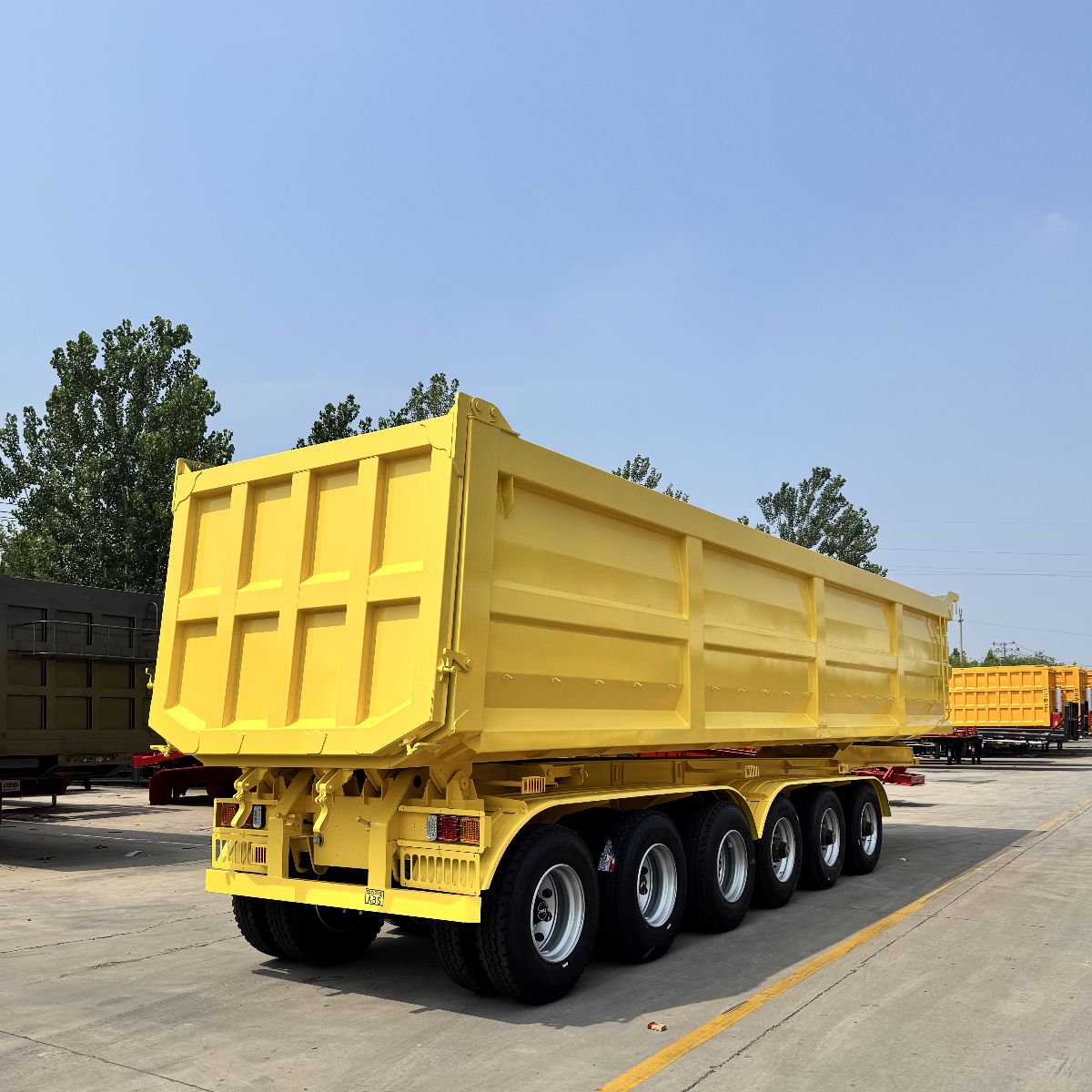
Dump trailers move sand, gravel, aggregate, and demolition waste on job sites across Saudi Arabia, UAE, and Qatar. The most common configurations are 3-axle rear-dump trailers with 30–40 m³ capacity and U-shape tubs for faster unloading of sticky materials like wet sand.
For Middle East use, look for Hardox 450 wear plates on the floor and sides — standard Q345 steel wears through in 8–12 months on abrasive Gulf sand, while Hardox lasts 3–5 years. A hydraulic cylinder from brands like HYVA or XBK is non-negotiable; cheap cylinders fail quickly under daily cycling in 45°C+ heat.
👉 Browse our dump semi trailer catalog — or see specific models like the Triple Axle Dump and Four-Axle Rear Dump.
Lowbed Semi Trailers — Heavy Equipment Haulers
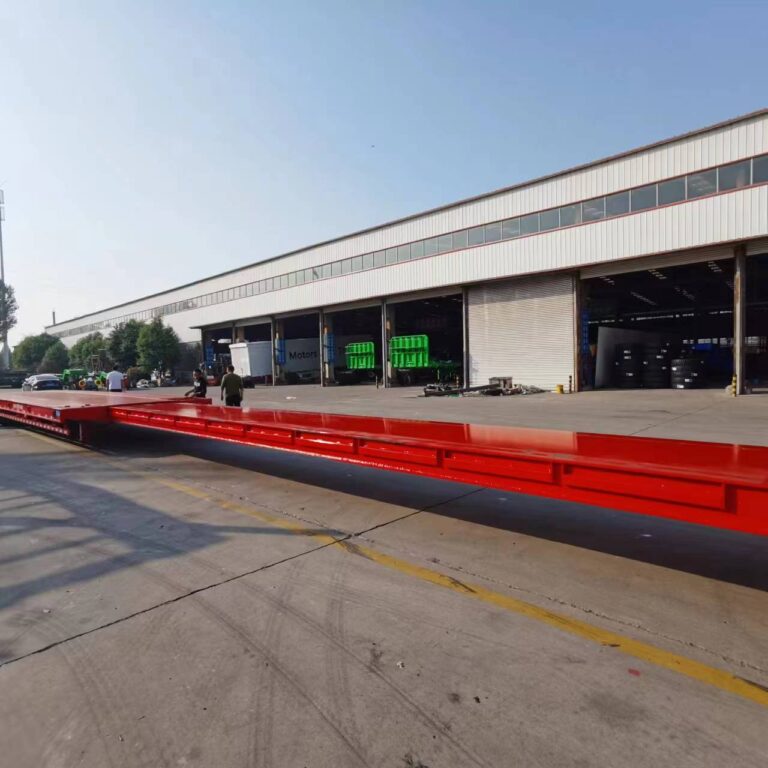
With massive construction projects requiring excavators, bulldozers, and cranes, lowbed trailers are essential. The most popular spec for Middle East buyers is a 3-axle lowbed with 60–80 ton payload, detachable gooseneck, and 800–900mm loading height. For oversized loads, 4-axle and 6-axle configurations handle 100–150 tons.
Critical spec for desert routes: spring suspension with heavy-duty dampers rather than air suspension. Air bags overheat and fail on long unsealed roads where ambient temperatures exceed 50°C.
👉 See our lowbed semi trailer range, including the Six-Axle Heavy Equipment Trailer and Four-Axle Lowbed.
Fuel Tank Trailers — Oil & Gas Sector
The Middle East’s oil and gas industry demands reliable fuel transport. A typical spec: 30,000–45,000 liter carbon steel or aluminum tank trailer, 3-axle, with bottom-loading valves, vapor recovery, and ADR-compliant fittings. Aluminum tanks save 1,500–2,000 kg over carbon steel, increasing payload per trip — a significant advantage when you’re running 10+ trips per day.
For Saudi Aramco and ADNOC contracts, tanks must meet API 650 standards and include emergency disconnect couplings. Chinese factories can produce these to spec — just make sure to provide the exact compliance documents required by your end client.
👉 Explore tank trailer options, including the Liquid Tank Trailer and Fuel Oil Tanker.
Flatbed Trailers — General Freight & Containers
Flatbeds handle steel coils, lumber, machinery, and ISO containers. A standard 3-axle 40ft flatbed with twist locks is the most versatile trailer in any fleet. For Middle East logistics companies running Dubai–Riyadh or Doha–Muscat routes, flatbeds with coil wells and removable side stakes offer the flexibility to switch between container transport and bulk cargo.
👉 View our flatbed trailer collection, including the Flatbed Transport Semi-Trailer and 5-Axle Flat Semi-Trailer.
Key Specifications for Middle East Operating Conditions
Buying a trailer designed for European roads and putting it to work in the Gulf is a recipe for breakdowns. Here’s what to specify:
| Component | Standard Spec | Middle East Upgrade | Why It Matters |
|---|---|---|---|
| Axles | 13T, BPW or Fuwa | 16T heavy-duty, brake drums upgraded | Higher payload margin for off-road routes |
| Tires | 12R22.5 standard | 12R22.5 heat-resistant, speed rating J | Prevents blowouts at 50°C+ road temps |
| Suspension | نظام التعليق الهوائي | Mechanical leaf spring, heavy-duty | Air bags overheat and fail on desert roads |
| Steel | Q345B main beam | Q690C or Hardox 450 wear areas | Abrasive sand wears through Q345 in months |
| Paint | Standard 2-coat | 3-coat marine-grade, UV-resistant | Intense UV degrades standard paint in 1 year |
| Electrical | Standard 24V | Sealed connectors, LED lights | Dust ingress causes 70% of electrical faults |
Semi Trailer Prices from China — 2026 FOB Guide for Middle East Buyers
Prices below are FOB (Tianjin or Qingdao) for standard configurations. Add 8–15% for Middle East upgrades listed above. All figures in USD.
| Trailer Type | Axles | Payload | FOB Price Range | Landed Cost (Jebel Ali) |
|---|---|---|---|---|
| Dump Semi Trailer | 3-axle | 40 m³ / 60T | $12,000–$18,000 | $17,500–$24,800 |
| Lowbed Semi Trailer | 3-axle | 60–80T | $15,000–$22,000 | $20,800–$29,000 |
| Fuel Tank Trailer | 3-axle | 30,000–45,000L | $18,000–$28,000 | $24,000–$35,500 |
| Flatbed Trailer | 3-axle | 40ft / 60T | $9,500–$14,000 | $14,800–$20,500 |
| Skeleton / Container Chassis | 3-axle | 40ft HC | $8,000–$12,000 | $13,200–$18,300 |
Landed cost estimate includes: ocean freight to Jebel Ali ($3,500–$5,500), marine insurance ($200–$400), 5% UAE import duty, and port handling charges ($800–$1,200). Saudi Arabia (Jeddah/Dammam) landed costs run 5–8% higher due to additional SASO certification fees.
How to Import a Semi Trailer from China to the Middle East — 6-Step Checklist
Step 1: Define Your Specs and Get Quotes
Send your requirements to 3–4 Chinese manufacturers. Include: trailer type, axle configuration, payload, material preferences (carbon steel vs. aluminum), tire brand preference, destination port, and any compliance requirements (SASO, GSO, ADR). Compare not just price but warranty terms, spare parts availability, and production timeline.
Step 2: Verify the Manufacturer
Request their business license, ISO 9001 certificate, and export qualification. Ask for video footage of their factory and recent shipments to Middle East clients. A legitimate manufacturer will have references in the region — ask for them.
Step 3: Confirm Compliance Documents
For Saudi Arabia: SASO Certificate of Conformity (mandatory for customs clearance). For UAE: ECAS conformity assessment may be required depending on trailer type. Most Chinese factories can arrange these through third-party inspection agencies (SGS, TUV, Intertek) for $300–$800 per shipment.
Step 4: Sign Contract and Pay Deposit
Standard terms: 30% T/T deposit, 70% balance before shipment (or against B/L copy). Use a proforma invoice that lists every spec, delivery date, and warranty clause. Avoid paying full amount upfront — ever.
Step 5: Production and Pre-Shipment Inspection
Production takes 15–30 days for standard configs, 30–45 for custom. Before the balance payment, request photos and videos of the finished trailer. For orders of 3+ units, hire a third-party inspector ($200–$400) to check welds, paint thickness, axle alignment, and brake function.
Step 6: Shipping and Customs Clearance
Ro-Ro (Roll-on/Roll-off) is the standard shipping method for trailers — drive it on at Tianjin, drive it off at Jebel Ali. Transit time: 18–28 days. Alternatively, flat rack shipping works for oversized trailers. Your freight forwarder handles the Bill of Lading, customs declaration, and port clearance. Have your SASO/ECAS certificate and commercial invoice ready for customs.
🚛 Get Your Middle East Trailer Quote Today
Tell us your cargo type, route, and destination port. You’ll get a custom spec sheet and FOB price within 24 hours.
💬 WhatsApp: +86 15315477956
📋 Online Inquiry Form
📱 WeChat: +86 15315477956
Frequently Asked Questions
What is the import duty for semi trailers in Saudi Arabia and the UAE?
Both Saudi Arabia and the UAE apply a 5% import duty on semi trailers under HS code 8716.39 as part of the GCC Common Customs Tariff. In addition, Saudi Arabia requires a SASO Certificate of Conformity, which costs $300–$800 depending on the inspection agency. The UAE may require an ECAS conformity assessment for certain trailer types. Factor in port handling charges of $800–$1,200 per unit at Jebel Ali, Jeddah, or Dammam.
Can Chinese semi trailers handle 50°C desert temperatures?
Yes — provided you specify the right components. The critical upgrades are: heat-resistant tires (speed rating J or higher), mechanical leaf spring suspension instead of air bags (which overheat), sealed electrical connectors with LED lighting, and marine-grade UV-resistant paint. These add 8–15% to the base FOB price but are essential for reliability in GCC conditions. A standard European-spec trailer without these upgrades will experience frequent breakdowns within 3–6 months.
How long does shipping take from China to Jebel Ali or Jeddah?
Ro-Ro shipping from Tianjin or Qingdao to Jebel Ali (Dubai) takes 18–25 days. To Jeddah Islamic Port, transit time is 20–28 days. Add 3–5 days for port clearance and documentation. For oversized trailers that can’t use Ro-Ro, flat rack container shipping adds 5–7 days. Total door-to-dealership timeline: 25–40 days from production completion, depending on destination port and customs efficiency.
What warranty do Chinese manufacturers offer on semi trailers?
Most reputable Chinese trailer factories offer a 12-month warranty from the date of shipment, covering frame welds, axles, and suspension components. Wear items (tires, brake linings, hydraulic seals) are typically excluded. Some manufacturers extend to 24 months on the main frame for an additional 3–5% of the trailer price. Always get warranty terms in writing on the proforma invoice, and clarify the claims process — ideally with photo evidence and replacement parts shipped by DHL.
Do I need SASO certification for every trailer shipment to Saudi Arabia?
Yes. Every shipment of semi trailers to Saudi Arabia requires a SASO Certificate of Conformity (CoC) obtained before shipment. The process involves a third-party inspection agency (SGS, TUV, Intertek, or BV) verifying that the trailer meets Saudi technical regulations. The inspection includes document review, physical product check, and testing verification. The CoC must be presented at Saudi customs for clearance. Without it, your shipment will be held at port and subject to re-export or destruction.
Should I buy aluminum or carbon steel tank trailers for fuel transport?
For Middle East fuel transport, aluminum tanks are worth the premium. A 30,000L aluminum tank weighs approximately 4,800 kg vs. 6,500 kg for carbon steel — that 1,700 kg weight saving translates to roughly 2,000 extra liters of fuel per trip. At 10 trips per day, the payload advantage pays back the $6,000–$9,000 price difference in 4–6 months. Aluminum also doesn’t rust, which matters in humid coastal environments like Dubai and Dammam. However, for non-corrosive liquids or short-haul routes, carbon steel remains a cost-effective choice.
Why Choose Nanou Trailer?
Shandong Nanou Trailer Manufacturing Co., Ltd. has been building semi trailers for export markets since 2004, with over 20,000 units delivered to 40+ countries. Here’s why Middle East fleet operators choose us:
✅ GCC-specific builds. Every trailer destined for the Middle East gets the desert-ready package: heat-resistant tires, mechanical suspension, sealed electronics, and UV-resistant paint — all standard, not upsells.
✅ Compliance support. We arrange SASO, GSO, and ECAS certification through partner inspection agencies. You receive a complete document pack before shipment, so customs clearance is straightforward.
✅ Spare parts in the region. We maintain a spare parts network serving Dubai, Riyadh, and Doha. Common wear items (brake chambers, axle seals, hydraulic fittings) ship from regional stock — no 3-week wait from China.
✅ Transparent pricing. Our quotes itemize every component, upgrade, and certification cost. No hidden charges, no surprise add-ons when the trailer reaches port.
🚛 Ready to Source Your Next Fleet of Trailers?
Whether you need 1 trailer or 50, we’ll build it to your spec and deliver it to your port. Get a detailed quote in 24 hours.
💬 WhatsApp: +86 15315477956
📋 Online Inquiry Form
📱 WeChat: +86 15315477956 | 🌐 www.nanou-trailer.com