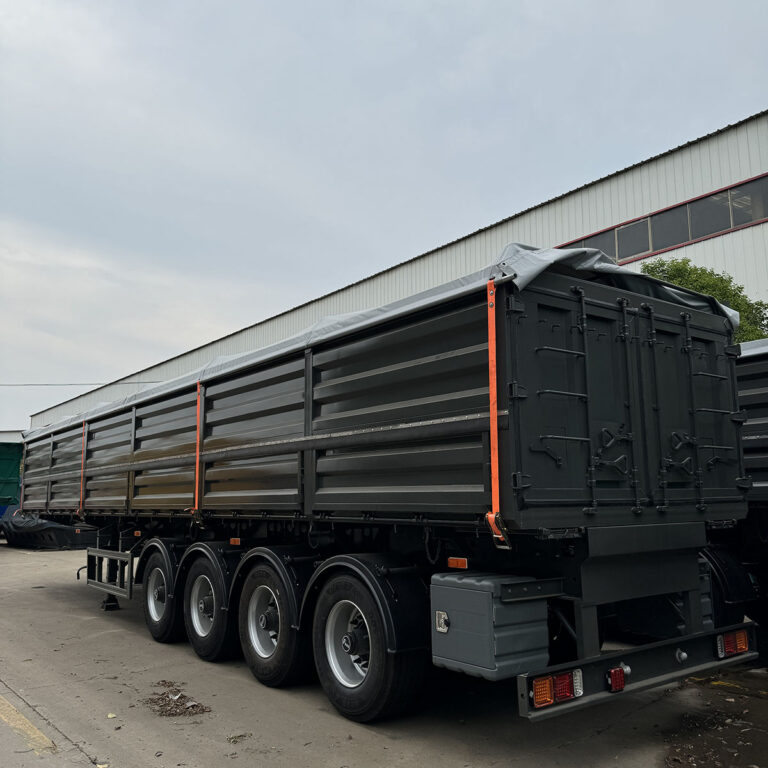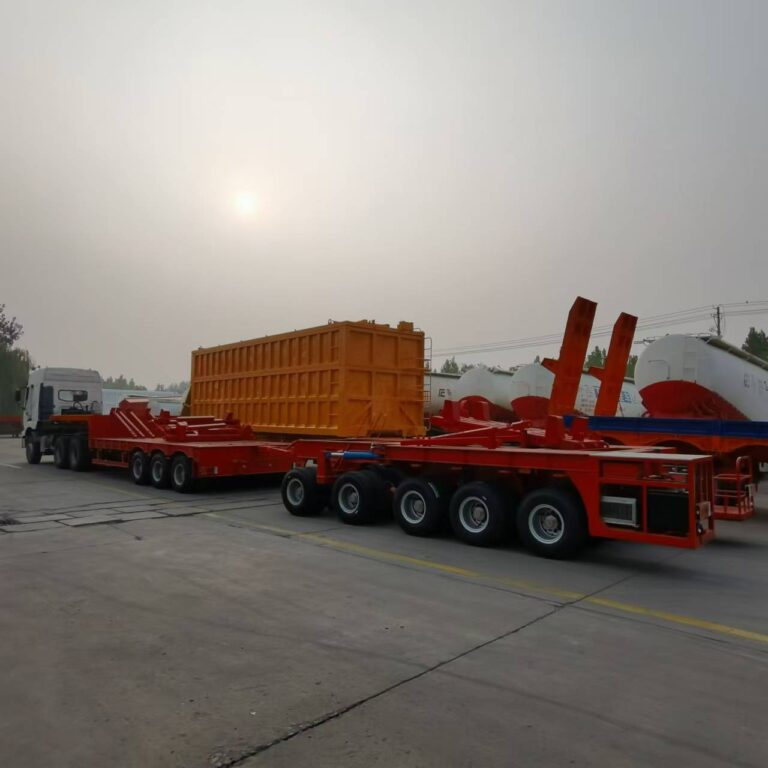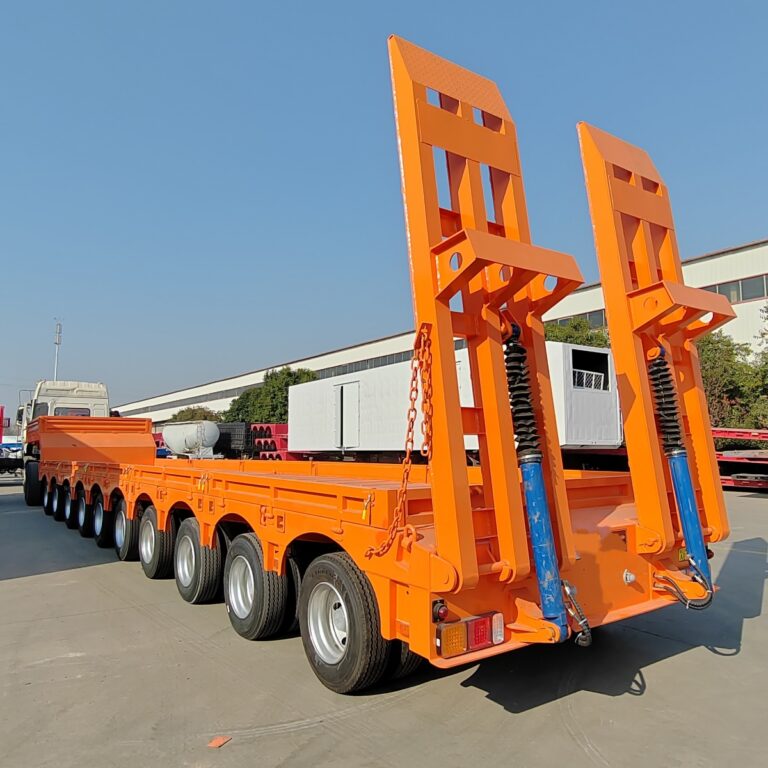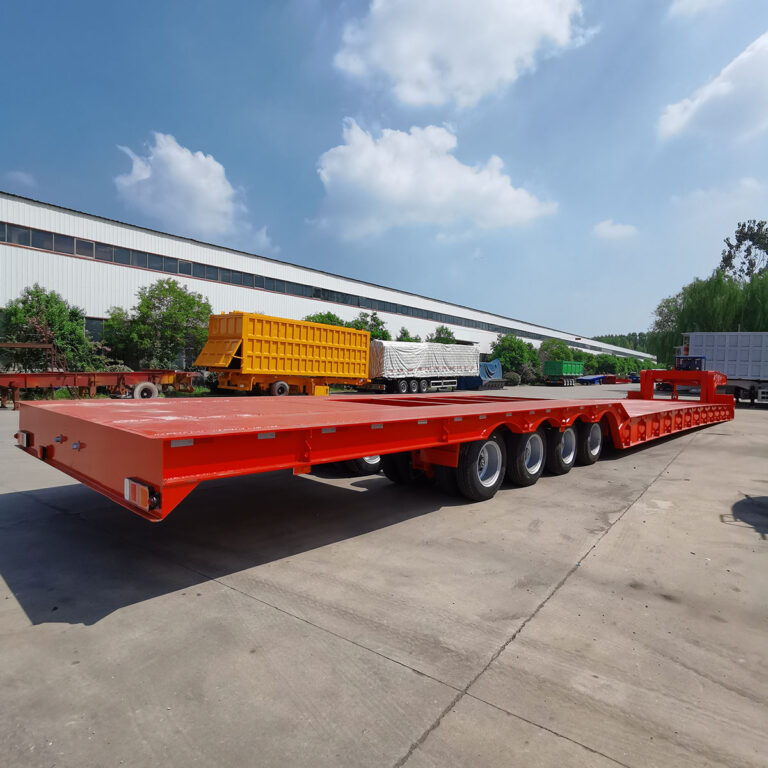


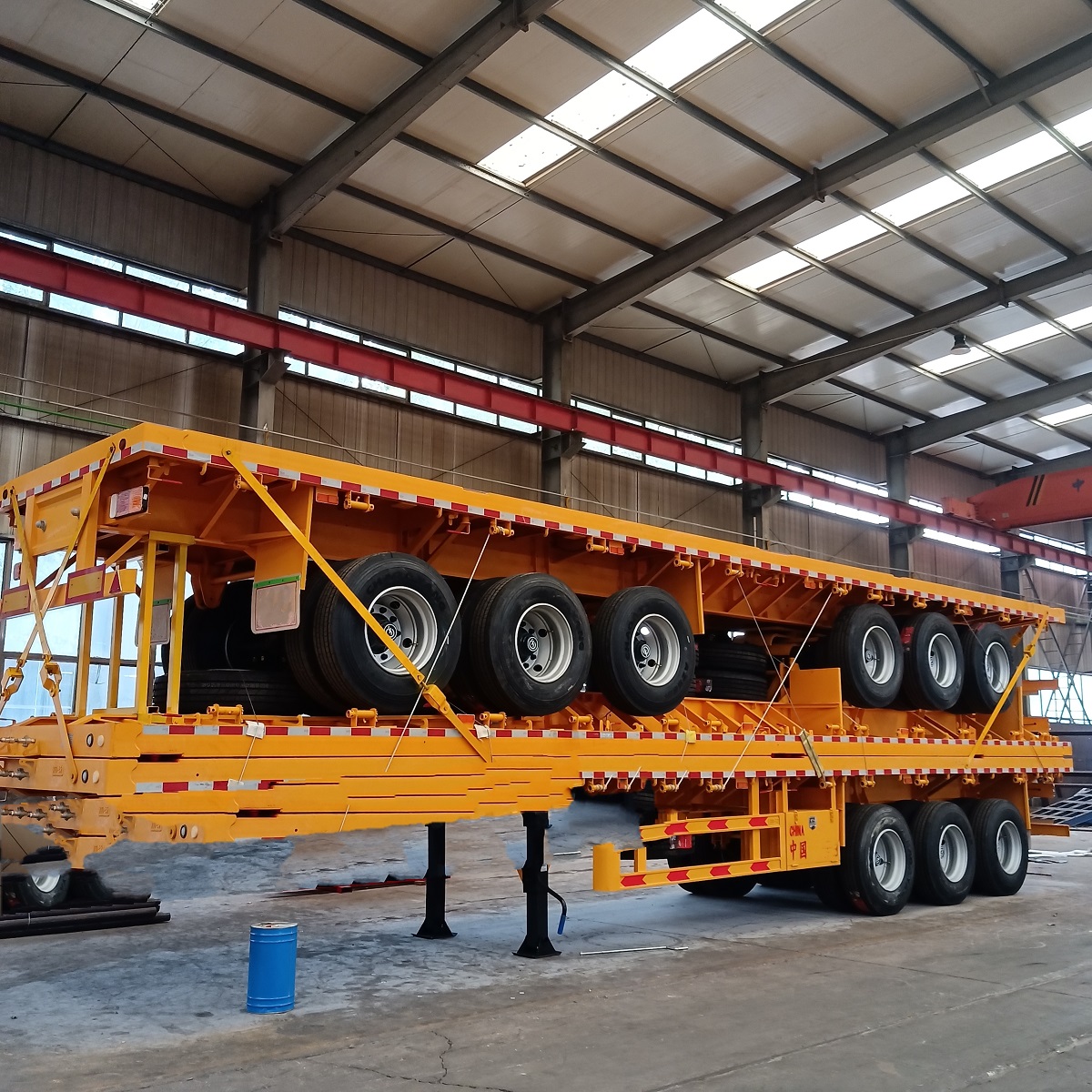
Characteristics of three-axis flatbed transport semi-trailer
A three-axis flatbed transport semi-trailer is a heavy-duty, versatile vehicle designed for transporting large, heavy, or oversized loads. Here are the key characteristics of such a trailer:
- Three Axles (Tri-Axle Configuration)
1.Weight Distribution: The three axles are strategically placed to evenly distribute the weight of the cargo across the trailer. This helps reduce stress on each axle and improves the stability and load-bearing capacity.
2.Increased Load Capacity: A tri-axle configuration typically increases the payload capacity of the trailer compared to a two-axle model, often allowing it to carry between 40,000 and 60,000 kg (88,000 to 132,000 lbs), depending on the design.
3.Improved Stability: The additional axle provides better balance, especially for heavy or unevenly distributed loads, which is crucial for safety during transportation.
- Flatbed Design
4.Open Platform: The trailer has a flat, open deck with no sides or roof. This makes it ideal for transporting large, bulky, or irregularly shaped cargo that doesn’t need to be enclosed, such as construction equipment, machinery, or vehicles.
5.Easy Loading and Unloading: Flatbed trailers are commonly used because they allow for easy access from the sides, rear, or even the top (depending on the cargo and method of loading/unloading).
6.Versatile Cargo: The flatbed can accommodate a wide variety of loads, including heavy machinery, construction materials (steel beams, pipes, etc.), vehicles, and other large items.
- High Strength Frame
7.Durable Construction: The frame of the semi-trailer is typically made from high-strength steel or other durable materials to ensure it can withstand heavy and potentially hazardous loads without warping or damage.
8.Reinforced Structure: The three-axle design ensures the trailer remains rigid under heavy weight, and the frame is often reinforced in key areas to prevent bending or deformation under stress.
- Load Capacity and Length
9.Payload Capacity: Depending on the design and the specific material used in construction, a three-axis flatbed transport semi-trailer can typically carry up to 60,000 kg (132,000 lbs) or more, with the specific weight limit depending on road regulations in different regions.
10.Length: These trailers are typically longer than standard trailers, ranging from 12 meters (39 feet) to over 15 meters (49 feet), allowing for longer loads to be carried.
- Suspension System
11.Enhanced Shock Absorption: The suspension system in a tri-axle flatbed trailer is designed to absorb shocks and vibrations while driving over rough terrain. This helps to protect both the cargo and the trailer from damage.
12.Air or Leaf Spring Suspensions: Many three-axle flatbed trailers use air suspension or leaf springs for a smoother ride, especially when carrying heavy loads. Air suspension provides more flexibility and better load distribution.
- Towing Mechanism
13.Fifth-Wheel Coupling: As a semi-trailer, it is designed to be towed by a truck via a fifth-wheel coupling. The coupling mechanism connects the front of the trailer to the towing vehicle, providing stability during transport.
14.Compatibility with Multiple Towing Vehicles: These trailers are typically compatible with a wide range of heavy-duty trucks and tractor units, making them adaptable to different fleet needs.
- Loading and Unloading Features
15.Ease of Access: The flatbed allows for multiple loading and unloading options, such as cranes, forklifts, or ramps. Some models may be equipped with a ramp for easier loading and unloading of vehicles.
16.Tie-Down Points: The trailer is often equipped with various tie-down points (such as rings or straps) to secure the cargo during transport, preventing it from shifting and ensuring safe transportation.
- Braking and Safety Systems
17.Air Braking System: Most three-axle flatbed trailers are equipped with an air brake system, which provides strong, reliable braking performance, especially for heavy loads.
18.Anti-lock Braking System (ABS): Many modern flatbed trailers come with ABS to prevent wheel lock-up during emergency braking, improving overall safety.
19.Reflective Tape or Lights: To increase visibility, these trailers are often fitted with reflective tape, marker lights, and safety markers, especially if they carry wide or oversized loads.
- Material Handling Accessories
20.Side Rails and Fenders: Some models feature removable side rails or fenders, which can help secure the cargo or prevent debris from falling off the trailer.
21.Extendable Versions: Some three-axle flatbed trailers are designed to be extendable, allowing for even longer cargo, such as large machinery or oversized construction materials.
- Durability and Longevity
22.Long-Lasting: These trailers are designed for heavy-duty use and are built to withstand harsh conditions, whether it’s extreme weather or rough handling. This makes them ideal for industries like construction, manufacturing, and logistics.
Applications:
23.Construction and Infrastructure: Transporting large equipment like bulldozers, cranes, and excavators.
24.Automobile Transport: Moving cars, buses, or even trucks.
25.Oversized and Overweight Cargo: Transporting large industrial equipment, wind turbines, or prefabricated building sections.
The three-axle flatbed transport semi-trailer is a robust and adaptable solution for transporting large, heavy, or oversized loads. Its combination of durability, versatility, and high load capacity makes it a key component in logistics and transportation, especially for industries that deal with large, heavy items.