

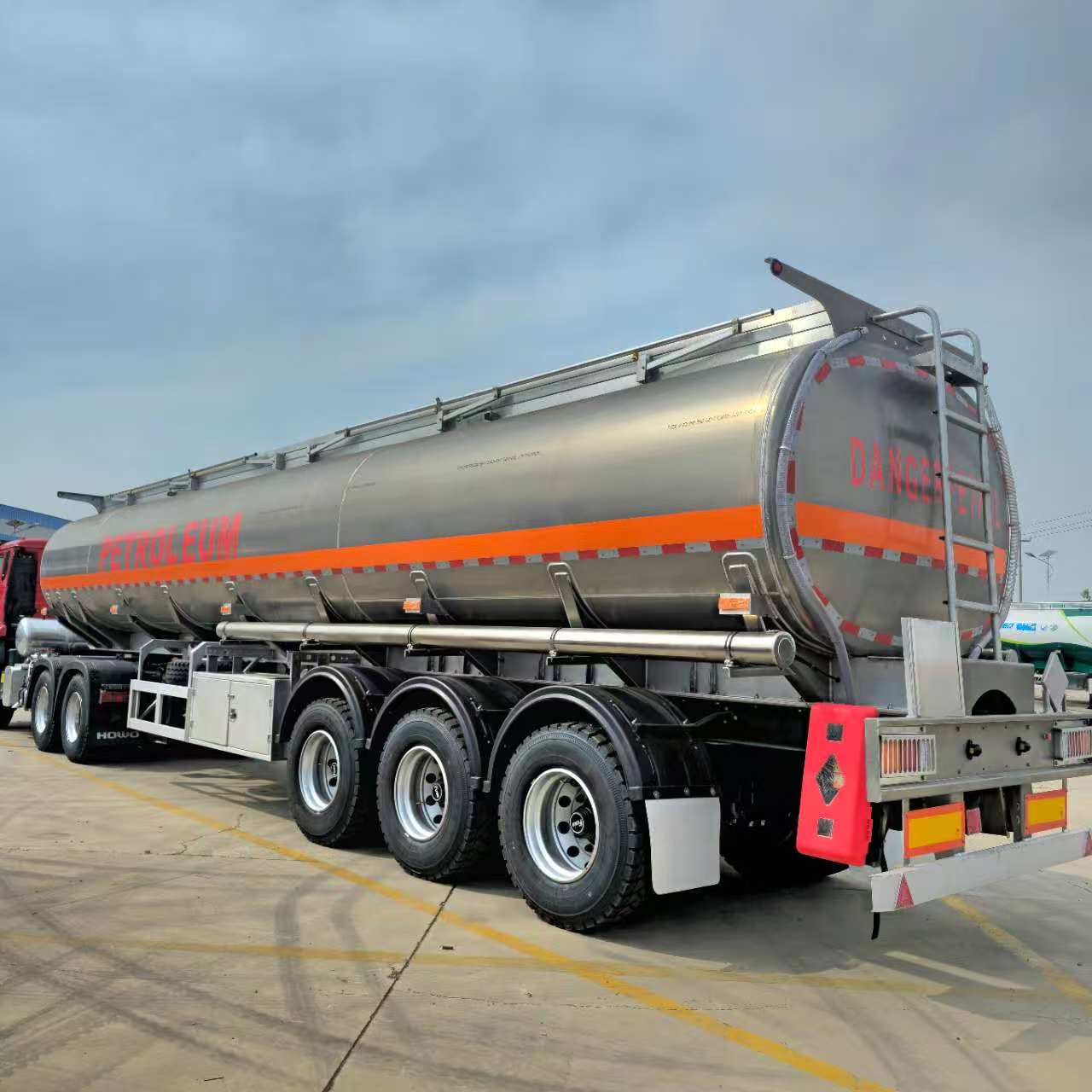
Working principle of aluminum alloy tanker truck
The working principle of aluminum alloy tank trucks is based on fluid mechanics and pressure control, which converts solid or liquid materials inside the tank into a fluidized state through compressed air, achieving efficient and safe loading, unloading, and transportation. The following is a detailed explanation of its core working principle:
1、 Core working principle: fluidized conveying
The workflow of aluminum alloy tank trucks can be divided into three stages: inflation, fluidization, and unloading. The core is to suspend the material into a liquid like flow state through compressed air:
Compressed air generation
Power source: Utilizing the built-in air compressor (such as screw or piston) of the tanker truck, the external air is compressed to 0.2-0.3MPa (some models can reach 0.4MPa) through engine drive or independent motor power supply.
Gas treatment: Compressed air is dried, filtered, and transported through pipelines to the gas chamber (distribution plate or fluidized bed) at the bottom of the tank.
Fluidization of materials
Function of the air chamber: The air chamber evenly disperses compressed air into tiny bubbles, penetrating the material layer at the bottom of the tank (such as cement, fly ash, and other powder particles).
Suspension effect: When bubbles rise in the material, the friction between particles decreases, and the material gradually suspends, forming a fluidized bed similar to a liquid. At this point, the material density decreases and the fluidity increases, allowing it to be transported through pipelines like a liquid.
Pressure control and unloading
Pressure monitoring: Install pressure sensors inside the tank to monitor real-time changes in air pressure. When the pressure reaches the rated value (usually 0.15-0.25MPa), the system automatically opens the discharge valve.
Unloading process: The fluidized material is driven by pressure and transported to the target location (such as storage tanks, mixing plants, etc.) through the discharge port at the top of the tank or the pipeline on the side.
Residual material cleaning: After unloading is completed, residual materials in the pipeline can be removed through a reverse blowing system (such as compressed air reverse blowing) to avoid blockage.
2、 Key equipment and structural support
The working principle of aluminum alloy tank trucks relies on the following core equipment and structural design:
air compressor
Type: Screw type (high efficiency, low noise) or piston type (simple structure, low cost).
Function: Provides stable high-pressure air and is the power source for fluidized conveying.
Gas chamber (distribution board)
Material: Aluminum alloy or stainless steel, corrosion-resistant and lightweight.
Structure: Porous plate or sintered metal mesh to ensure even distribution of compressed air and avoid local material agglomeration.
Tank design
Sectional shape: Adopting a square or elliptical cross-section to lower the center of gravity and enhance rollover stability.
Warehouse structure: Some tanks are divided into 2-4 independent compartments, supporting the simultaneous transportation of multiple types of materials and improving flexibility.
Insulation layer: When transporting liquid materials (such as asphalt and chemical raw materials), an insulation layer is added to the outside of the tank to maintain temperature stability.
Discharge system
Unloading valve: Pneumatic or electric control, quickly open/close to prevent material leakage.
Pipeline design: Using large-diameter, low resistance pipelines to reduce material transportation resistance and improve unloading speed.
3、 Typical application scenarios and material types
The working principle of aluminum alloy tank trucks is applicable to the fluidized transportation of various materials, mainly divided into the following two categories:
Powder and granular materials
Representative materials: cement, fly ash, lime powder, chemical raw materials (such as plastic pellets).
Transportation characteristics: Efficient unloading needs to be achieved through fluidization to avoid dust pollution. Aluminum alloy tanks are corrosion-resistant, easy to clean, and suitable for long-term transportation of such materials.
Liquid material
Representative materials: gasoline, diesel, edible oil, chemical liquids (such as acid and alkali solutions).
Transportation characteristics: Utilizing the sealing (aluminum alloy welding process) and pressure resistance of the tank body to ensure that the liquid does not leak. Some models are equipped with heating systems to maintain fluidity when transporting high viscosity liquids such as asphalt.
4、 Summary of advantages: Aluminum alloy material enhances the working principle
The working principle of aluminum alloy tank trucks has been further optimized due to material characteristics:
Lightweight improves efficiency: the weight of the tank is reduced, the energy consumption of the air compressor is reduced, and fluidized conveying is more energy-efficient.
Corrosion resistance and extended service life: The aluminum alloy oxide film protects the tank body, reduces material residue and corrosion, and ensures long-term smooth operation of the gas chamber and pipeline.
Enhanced safety: The low center of gravity design combined with the toughness of aluminum alloy reduces the risk of rollover and is less prone to cracking and leakage during collisions.
Environmental compliance: Good sealing, reduces dust or liquid leakage during transportation, and meets hazardous chemical transportation standards.