

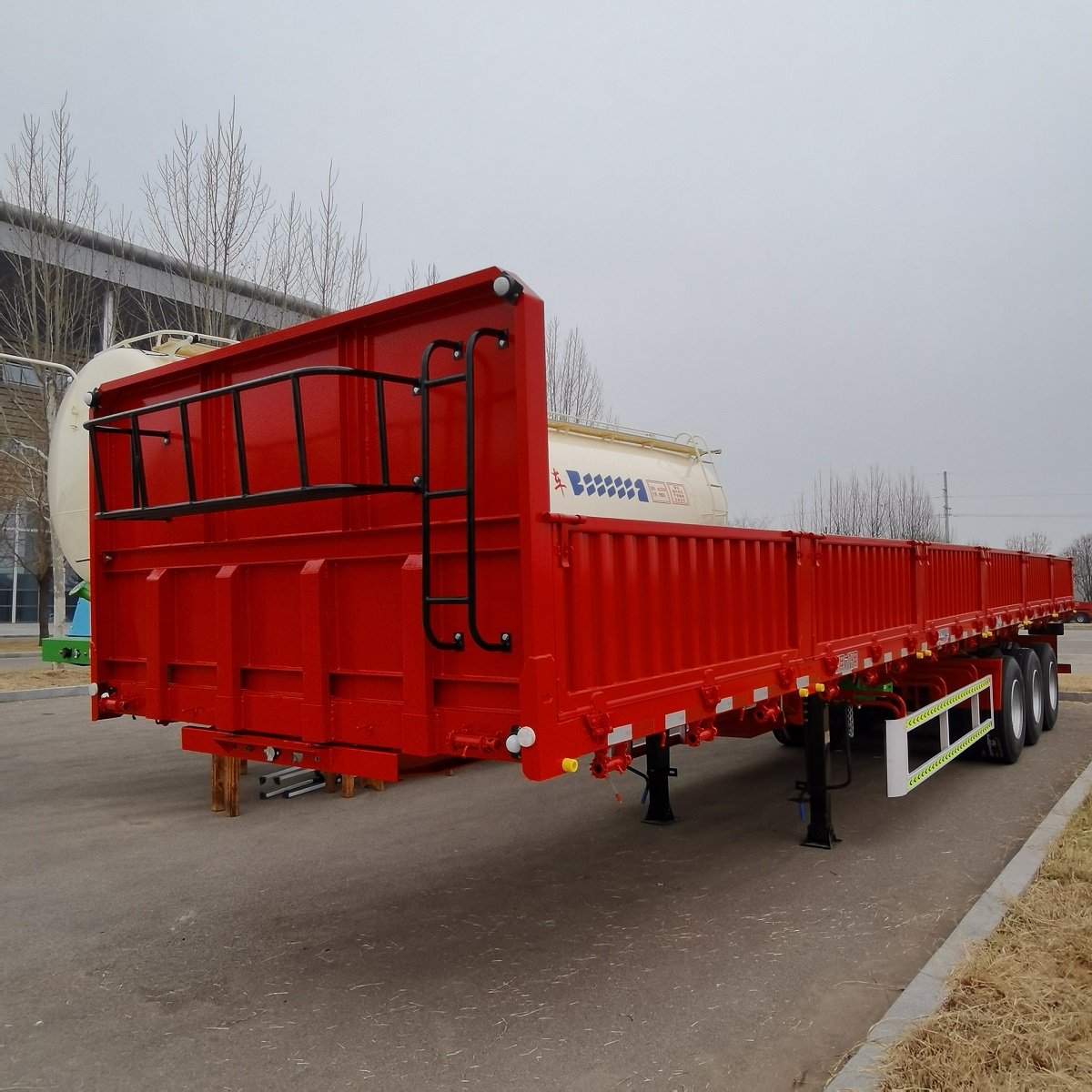
Design characteristics of a semi-trailer with a rollover dump truck
The design characteristics of a dump semi-trailer are mainly reflected in five aspects: an efficient hydraulic rollover system for unloading, a high-strength and lightweight frame structure, a flexible and adaptable customized carriage, a safe and durable stability design, and intelligent and modular maintenance upgrades. The specific analysis is as follows:
- Hydraulic rollover system: the core of efficient unloading
Bidirectional rollover structure: The carriage can tilt to the left or right and be quickly unloaded through hydraulic cylinder drive. For example, some models use a combination of 6 hydraulic cylinders (including 2 120mm cylinder diameter hydraulic cylinders arranged in front of the locomotive) to ensure even lifting force and avoid interference with the tractor.
Displacement cylinder design: The rear of the vehicle is equipped with a large bore displacement cylinder. When the wheels are buried by cargo, the chassis can be laterally moved to help the vehicle escape and improve its adaptability to the terrain.
Direct push lifting mechanism: For long carriages and heavy loads, a direct push structure is adopted to reduce force loss during the lifting process and ensure stability. - A frame structure that combines high strength and lightweight
Material upgrade: High strength steel with a yield strength of ≥ 345MPa (such as AG750 high-strength steel plate) is used, and some vehicle models are optimized through structures such as W-shaped through beams and convex concave through beams to reduce their own weight while ensuring strength. For example, the 13 meter rollover semi-trailer of CIMC Dongyue weighs only 6800kg, which is 1.5 tons lighter than traditional models.
Partial weight reduction technology: By reducing the thickness of the bottom/side panels, using aluminum alloy legs, and prefabricated lower body parts, the vehicle weight is further reduced and fuel economy is improved. - Flexible and adaptable customized carriages
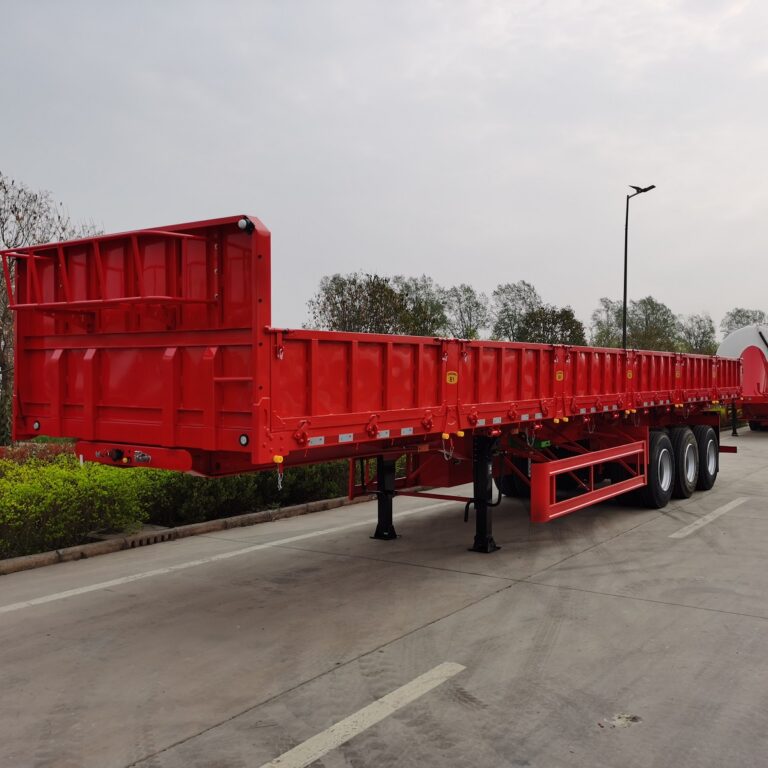
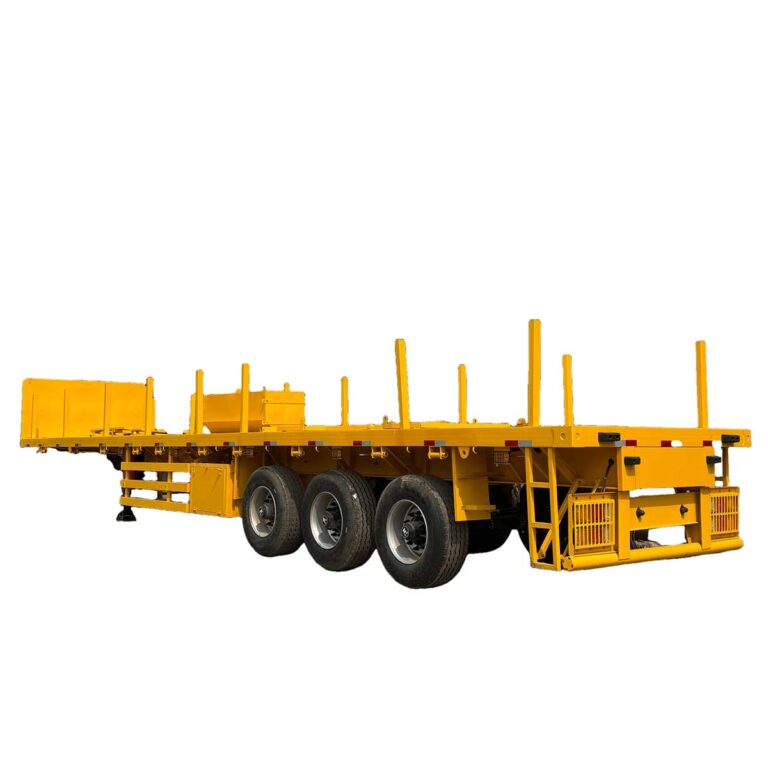
Multi form adaptation: providing various carriage structures such as flat plate, warehouse rack, and box, to match different cargo needs. For example, the warehouse grid design is convenient for stacking bulk goods, while the flat plate design is suitable for transporting ultra wide goods.
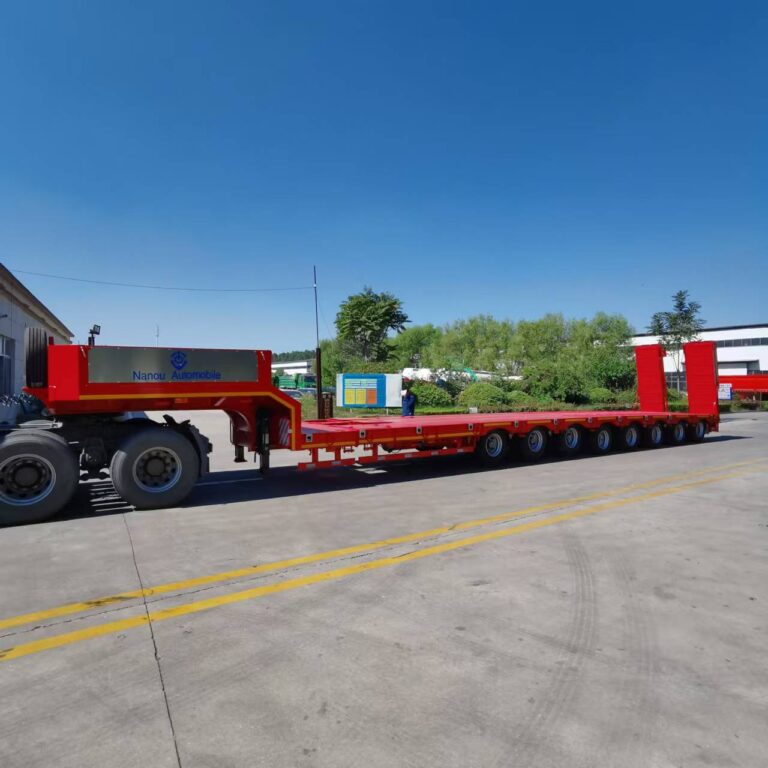
Functional Expansion: Optional accessories such as movable ladders, detachable guardrails, and hydraulic support legs can be installed to support the transportation of large equipment such as wind turbine blades and excavators.
Dual use vehicle design: such as Shouda’s lightweight rollover, the railing can be hung up and down, taking into account the needs of rollover unloading and standard box cargo distribution, and expanding the range of goods supply. - Safe and durable stability design
Low center of gravity layout: adopting a goose neck structure design, reducing the height of the bearing surface and minimizing the risk of lateral tilt during driving.
Limit and anti rollover device: A limit valve is installed in the middle of the vehicle to control the lifting angle of the oil cylinder, and a limit mechanism is installed on the main frame to prevent excessive lifting and lowering of the subframe.
Standardized welding process: Imported robot modular welding ensures perfect weld seams and avoids problems such as cracking and box expansion. - Maintenance and upgrade of intelligence and modularity
Electronic technology: optional vehicle monitoring systems, automatic alarm devices, etc. can be installed to improve transportation safety and management efficiency.
Modular accessories: Standardized accessory supply, low maintenance costs, and a service life of over 10 years. For example, the lower plate adopts an assembled structure, which is convenient for adjustment and maintenance.
New energy transformation: Some manufacturers have launched pure electric and hybrid side dump semi trailers to meet environmental policy requirements.