

Electric Truck Revolution: Is Your Fleet Ready for the Energy Transition?
Electric Truck Revolution: Is Your Fleet Ready for the Energy Transition?
April 8, 2026 — The commercial vehicle industry is undergoing its most significant transformation in a century. While Europe and China race ahead with electric truck mandates, Middle East logistics operators face a critical question: When should you electrify your fleet?
The Global Electric Truck Landscape
Regulatory Pressure Mounting
Europe:
- 2030: 45% CO2 reduction target for heavy-duty vehicles
- 2035: Effectively bans new diesel truck sales
- 2040: Full zero-emission mandate in UK, Germany, Netherlands
China:
- 2025: 30% of new commercial EV sales target
- 2030: Peak carbon emissions deadline
- Major cities restrict diesel truck access during daytime
United States:
- California ACT Rule: 100% zero-emission drayage trucks by 2035
- EPA Clean Truck Rule: 40% emissions reduction by 2032
- $7.5B federal investment in charging infrastructure
What This Means for Middle East Operators
While GCC countries haven’t announced diesel phase-out timelines, the global shift affects regional operators in three ways:
- Resale Value Risk: Diesel trucks purchased today may have limited resale markets by 2035
- Technology Obsolescence: Early EV adopters gain operational efficiency advantages
- Customer Requirements: Multinational clients increasingly demand green logistics partners
Electric Truck Economics: 2026 Reality Check
Total Cost of Ownership Comparison
Scenario: 40-ton Regional Haul Truck (Dubai-Riyadh Route)
| Cost Component | Diesel Truck | Electric Truck | Difference |
|---|---|---|---|
| Purchase Price | $120,000 | $280,000 | +$160,000 |
| Fuel/Energy (5 years) | $187,000 | $68,000 | -$119,000 |
| Maintenance (5 years) | $42,000 | $18,000 | -$24,000 |
| Carbon Tax/Fees (5 years) | $15,000 | $0 | -$15,000 |
| Resale Value (Year 5) | $36,000 | $84,000 | +$48,000 |
| 5-Year TCO | $328,000 | $282,000 | -$46,000 |
Key Insight: Despite 133% higher purchase price, electric trucks achieve 14% lower TCO over 5 years.
Break-Even Analysis
Annual Mileage: 120,000 km
Diesel Price: $0.85/liter (GCC subsidized)
Electricity Price: $0.08/kWh (commercial rate)
Diesel Truck:
- Fuel Efficiency: 3.2 km/liter
- Annual Fuel Cost: $31,875
- Annual Maintenance: $8,400
- Total Annual Operating Cost: $40,275
Electric Truck:
- Energy Efficiency: 1.8 kWh/km
- Annual Energy Cost: $17,280
- Annual Maintenance: $3,600
- Total Annual Operating Cost: $20,880
Annual Savings: $19,395
Payback Period: $160,000 ÷ $19,395 = 8.25 years
With Carbon Credits ($15,000/year value):
Annual Savings: $34,395
Payback Period: 4.65 years
Application Suitability Matrix
Best Use Cases for Electric Trucks (2026)
| Application | Suitability | Rationale |
|---|---|---|
| Port Drayage | ⭐⭐⭐⭐⭐ | Short routes, fixed schedules, depot charging |
| Urban Delivery | ⭐⭐⭐⭐⭐ | Low-speed, stop-start, zero-emission zones |
| Regional Distribution | ⭐⭐⭐⭐ | 200-400km routes, overnight charging sufficient |
| Construction Sites | ⭐⭐⭐⭐ | Closed environments, noise restrictions |
| Long-Haul Freight | ⭐⭐ | Range limitations, charging infrastructure gaps |
| Desert Operations | ⭐⭐ | Extreme heat impacts battery performance |
Range Reality Check
Current Generation Electric Trucks (2026):
| Model | Battery Capacity | Real-World Range | Charging Time (DC Fast) |
|---|---|---|---|
| Tesla Semi | 900 kWh | 500-600 km | 75 min (10-80%) |
| BYD Q2M | 422 kWh | 300-350 km | 90 min (10-80%) |
| SANY Electric Tractor | 512 kWh | 350-400 km | 80 min (10-80%) |
| XCMG Electric Truck | 450 kWh | 320-380 km | 85 min (10-80%) |
Important Note: Range decreases 20-30% in extreme heat (>45°C) and with full payload.
Infrastructure Requirements
Depot Charging Setup
Minimum Viable Installation:
Scenario: 10-truck electric fleet
Equipment Required:
- 10x DC Fast Chargers (150kW each): $450,000
- Electrical Substation Upgrade: $280,000
- Installation & Civil Works: $120,000
- Grid Connection Fees: $85,000
- Energy Storage System (optional): $180,000
Total Investment: $935,000 - $1,115,000
Per-Truck Infrastructure Cost: $93,500 - $111,500
Operating Costs:
- Electricity: $0.08/kWh × 432 kWh/truck/day × 300 days = $10,368/truck/year
- Maintenance: $2,000/charger/year × 10 = $20,000/year
- Total Annual Operating Cost: ~$125,000 for 10-truck fleet
Public Charging Network Status
GCC Region (April 2026):
| Country | DC Fast Chargers | Highway Corridors | Coverage Rating |
|---|---|---|---|
| UAE | 850+ | Dubai-Abu Dhabi, Dubai-Sharjah | ⭐⭐⭐⭐ |
| Saudi Arabia | 420+ | Riyadh-Jeddah, Riyadh-Dammam | ⭐⭐⭐ |
| Oman | 85+ | Muscat-Salalah | ⭐⭐ |
| Qatar | 120+ | Doha-Dukhan | ⭐⭐⭐ |
| Kuwait | 95+ | Kuwait City-Ahmadi | ⭐⭐ |
| Bahrain | 45+ | Manama-Isa Town | ⭐⭐ |
Gap Analysis: Long-haul routes (Dubai-Riyadh, Riyadh-Amman) lack adequate fast-charging coverage.
Hybrid Approach: The Pragmatic Transition Strategy
Why Not Go All-Electric Immediately?
Challenges for Middle East Operators:
- Infrastructure Gaps: Limited fast-charging on key trade routes
- Extreme Heat: Battery degradation in 50°C+ summer temperatures
- Payload Penalty: Batteries add 3-5 tons, reducing cargo capacity
- Capital Intensity: 133% higher purchase price strains cash flow
- Resale Uncertainty: 5-year-old EV truck market is unproven
Recommended Transition Pathway
Phase 1 (2026-2027): Pilot Program
Fleet Composition:
- 80% Diesel (existing + new purchases)
- 20% Electric (pilot deployment)
Actions:
- Deploy 3-5 electric trucks on fixed urban routes
- Install depot charging infrastructure
- Train maintenance team on EV systems
- Collect real-world performance data
- Establish relationships with EV manufacturers
Phase 2 (2028-2030): Selective Electrification
Fleet Composition:
- 60% Diesel
- 40% Electric/Hybrid
Actions:
- Expand electric fleet to 40-50% of total
- Electrify all port drayage operations
- Deploy electric trucks on regional distribution routes
- Evaluate hydrogen fuel cell options for long-haul
- Begin phasing out oldest diesel units
Phase 3 (2031-2035): Full Transition
Fleet Composition:
- 20% Diesel (long-haul, specialized)
- 80% Electric/Hydrogen
Actions:
- Complete urban fleet electrification
- Invest in renewable energy for charging
- Evaluate hydrogen infrastructure readiness
- Plan diesel truck disposal/resale strategy
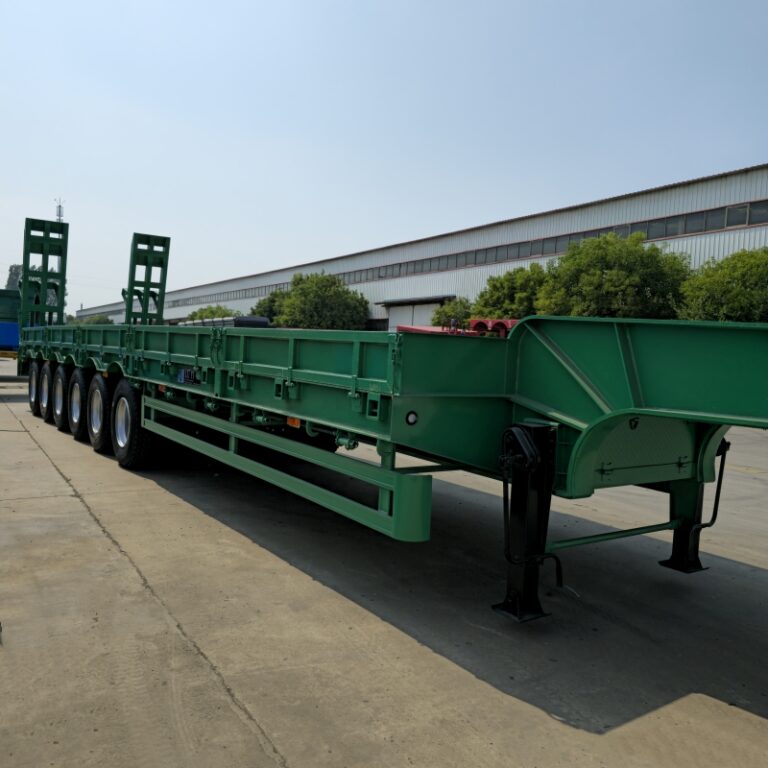
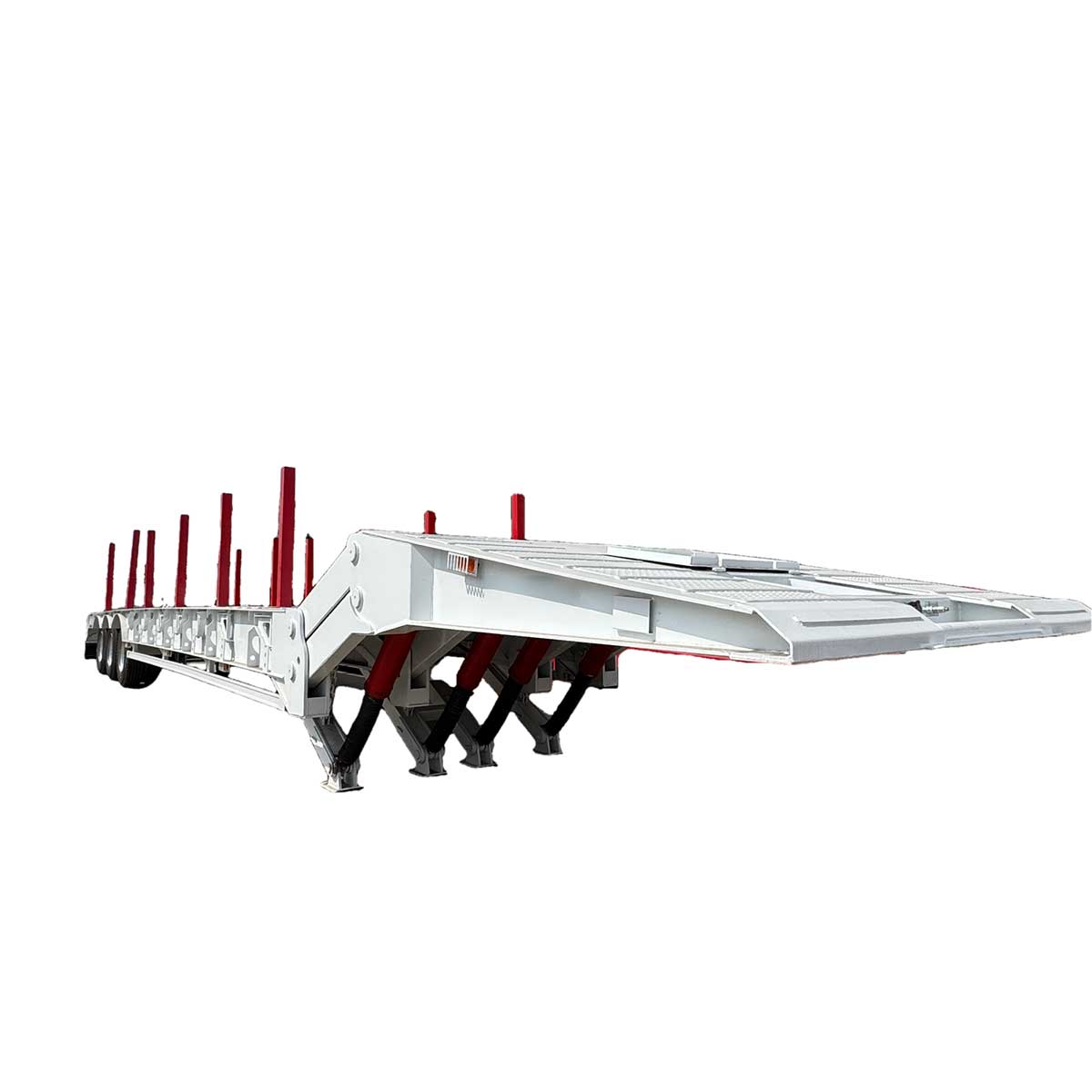
Nanou Electric Trailer Solutions
Electric-Compatible Trailer Portfolio
While we don’t manufacture electric prime movers, Nanou trailers are optimized for electric truck integration:
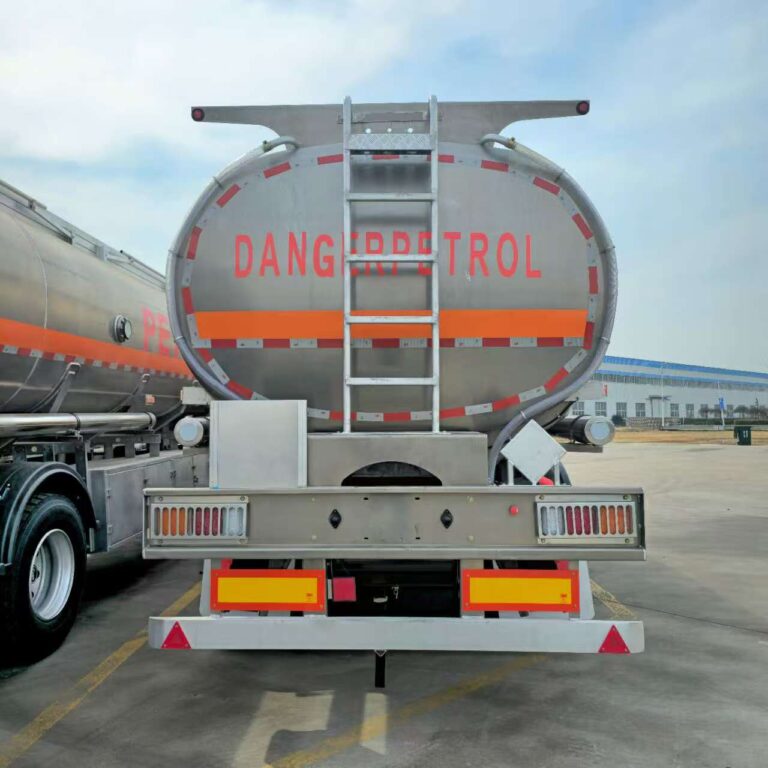
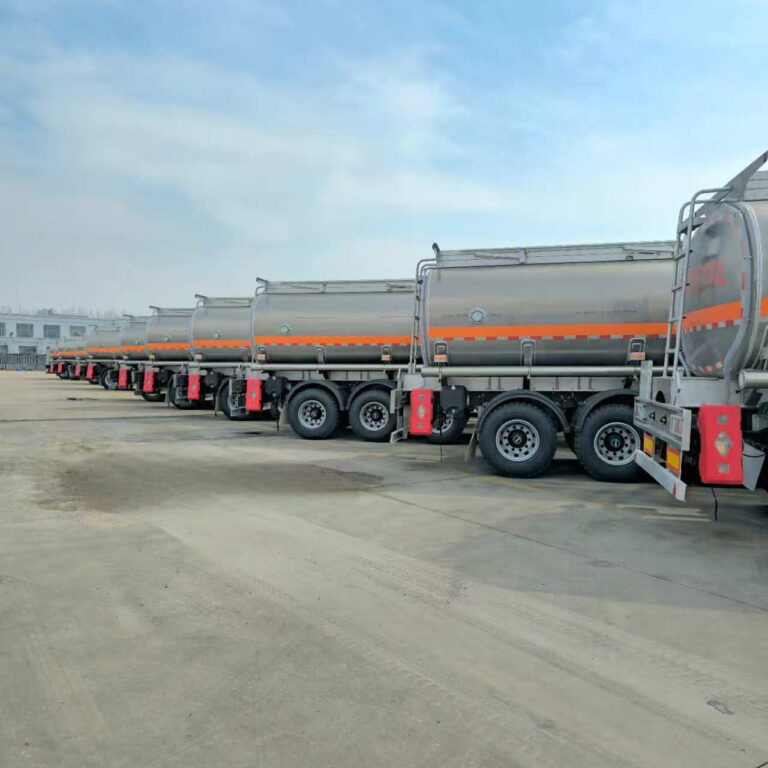
1. Lightweight Aluminum Tankers
Model: NANOU-EV-ALU-45000
- Tank Capacity: 45,000 liters
- Curb Weight: 6,200 kg (27% lighter than steel)
- Benefit: Extends electric truck range by 8-12%
- Price: $78,000
- Delivery: 25-30 days
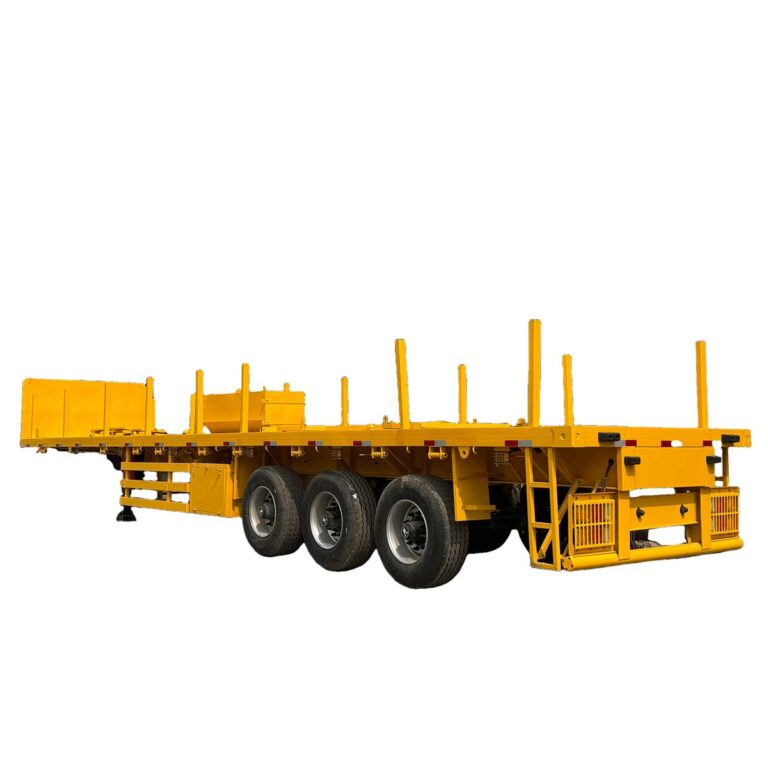
2. Aerodynamic Flatbed Trailers
Model: NANOU-EV-AERO-FLAT
- Payload: 40 tons
- Features: Integrated side skirts, rear fairing
- Benefit: Reduces drag by 15%, extends range 5-7%
- Price: $72,000
- Delivery: 25-30 days
3. Regenerative Braking-Compatible Trailers
Model: NANOU-EV-REGEN
- Feature: Enhanced braking system syncs with EV regen
- Benefit: Recovers 12-15% more energy during braking
- Price: $75,000 (premium over standard)
- Delivery: 30-35 days
Why Trailer Weight Matters for Electric Trucks
Physics of Electric Truck Efficiency:
Energy Consumption Formula:
E = (Rolling Resistance + Air Resistance + Gradient + Acceleration) × Distance
Key Variables:
- Rolling Resistance ∝ Vehicle Weight
- Air Resistance ∝ Velocity² × Drag Coefficient
- Acceleration Energy ∝ Mass
Weight Reduction Impact:
- 10% weight reduction = 5-7% energy savings
- 1,000 kg weight savings = 8-12 km additional range
- Aluminum vs Steel trailer = 2,300 kg savings = 18-28 km range extension
Real-World Example:
Route: Dubai Industrial City to Jebel Ali Port (85 km)
Steel Tanker Setup:
- Truck + Trailer + Payload: 48,500 kg
- Energy Consumption: 1.95 kWh/km
- Total Energy: 166 kWh
- Charging Stops: 0 (within range)
Aluminum Tanker Setup:
- Truck + Trailer + Payload: 46,200 kg
- Energy Consumption: 1.82 kWh/km
- Total Energy: 155 kWh
- Energy Savings: 11 kWh per trip (6.6%)
- Annual Savings (300 trips): 3,300 kWh = $264
Financial Incentives and Support Programs
GCC Government Initiatives
UAE:
- Dubai Green Fleet Program: 20% subsidy on EV truck purchases (up to AED 200,000)
- DEWA Charging Infrastructure Grant: 30% of installation costs
- Salik (Toll) Exemption: Electric trucks free from road tolls
- Estimated Annual Value: $15,000-25,000 per truck
Saudi Arabia:
- National Industrial Development and Logistics Program (NIDLP): Low-interest loans for green equipment
- Saudi Green Initiative: Tax credits for zero-emission vehicles
- Coming Soon: Direct purchase subsidies (announced 2026 Q1)
Qatar:
- Kahramaa EV Charging Program: Free charger installation for commercial fleets
- Customs Duty Exemption: 0% import duty on EV trucks and components
Carbon Credit Opportunities
Voluntary Carbon Market:
Emission Reduction Calculation:
- Diesel Truck: 1.8 kg CO2/km
- Electric Truck (GCC grid): 0.9 kg CO2/km
- Reduction: 0.9 kg CO2/km
Annual Reduction (120,000 km): 108 tons CO2
Carbon Credit Price (2026): $45-65/ton
Annual Credit Value: $4,860-7,020 per truck
10-Truck Fleet Annual Carbon Credit Value: $48,600-70,200
Risk Assessment and Mitigation
Technology Risks
| Risk | Probability | Impact | Mitigation |
|---|---|---|---|
| Battery Degradation | Medium | High | Choose LFP chemistry, maintain 20-80% SOC |
| Charging Infrastructure Delays | High | Medium | Start with depot charging, avoid route dependency |
| Resale Value Uncertainty | Medium | Medium | Lease vs buy, 5-year maximum ownership |
| Extreme Heat Performance | High | Medium | Pre-conditioning, shaded parking, thermal management |
| Grid Capacity Constraints | Medium | Low | Install energy storage, off-peak charging |
Financial Risks
| Risk | Probability | Impact | Mitigation |
|---|---|---|---|
| Higher-Than-Expected TCO | Low | High | 5-year TCO modeling, pilot before scaling |
| Subsidy Program Changes | Medium | Medium | Don’t rely on subsidies for core economics |
| Electricity Price Increases | Medium | Low | Lock in long-term power purchase agreements |
| Diesel Price Volatility | High | Medium | Hedge fuel costs, diversify energy sources |
Competitive Intelligence
What Are Regional Competitors Doing?
DP World (UAE):
- Announced 100% electric drayage fleet by 2030
- Currently operating 45 electric terminal tractors
- Investing $12M in depot charging infrastructure
Aramex:
- Pilot program: 20 electric delivery vans in Dubai
- Partnership with Tesla for Semi evaluation
- Target: 30% electric fleet by 2028
Bahri (Saudi Arabia):
- Evaluating electric trucks for port operations
- Waiting for charging infrastructure maturity
- Exploring hydrogen fuel cell options
Naqel Express:
- 15 electric trucks operational in Riyadh
- Focus on last-mile delivery segment
- Reporting 40% lower operating costs
Action Plan: Next 90 Days
Week 1-4: Assessment and Planning
- [ ] Audit current fleet utilization and routes
- [ ] Identify suitable routes for electric pilot (200-400 km range)
- [ ] Contact 3-4 EV truck manufacturers for quotes
- [ ] Engage local utility company about depot charging
- [ ] Apply for government incentive programs
Week 5-8: Pilot Preparation
- [ ] Select 3-5 trucks for initial pilot
- [ ] Finalize charging infrastructure design
- [ ] Train maintenance team on EV systems
- [ ] Establish baseline metrics (fuel, maintenance, uptime)
- [ ] Set up data collection and monitoring systems
Week 9-12: Pilot Launch
- [ ] Deploy electric trucks on selected routes
- [ ] Monitor performance daily (range, charging time, energy use)
- [ ] Collect driver feedback
- [ ] Adjust routes and schedules as needed
- [ ] Prepare Phase 2 expansion plan
Заключение
The electric truck revolution is not a question of “if” but “when.” For Middle East logistics operators, the optimal strategy is neither immediate full adoption nor complete avoidance. Instead, a measured, data-driven transition starting with pilot deployments allows you to:
- Learn Without Excessive Risk: Small-scale pilots limit capital exposure
- Build Internal Expertise: Train your team before full-scale rollout
- Capture Early Advantages: Lower operating costs, green branding, customer preference
- Influence Technology Development: Provide feedback to manufacturers on regional requirements
The companies that start learning today will lead the market tomorrow.