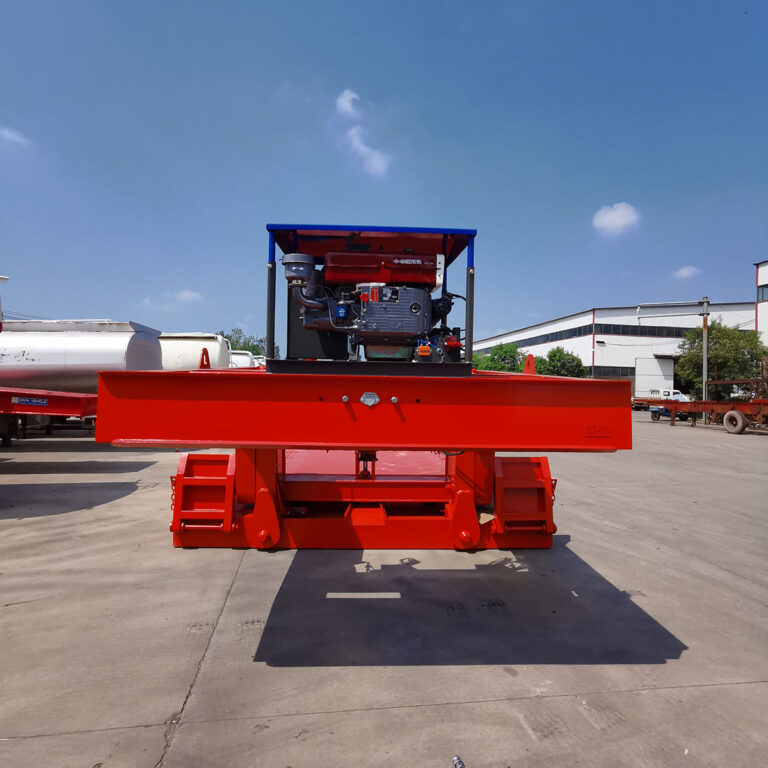


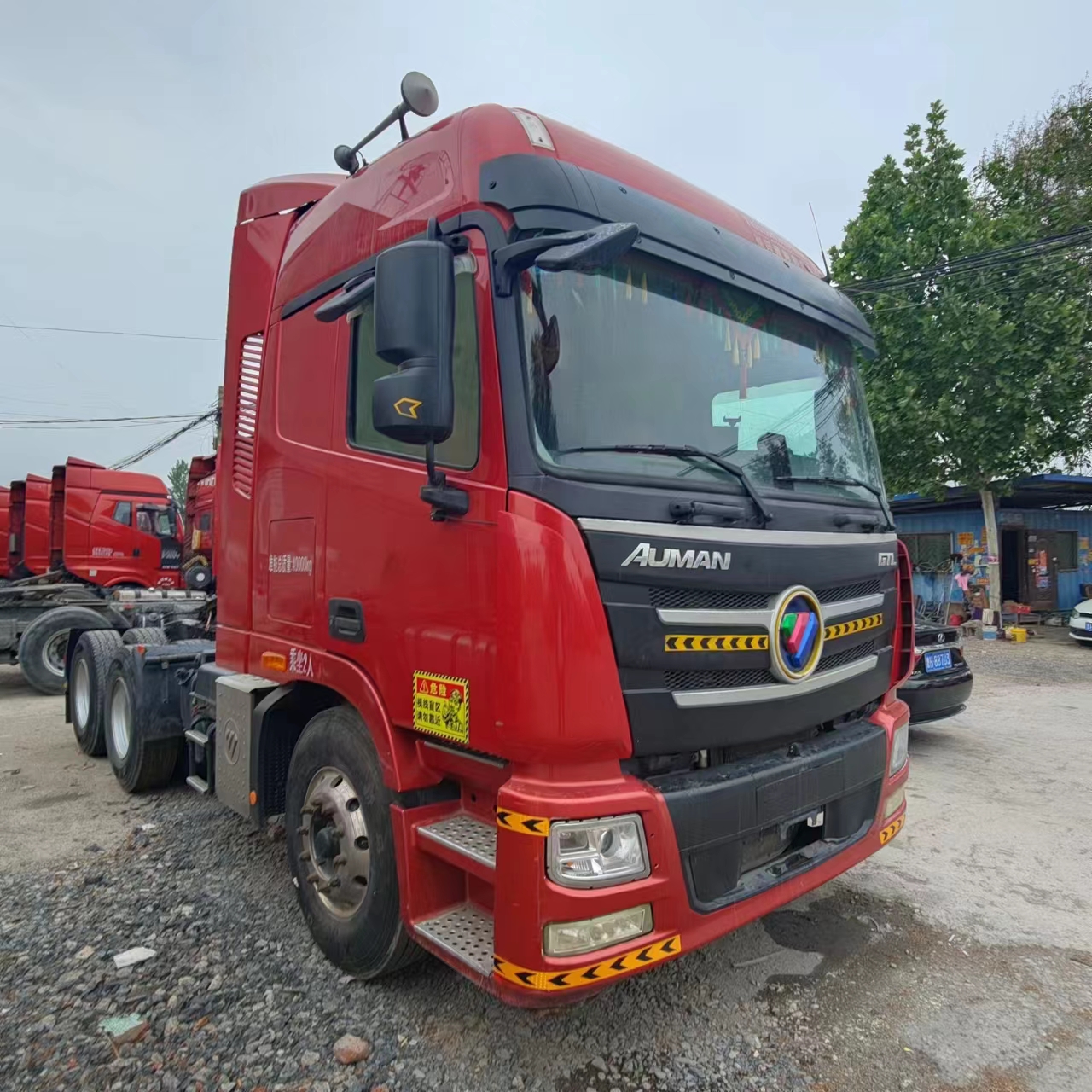
What are the advantages of a full trailer
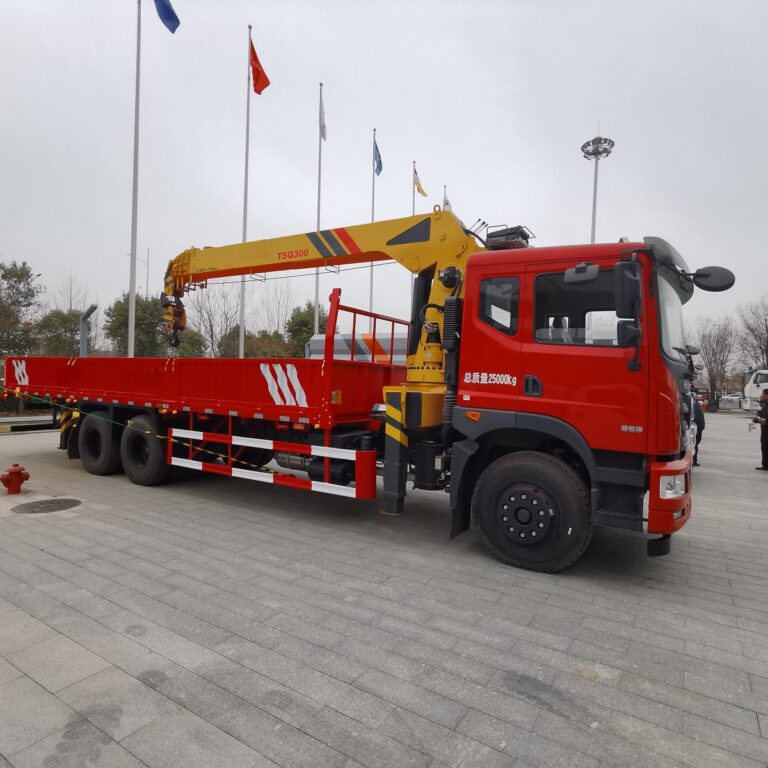
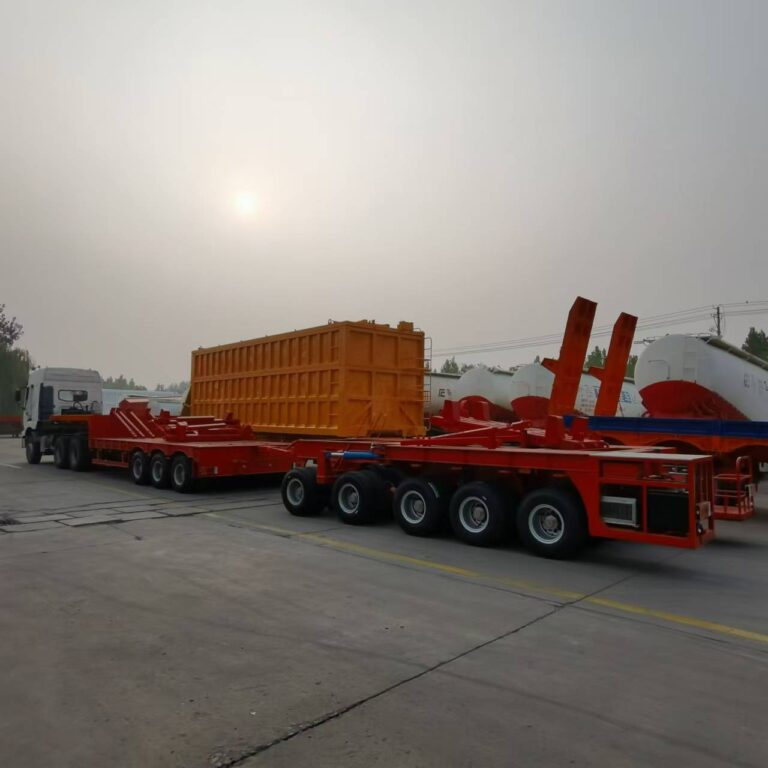
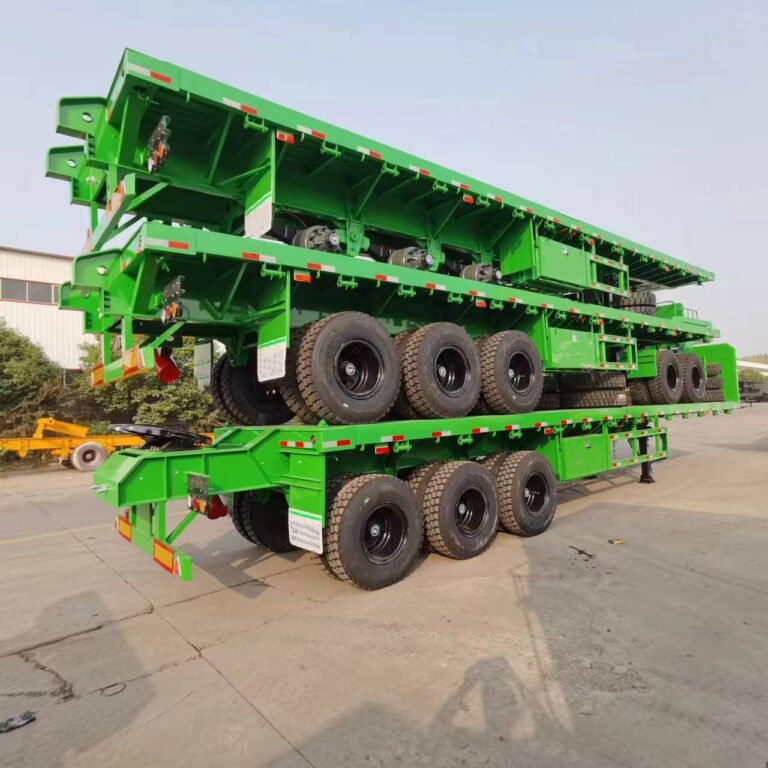
As an independent transportation unit, the full trailer is connected to the tractor through a traction device and has unique structural design and functional advantages. The following are the main advantages of full trailers, analyzed in detail based on their application scenarios and technical characteristics:
- Independent load-bearing, lightweight tractor
Load self-sustaining: All weight of the trailer (including cargo and its own structure) is supported by its own wheel bearings, and the tractor only needs to provide power and does not bear the load of the trailer. This design allows the tractor to choose lighter models (such as small trucks or specialized tractors), reducing purchase costs and fuel consumption.
Wide applicability: The same tractor can tow full trailers of different specifications, adapting to various cargo transportation needs and improving equipment utilization. - Flexible turning and strong maneuverability
Tow bar swing design: The trailer is connected to the tractor through a tow bar, allowing the trailer to swing at a certain angle relative to the tractor when turning. This characteristic makes it more flexible to operate on narrow roads, curves, or in areas such as factories and ports, with a smaller turning radius than semi trailers.
Reverse assist: Some full trailers are equipped with a steering system that can control the rear wheel steering through hydraulic or mechanical devices, further simplifying reversing and turning operations, suitable for work environments with limited space. - Simple structure and low maintenance cost
Component simplification: The full trailer is mainly composed of a frame, axles, suspension system, and traction device, without complex hydraulic or electrical systems, with a low failure rate and easy maintenance.
Low manufacturing cost: Compared to semi-trailer, full trailer has a simpler structure, lower material and process requirements, so the purchase cost is usually lower, suitable for users with limited budgets or short-term transportation needs. - High loading and unloading efficiency, adaptable to multiple scenarios
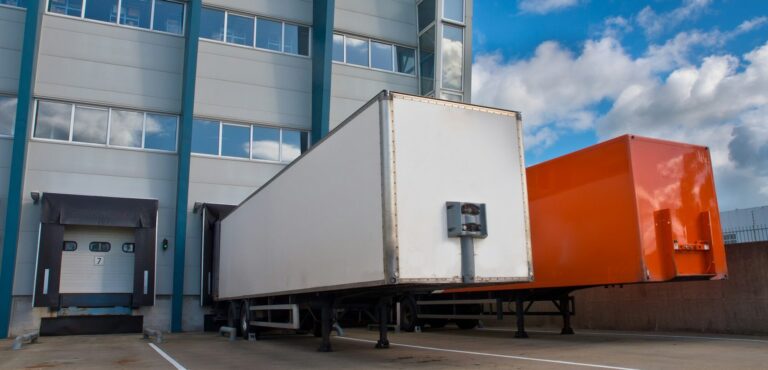
Quick loading and unloading: The full trailer can be parked independently, and loading and unloading operations can be carried out after the tractor is detached, without the need to move the entire vehicle, saving time. For example, in a logistics center or warehouse, trailers can remain in the loading and unloading area while the tractor continues to perform other tasks.
Multimodal transport compatibility: Full trailers can be transported by railway or ship, achieving seamless “door-to-door” connection, suitable for cross-border or cross regional logistics. - Security design optimization
Independent braking system: The entire trailer is equipped with an independent braking device (such as pneumatic or hydraulic braking) that works in conjunction with the tractor braking system to ensure stability during emergency braking.
Anti rollover design: Some full trailers adopt a low center of gravity frame and wide wheelbase design to reduce the risk of rollover during high-speed driving or sharp turns.
Synchronization of lights and signals: The entire trailer is equipped with turn signals, brake lights, etc. that are linked to the tractor, enhancing visibility at night or in complex road conditions. - Environmental and economic advantages
Fuel efficiency improvement: Due to the fact that the tractor does not carry the weight of the trailer, the engine load is reduced and fuel consumption is reduced, which is in line with the trend of low-carbon transportation.
Balanced tire wear: The axles of the full trailer are independently subjected to force, resulting in more uniform tire wear, extending service life, and reducing operating costs. - Adaptability to special scenarios
Off road transportation: In unpaved roads such as mines, forest areas, or construction sites, the independent suspension and strong frame of the full trailer can better adapt to harsh road conditions.
Dangerous goods transportation: Some full trailers are designed as specialized dangerous goods transport vehicles, equipped with explosion-proof, fireproof and other safety devices to meet the requirements of special goods transportation. - Policy and regulatory advantages
Low driver’s license requirements: In some regions, the required driver’s license category for driving a full trailer may be lower than that for a semi-trailer (such as some provinces in China allowing B2 driver’s license to drive a full trailer), lowering the entry threshold for drivers.
Flexible road rights: Full trailers may not be subject to certain bridge or tunnel height restrictions due to their lower height, expanding transportation route options.