

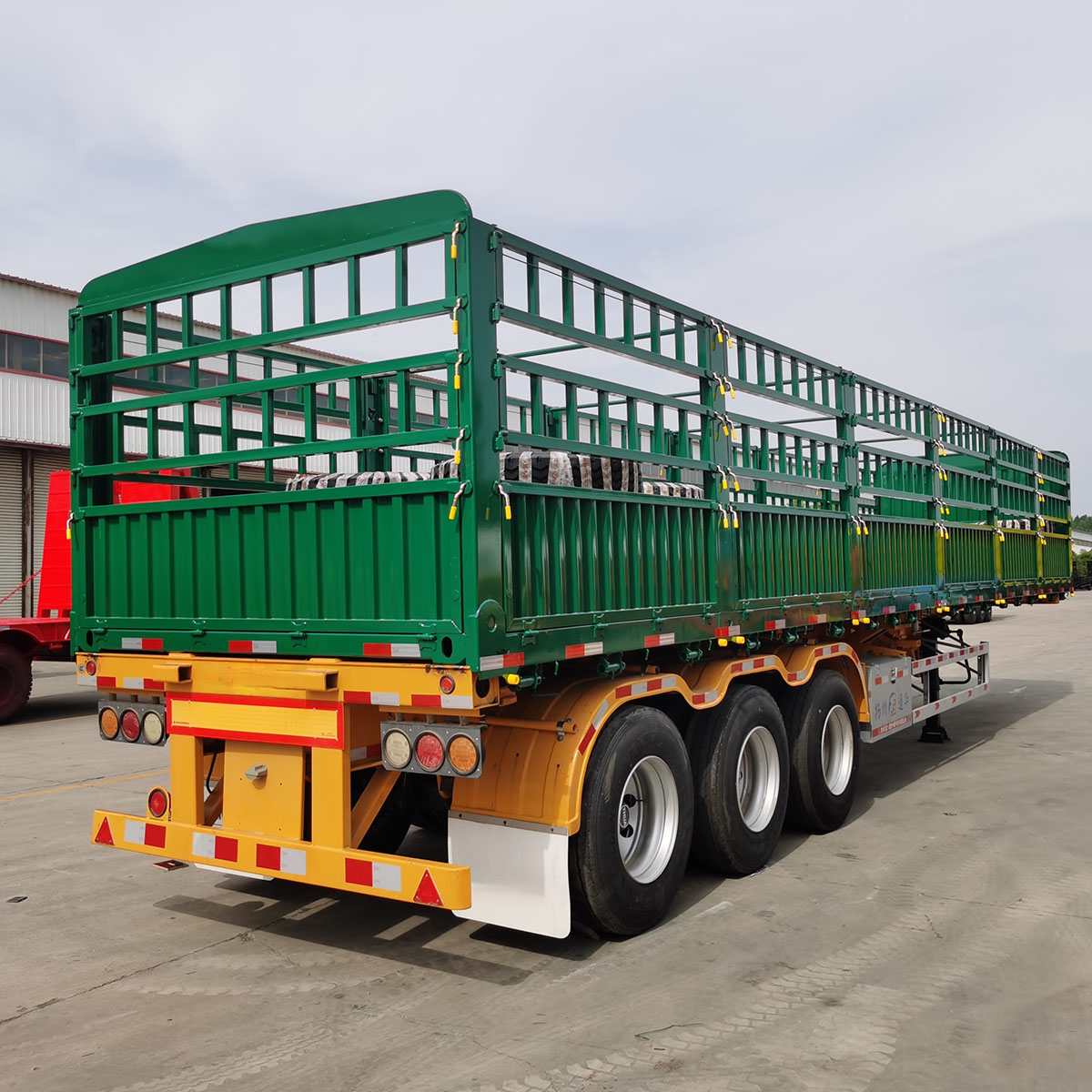
Advantages and disadvantages of warehouse style semi-trailer
As a common freight transport tool, the warehouse style semi-trailer has unique advantages in logistics transportation, but there are also some limitations. The following is a detailed analysis of its advantages and disadvantages:
advantage
Flexible structure and strong adaptability
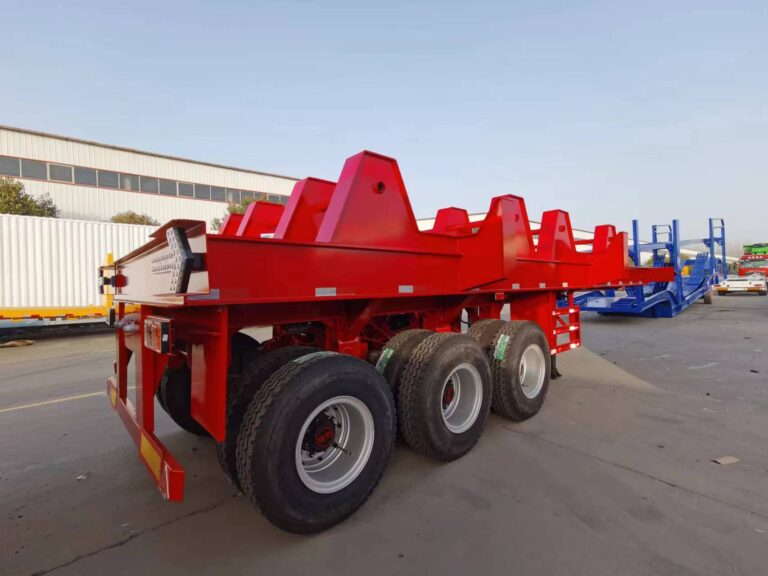
Multi category cargo transportation: The open cargo compartment design is suitable for transporting goods with large volume, irregular shape or requiring ventilation, such as agricultural products (grains, vegetables, live poultry), industrial products (steel, wood, pipes), bulk goods (coal, sand and gravel), etc.
Adjustable cargo compartment: The height of the warehouse grille can be adjusted for some models, or the volume can be flexibly changed by increasing or decreasing the number of railings to meet the loading needs of different sizes of goods.
High loading and unloading efficiency
Quick operation: Forklifts, cranes and other equipment can directly load and unload goods from the side or rear without opening the cargo door, greatly reducing time, especially suitable for high-frequency and short cycle delivery scenarios.
Reduce labor costs: Compared to enclosed carriages that require manual transportation of goods to the interior, the grille design can reduce labor intensity and manpower input.
Ventilation and breathability ensure the quality of goods
Natural ventilation: The gaps between the warehouse grilles form air circulation channels to prevent goods from becoming moldy or damaged due to stuffiness and humidity. It is suitable for environmentally sensitive goods such as fresh agricultural products and perishable items.
Moisture proof: Reduce the accumulation of moisture in the cargo compartment, lower the risk of moisture damage to the goods, and extend the shelf life.
Lightweight design, outstanding economy
Material optimization: Lightweight materials such as high-strength steel or aluminum alloy are used to reduce the weight of the vehicle, thereby reducing fuel consumption and increasing load capacity (able to carry more cargo within the total weight limit).
Compliance advantage: Meets the national policy requirements for lightweighting semi trailers, avoiding the risk of overweight penalties.
Easy maintenance and low cost
Simple structure: No complex hydraulic or sealing systems, reducing mechanical failure points and making maintenance easier.
Easy to clean: The open cargo compartment is easy to wash and suitable for quick cleaning after transporting easily contaminated goods such as coal and sand, reducing residual corrosion.
Significant cost-effectiveness
Low purchase cost: The simple structure results in lower manufacturing costs compared to enclosed box type semi trailers, with less initial investment.
Wide applicability: covering multiple types of goods, reducing additional expenses for changing vehicle models due to changes in goods.
High residual value rate: The demand in the second-hand market is stable, and the resale value is relatively high.
Strong policy adaptability
Compliance with over limit management: Lightweight design meets the requirements of total vehicle weight and axle load limits, avoiding fines.
Environmental advantages: Some car models use environmentally friendly materials or new energy power to adapt to the trend of green logistics, and may enjoy policy subsidies or road rights discounts.
disadvantage
Poor protection of goods
Unrestricted structure: The goods are exposed to the outside and are easily affected by weather (rain, snow, sun), which can cause damage or deterioration. Additional protective measures such as rainproof cloth are required.
Anti theft risk: Open design increases the risk of goods theft, especially during long-distance transportation or when parked in unattended areas.
Low security
Risk of rollover: A semi-trailer with a high center of gravity and no enclosed structure in the cargo compartment is prone to rollover during sharp turns or high-speed driving, especially when the cargo is not evenly distributed.
Limited structural strength: Compared to enclosed carriages, the impact resistance of warehouse style cargo compartments is weaker, which may cause greater damage to the cargo in the event of a collision.
Limited applicability scenarios
Not suitable for high-value or precision goods such as electronic products, precision instruments, etc. that require dust, moisture, and shock prevention. The warehouse grid design cannot provide sufficient protection.
Long distance transportation challenge: frequent stops are required to check the condition of goods (such as whether the waterproof cloth is secure), which increases transportation time and cost.
Environmental pressure
Dust pollution: When transporting bulk goods such as coal and sand, dust is easily generated, causing pollution to the environment and potentially facing environmental regulatory restrictions.
Cleaning cost: Although easy to clean, frequent rinsing may increase water resource consumption and wastewater treatment costs.
Market competitiveness differentiation
Regional differences: In areas with strict environmental requirements (such as first tier cities), warehouse style semi trailers may be restricted due to dust issues, while enclosed box type vehicles are more popular.
Industry trend: With the increasing demand for cargo protection in cold chain logistics, e-commerce express delivery, etc., the market share of warehouse style vehicles may be compressed.