

Advantages of the platform semi-trailer
With its unique design and functionality, the platform semi-trailer exhibits significant advantages in the field of logistics and transportation, particularly suitable for the transportation of agricultural and sideline products, light and bulky goods, and engineering equipment. The following is a detailed analysis of its core advantages:
- High structural strength and strong load-bearing capacity
Cross-beam frame design
The spatial frame structure, which is assembled and welded using longitudinal beams and integral through-type cross beams, ensures a balanced strength, toughness, and rigidity of the frame. This design effectively disperses stress, preventing frame deformation, and maintains stability and prolongs service life even when bearing heavy loads (such as steel and building materials) for extended periods.
Application of high-strength materials
The frame and fencing are predominantly constructed from high-strength steel (such as W-shaped through beams) or aluminum alloy, ensuring structural strength while reducing self-weight. For instance, through optimized design, the curb weight can be reduced by approximately 1.5 tons compared to standard products, without compromising load-bearing capacity, thereby significantly enhancing transportation efficiency.
New suspension system
Equipped with a high-strength, impact-resistant suspension system, the system maintains balanced axle loads and features a reasonably designed tie rod angle. Even under bumpy road conditions, it can reduce the friction and slip distance between the tires and the ground, minimize wear, and enhance stability under heavy loads.
II. High loading and unloading efficiency, strong adaptability
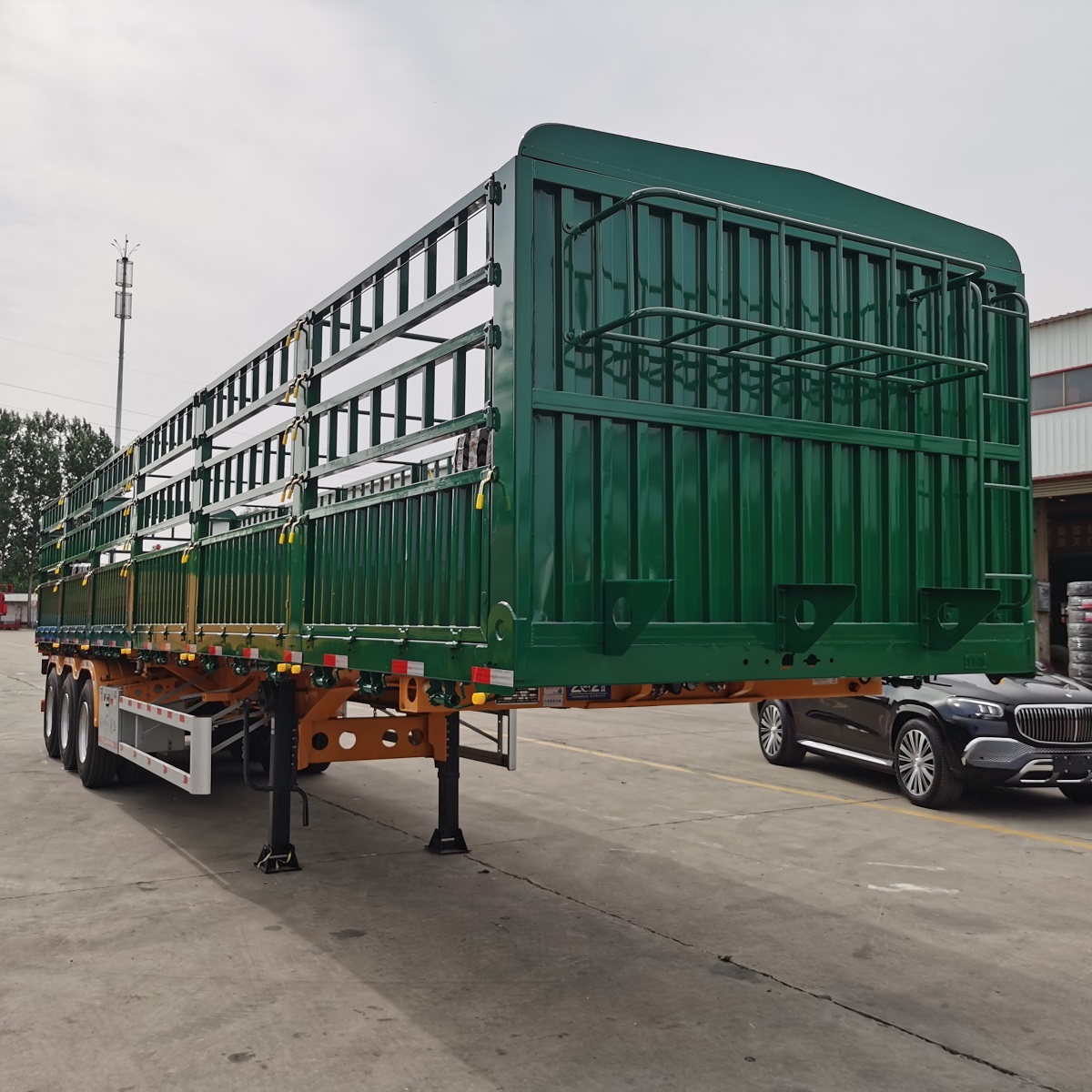
Flexible fence design
The fence can be partially or fully dismantled, or raised or lowered as desired, supporting multiple door-opening methods (such as long lock rod double-door, short lock rod double-door, left-right opening, up-down opening, etc.), facilitating rapid loading and unloading of goods by mechanized equipment such as forklifts. For example, when transporting vegetables and fruits, the fence can be quickly opened for loading and unloading, reducing the exposure time of the goods and maintaining freshness.
Good ventilation and breathability
The open-type lattice structure facilitates air circulation, preventing goods from decaying or getting wet. This feature is particularly suitable for transporting goods that require ventilation, such as live poultry and fresh agricultural products, ensuring quality and safety during transportation.
Customized hierarchical design
Some vehicle models support a tiered cargo rack design, allowing for adjustment of layer height and spacing according to the type of cargo. For instance, when transporting lightweight and bulky goods such as cotton and foam boxes, the tiered design maximizes space utilization and increases loading capacity.
Third, it has good economic efficiency and low operating costs
Low acquisition cost
Compared to van-type semi-trailers, platform-type semi-trailers have a simpler structure and do not require complex manufacturing processes for the body, resulting in lower acquisition costs. They are suitable for transportation companies or individual operators with limited budgets.
Lightweight design reduces fuel consumption
By utilizing high-strength lightweight materials (such as aluminum alloy) and optimizing structural design, the curb weight has been significantly reduced. For instance, a certain enterprise has reduced the curb weight by 1.5 tons through optimized design, resulting in annual fuel cost savings of approximately 20,000 yuan, while also reducing tire wear and maintenance costs.
Reduce no-load rate through multiple purposes
The flatbed semi-trailer can transport a variety of goods (such as agricultural and sideline products, daily necessities, engineering equipment, etc.), adapting to different transportation needs, reducing vehicle idle time, and improving overall operational efficiency. - High safety and strong compliance
Upgrade of security configuration
Equipped with safety bars, cushion pads, and other devices to reduce bumps and collisions during transportation. For example, when transporting fragile items such as glass, safety bars can prevent the goods from shifting, and cushion pads can absorb impact forces to reduce the rate of breakage.
Policy compliance
Complying with national standards such as GB 7258-2017 “Technical Conditions for Motor Vehicle Operation Safety” can avoid the risks of fines and suspension due to illegal modifications. For example, from January 1, 2020, three-axle warehouse-style semi-trailers with a total mass of ≥12,000kg must be equipped with disc brakes and air suspension, otherwise they cannot be licensed. Compliant models can ensure long-term stable operation.
The braking system is sensitive
The disc brake is sensitive and stable, capable of quick braking in emergency situations, thereby enhancing driving safety. The air suspension can further reduce cargo jolts and protect fragile goods. - High versatility and wide range of application scenarios
Transportation of agricultural and sideline products
Goods that require ventilation and moisture protection, such as vegetables, fruits, and grains, are the primary transportation targets for warehouse-style semi-trailers. The fence structure facilitates air circulation, while the top tarpaulin provides rain protection, ensuring the safety of the goods.
Lightly packed goods and general merchandise
Light and bulky goods such as clothing and household appliances can be transported via flatbed trucks, making full use of the vehicle’s height space and increasing loading capacity. The flexibility of the rails also facilitates the binding and securing of goods.
Transportation of engineering equipment
Small equipment in electrical engineering and communication engineering, such as cables and toolboxes, are often transported via pallet trucks. The pallets can be partially or fully dismantled, or raised and lowered as needed, accommodating the loading requirements of goods of varying sizes.
Cross-border and long-distance transportation
The 13-meter standard-sized flatbed trailer (with an overall dimension of 13000×2500×1600mm) is the main vehicle type for long-distance transportation, adaptable to different tractors and meeting cross-regional logistics needs.