

Fuel Tanker Trailer for Sale: Types, Specs & Prices from China Manufacturer (2026)
Fuel Tanker Trailer for Sale: Types, Specs & Prices from China Manufacturer (2026)
Summary: This guide explains what a fuel tanker trailer is, how to choose the right oil tank semi trailer for your fuel transport business, and what specifications matter when importing from China. You will see real 2026 price ranges, a specs comparison table, a 6-step buying checklist, and answers to the most common buyer questions. By the end, you will know whether a carbon steel or aluminum alloy tanker fits your fleet and how to request an exact FOB quote from Nanou Trailer.
A fuel tanker trailer is the standard semi-trailer used to move diesel, gasoline, kerosene, aviation fuel, and edible oils over long distances. If you operate a fuel transport fleet, work as a petroleum distributor, or supply logistics to mining and construction sites, choosing the right oil tank semi trailer directly affects your payload, fuel consumption, and compliance with local transport laws. Chinese manufacturers now produce tankers that match European and Middle Eastern spec requirements at 30–50% lower cost than Western brands, which is why buyers from Nigeria, Kenya, Saudi Arabia, Dubai, and Southeast Asia increasingly source from China.
What Is a Fuel Tanker Trailer?
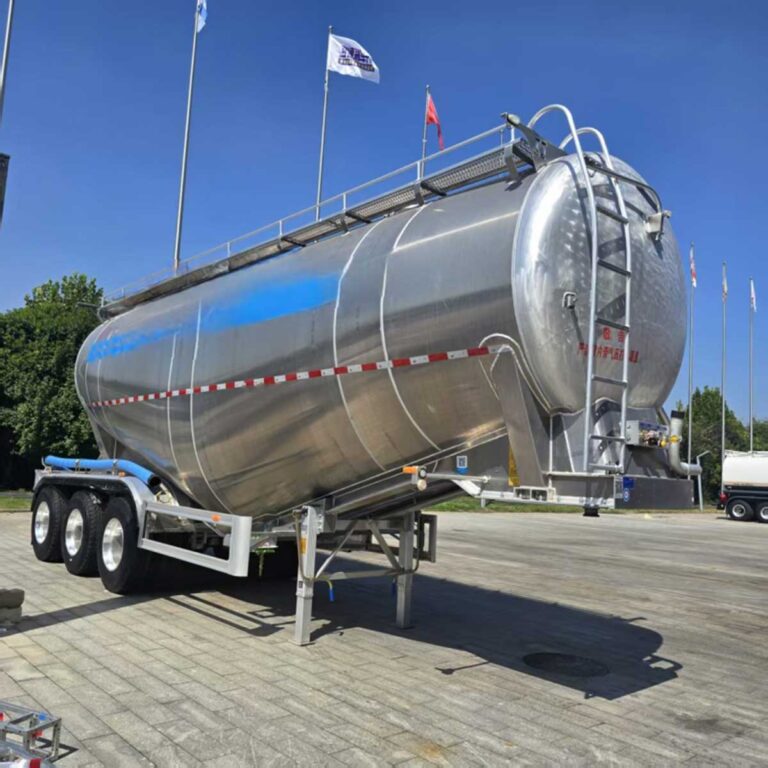
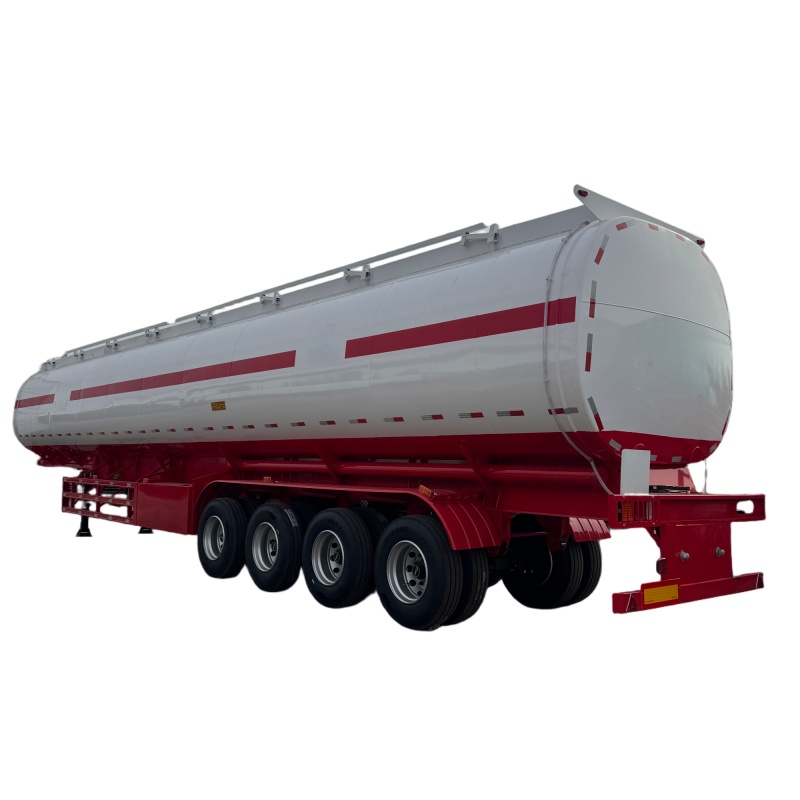
A fuel tanker trailer is a semi-trailer with one or more cylindrical tanks mounted on a chassis frame. The tank is divided into compartments, each with its own manhole, breathing valve, and discharge system. The trailer connects to a tractor head through a fifth wheel and carries the payload on its own axles.
Standard capacities range from 30,000 liters for regional fuel distribution up to 60,000 liters for long-haul bulk transport. Most export models use 3 axles for 42–45 ton gross combination weight or 4 axles for 55–60 ton operations. The tank body is built from carbon steel Q345 or aluminum alloy 5454/5083, depending on weight limits and cargo compatibility.
Types of Fuel Tanker Trailers — Which One Fits Your Business?
Carbon Steel vs. Aluminum Alloy Tankers
Carbon steel fuel tanker trailers are the most common export choice. The shell is usually 4–6 mm thick and the heads are 5–7 mm. They cost less, resist impact well, and handle a wide range of petroleum products. A 45,000L carbon steel tanker with 3 axles typically has a tare weight of 8.5–9.5 tons and a payload capacity near 35 tons.
Aluminum alloy tanker trailers reduce tare weight by 3.5–4.5 tons compared with steel. That extra payload translates into more revenue per trip when local weight laws are strict. Aluminum also resists corrosion better for ethanol, biodiesel, and certain chemicals. The trade-off is a higher purchase price, usually 35–45% above carbon steel.
Single-Compartment vs. Multi-Compartment Design
Single-compartment tankers are cheaper and simpler to maintain. They suit buyers who transport one fuel grade in bulk. Multi-compartment tankers carry 3–7 separate chambers in one shell, each with independent valves and metering. This design lets a distributor deliver diesel, gasoline, and kerosene in a single trip, cutting logistics costs by 20–30% for fuel retail networks.
Axle Configuration: 3-Axle vs. 4-Axle
Three-axle oil tank semi trailers are the default for markets with a 42–48 ton gross vehicle weight limit. Four-axle models distribute the load over more wheels, allowing gross weights up to 60 tons in countries like Nigeria, Angola, and parts of the Middle East. More axles also reduce axle load pressure on poor road surfaces, which lowers suspension and tire wear.
Key Specifications & What to Look For
When you compare fuel tanker trailer quotes, focus on these numbers instead of generic claims like “heavy-duty” or “high-quality.”
| Spec | 3-Axle Carbon Steel | 3-Axle Aluminum Alloy | 4-Axle Carbon Steel |
|---|---|---|---|
| Tank Capacity | 40,000 – 45,000 L | 40,000 – 45,000 L | 50,000 – 60,000 L |
| Tare Weight | 8.5 – 9.5 t | 6.0 – 7.0 t | 10.5 – 12.0 t |
| Axle Load | 13 t × 3 (BPW/Fuwa) | 13 t × 3 (BPW/Fuwa) | 13 t × 4 or 16 t × 4 |
| Shell / Head Thickness | 5 mm / 6 mm | 6 mm / 7 mm | 5 mm / 6 mm |
| Compartments | 1 – 5 | 1 – 5 | 1 – 7 |
| Suspension | Mechanical / Air | Suspensión neumática | Mechanical / Air |
| Tire Size | 12R22.5 or 385/65R22.5 | 12R22.5 or 385/65R22.5 | 12R22.5 or 385/65R22.5 |
| Braking | ABS + WABCO valve | ABS + WABCO valve | ABS/EBS + WABCO |
Always confirm that the manhole cover, breathing valve, discharge valve, and bottom loading system match the port and filling standards in your country. API valves are common in Africa and the Middle East; European buyers usually ask for ADR-compliant discharge kits.
Price Guide — Fuel Tanker Trailer Costs from China (2026)
The following prices are typical FOB China ranges for new Nanou fuel tanker trailers. Final quotes depend on steel prices, axle brand, tire brand, number of compartments, and optional equipment such as flow meters or GPS tracking.
| Model | Capacity | Material | 2026 FOB Price (USD) |
|---|---|---|---|
| 3-axle fuel tanker trailer | 40,000 L | Carbon steel | $18,000 – $23,000 |
| 3-axle fuel tanker trailer | 45,000 L | Carbon steel | $20,000 – $26,000 |
| 3-axle fuel tanker trailer | 45,000 L | Aluminum alloy | $28,000 – $35,000 |
| 4-axle fuel tanker trailer | 55,000 L | Carbon steel | $26,000 – $32,000 |
| 4-axle fuel tanker trailer | 60,000 L | Carbon steel | $29,000 – $36,000 |
| Multi-compartment tanker | 45,000 L (3–5 chambers) | Carbon steel | $23,000 – $29,000 |
Adding air suspension, EBS, aluminum wheels, or ADR certification increases the price by $1,500–$4,000 depending on the package. Bulk orders of 3–5 units typically receive a 5–8% discount on the unit price.
How to Buy a Fuel Tanker Trailer from China — 6-Step Checklist
- Define your cargo and capacity. Tell the supplier which fuel or liquid you will transport, the required capacity, and whether you need single or multiple compartments. Diesel and gasoline have different vapor pressure and corrosion profiles.
- Confirm local weight and dimension limits. Check your country’s maximum gross vehicle weight, axle load limits, and overall length rules before choosing 3-axle or 4-axle.
- Request a detailed spec sheet. The sheet should list tank material grade, shell and head thickness, axle brand and rating, tire size, valve brand, braking system, and electrical connector type.
- Verify safety and compliance. Ask for welding records, pressure test certificates, and whether the trailer can be equipped for ADR, DOT, or local dangerous goods rules.
- Compare real FOB and CIF quotes. A low FOB price can be erased by high sea freight or unexpected port charges. Ask for a landed cost estimate to your nearest port.
- Inspect before shipment. Request photos and a short video of the hydrostatic test, brake test, and loading trial. A factory visit or third-party inspection adds confidence for first-time buyers.
🚛 Get Your Fuel Tanker Trailer Quote Today
Tell us your cargo, route, and country. You’ll get a custom spec sheet and FOB price within 24 hours.
💬 WhatsApp: +86 15315477956
📋 Online Inquiry Form
📱 WeChat: +86 15315477956
Frequently Asked Questions
What is the difference between a fuel tanker trailer and an oil tank semi trailer?
There is no functional difference. “Fuel tanker trailer” is the common term in Africa, the Middle East, and Southeast Asia. “Oil tank semi trailer” is more often used in technical and import documentation. Both refer to a semi-trailer designed to transport liquid fuel products.
How many liters can a fuel tanker trailer carry?
Common capacities are 30,000L, 40,000L, 45,000L, 50,000L, and 60,000L. The right capacity depends on your tractor power, local road weight limits, and trip distance. A 45,000L 3-axle tanker is the most popular export size.
Is carbon steel or aluminum alloy better for a fuel tanker trailer?
Carbon steel costs less and withstands rough handling, making it ideal for markets where purchase budget matters most. Aluminum alloy saves 3.5–4.5 tons of tare weight, allowing higher payload where strict weight laws apply, and it resists corrosion for ethanol and biodiesel.
What documents do I need to import a fuel tanker trailer from China?
You generally need a commercial invoice, packing list, bill of lading, certificate of origin, and sometimes a dangerous goods transport certificate if the tanker will carry flammable liquids. Your supplier should also provide welding inspection and hydrostatic test reports.
How long does delivery take from China to Africa or the Middle East?
Production takes 20–35 days after deposit. Sea freight adds 25–45 days to West Africa, 20–30 days to East Africa, and 18–25 days to Middle Eastern ports such as Jebel Ali or Dammam. Total lead time is usually 50–75 days.
Can the tanker be customized for multiple fuel grades?
Yes. Multi-compartment fuel tanker trailers can carry 2–7 separate chambers in one tank shell, each with independent manholes, breathing valves, and discharge outlets. This design is popular with fuel distributors who deliver diesel, gasoline, and kerosene on the same route.
Why Choose Nanou Trailer?
Built for export. Nanou Trailer has shipped semi-trailers to more than 40 countries. Our fuel tanker trailers are built with Q345 carbon steel or 5454 aluminum alloy, BPW/Fuwa axles, WABCO braking valves, and optional ADR kits for Middle Eastern and African regulations.
Factory-direct pricing. Because we manufacture in our own facility in Shandong, China, you avoid distributor markup. A 45,000L carbon steel fuel tanker trailer starts around $20,000 FOB, while an aluminum alloy oil tanker offers maximum payload for weight-restricted markets.
Transparent specs and video inspection. Every tanker undergoes hydrostatic testing, brake testing, and coating inspection before shipment. We share photos, videos, and test reports so you know exactly what is leaving the factory.
Full logistics support. We handle container loading, sea freight booking, and export clearance. You receive the bill of lading and customs documents needed for import clearance at your port.
🚛 Ready to Add a Fuel Tanker Trailer to Your Fleet?
Send your capacity, material, and destination requirements. We will reply with a full spec sheet and FOB quote within one working day.
💬 WhatsApp: +86 15315477956
📋 Online Inquiry Form
📱 WeChat: +86 15315477956