

Is there any difference between refrigerated containers and ordinary containers
There are significant differences between refrigerated containers and ordinary containers in terms of temperature control, structural design, applicable goods, temperature range, usage, and operating costs. The specific analysis is as follows:
- Temperature control
Refrigerated container: Equipped with refrigeration equipment (such as mechanical refrigeration units), it can actively adjust and maintain the temperature inside the container, typically ranging from -30°C to +30°C, meeting the needs of refrigeration (0-18°C) and freezing (0 to -21°C). Some high-end models also feature heating capabilities to adapt to extreme environments.
General container: Without any temperature control equipment, the cargo is completely exposed to the natural environment, with temperature fluctuating according to external changes. It is only suitable for goods that are not sensitive to temperature.
II. Structural Design
Refrigerated container:
Insulation layer: The box body adopts a double-layer structure, with high-efficiency insulation materials such as glass wool and polystyrene filled in between to reduce heat transfer.
Refrigeration system: Integrating core components such as compressors, condensers, and evaporators, it requires external power supply or fuel supply to maintain operation.
Ventilation system: Equipped with adjustable ventilation outlets to ensure air circulation inside the container and prevent goods from deteriorating due to high humidity.
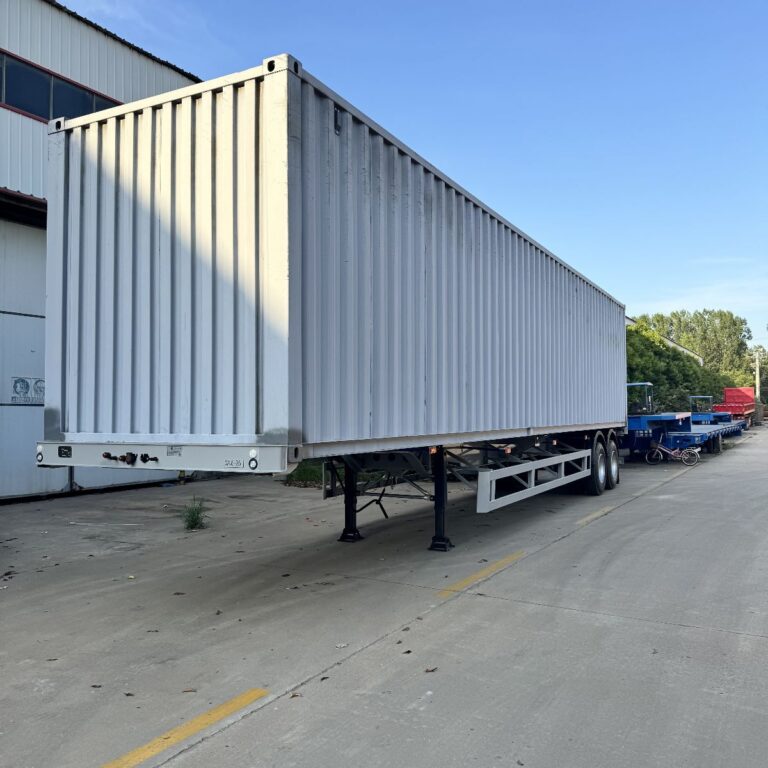
General container: It has a simple structure, consisting solely of a steel frame and corrugated steel plates, without additional insulation or cooling devices, and is relatively low in cost.
III. Applicable goods
Refrigerated container: specifically designed for perishable goods, such as:
Food category: meat, seafood, fruits, vegetables, dairy products, frozen food, etc.
Pharmaceuticals: Vaccines, blood products, biologics, and other drugs that require strict temperature control.
Chemical industry: some temperature-sensitive chemicals or raw materials.
General container: suitable for most dry and temperature-resistant goods, such as:
Industrial products: machinery and equipment, hardware and electrical equipment, textiles, etc.
Daily necessities: stationery, household goods, furniture, etc.
Bulk cargo: grain, ore, sand and gravel, etc. (requires use with bulk containers).
IV. Temperature range and stability
Refrigerated container: It allows precise temperature control, with fluctuations typically not exceeding ±1°C, ensuring stable product quality. For instance, a constant temperature environment of 2-8°C is required when transporting vaccines.
General container: Its temperature is entirely dependent on the external environment. In equatorial regions, the temperature inside the container may rise to 60-70°C, while in polar regions, it may drop below zero, causing irreversible damage to the cargo.
V. Purpose and Flexibility
Refrigerated container:
Multimodal transport: It supports seamless connections between sea, land, and air transportation, eliminating the need for cargo reloading in the process and reducing the risk of loss.
Temporary cold storage: It can be used as a mobile cold storage at the destination to regulate market supply and enhance economic benefits.
Cold chain logistics: achieving direct transportation from the production site to the point of sale, ensuring the freshness of food.
General container:
Economical and practical: simple structure, low cost, suitable for large-scale, low-cost transportation.
Wide range of applications: Covering over 80% of dry cargo transportation needs, it is the mainstream choice for international trade.
VI. Operating costs
Refrigerated container:
Acquisition cost: Due to the integration of refrigeration equipment, the price is 2-3 times that of an ordinary container.
Operating costs: Electricity or fuel costs need to be paid to maintain refrigeration, resulting in high long-term transportation costs.
General container:
Acquisition cost: With a simple structure and low cost, it is suitable for enterprises with limited budgets.
Operating costs: No additional energy consumption costs, and relatively low transportation costs.