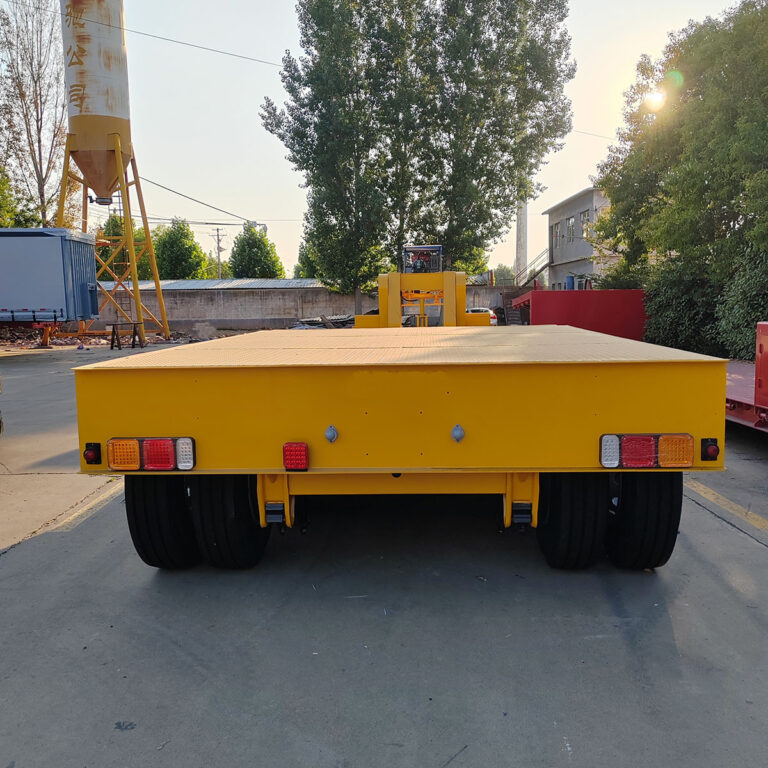


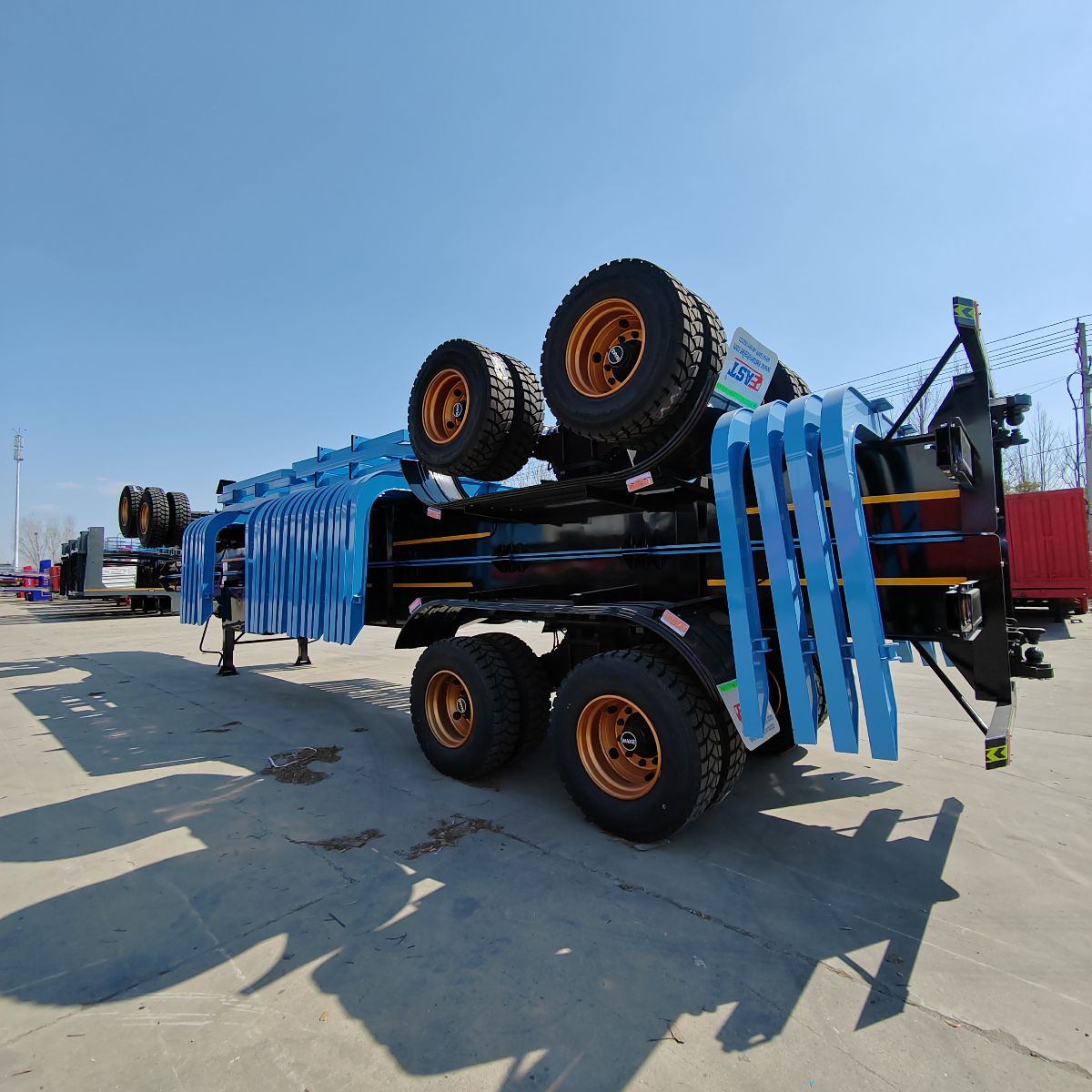
Type of semi-trailer for timber transportation
According to structural design and functional characteristics, wood transport semi trailers are mainly divided into the following types:
1、 Long haul timber semi-trailer
Structural features:
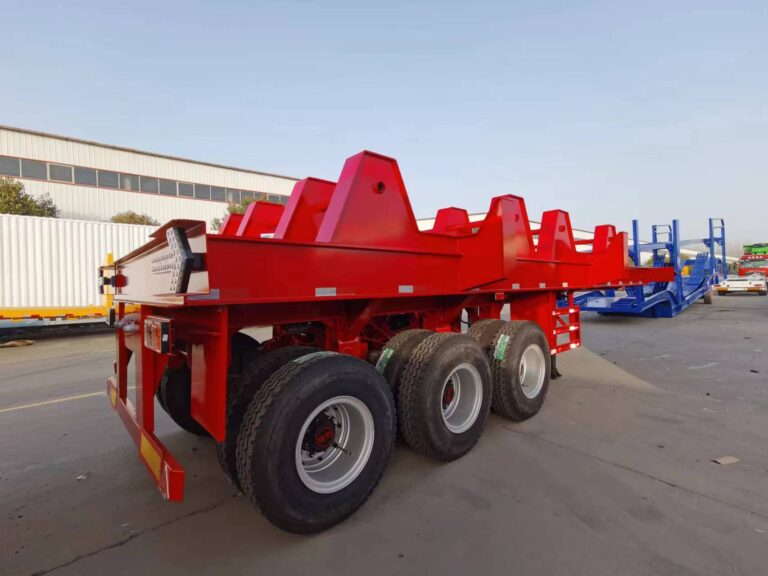
Adopting a flat or skeleton frame, without a box board design, the cargo platform is flat and open.
There are multiple sets of detachable or foldable pillars on both sides of the vehicle to prevent the wood from sliding sideways; The tail is equipped with a rotating or hydraulic lifting carrier (commonly known as a “goose neck”), which prevents long wood from slipping through physical barriers.
Some car models can be equipped with side rails or high rails to form a cargo box structure, improving the safety of short timber transportation.
Applicable scenarios:
Specially designed for transporting long logs (over 6 meters), commonly used for transportation from forest areas, logging sites to processing plants.
The hydraulic lifting carrier can adapt to different lengths of wood, improving transportation flexibility.
Advantage:
Strong carrying capacity: The length of the cargo box can reach 11 to 17.5 meters, and the single transportation volume far exceeds that of ordinary trucks.
High stability: The goose neck design reduces the height of the cargo platform, lowers the center of gravity, and reduces the risk of rollover.
Strong adaptability: The column can be disassembled and adapted to different specifications of wood; Some models are equipped with self dumping function to improve unloading efficiency.
2、 Fence type wood transport semi-trailer
Structural features:
There are detachable railings around, and the cargo box structure is enclosed to prevent short pieces of wood from scattering.
Some models are equipped with a self dumping function (hydraulic tilting unloading) to improve unloading efficiency.
Applicable scenarios:
Transporting short specification timber such as sawn timber and wooden beams (usually less than 6 meters in length), commonly found in southern forest areas and around timber processing plants.
The self dumping function is suitable for transporting bulk materials such as sawdust and wood chips, improving equipment utilization.
Advantage:
High safety: The fence design prevents wood from slipping during transportation, reducing the risk of accidents.
Multifunctionality: The self unloading function can quickly unload and adapt to various transportation needs.
Cost effectiveness: Reduce unit wood transportation costs by 30% -40%, suitable for short distance and high-frequency transportation.
3、 Skeleton type wood transport semi-trailer
Structural features:
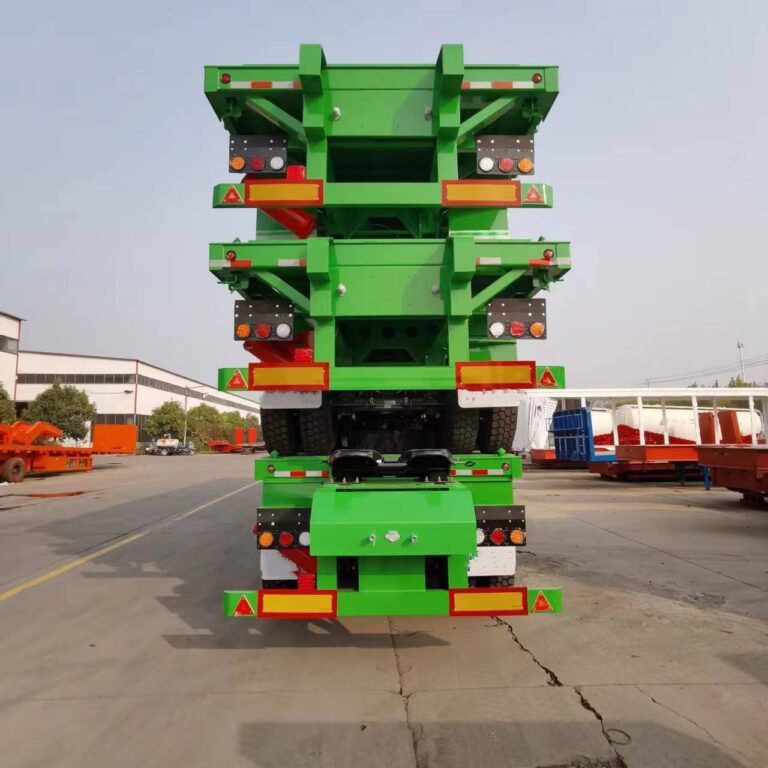
No cargo platform, only retaining the frame structure, suitable for standard containers or specialized wooden boxes.
The frame is made of high-strength steel (such as Q345B), which has excellent tensile strength and bending resistance.
Applicable scenarios:
Suitable for standard containers, used for cross-border or multimodal transportation of timber (such as sea and rail transportation).
It is necessary to cooperate with bundling and fixation to ensure the stability of the wood during transportation.
Advantage:
Standardized transportation: Adapt to containers, reduce cargo loading and unloading losses, and improve transportation efficiency.
Lightweight design: Some models use aluminum alloy material to reduce weight and increase payload.
Strong compatibility: can transport other standardized goods (such as mechanical equipment), improving equipment utilization.
4、 Multi functional flatbed semi-trailer
Structural features:
Flat cargo platform with reserved pile holes on both sides, capable of inserting 10 × 10 piles to fix wood.
Installing container locks can transport two 20 foot containers or one 40 foot container.
The lock can be hidden under the bottom plate without affecting Lapu or other goods.
Applicable scenarios:
Balancing wood, container, and general cargo transportation, suitable for multi-purpose logistics needs.
Commonly used in scenarios that require flexible switching of transportation tasks (such as cross regional logistics, integrated freight).
Advantage:
High flexibility: One vehicle for multiple uses, reducing transportation costs.
Strong bearing capacity: Made of high-strength steel material, it has a light weight and significantly improved bearing capacity.
Operational compliance: Announce dual qualifications for operation, making it worry free to use and reassuring to run.
5、 Long trailer (semi-trailer type)
Structural features:
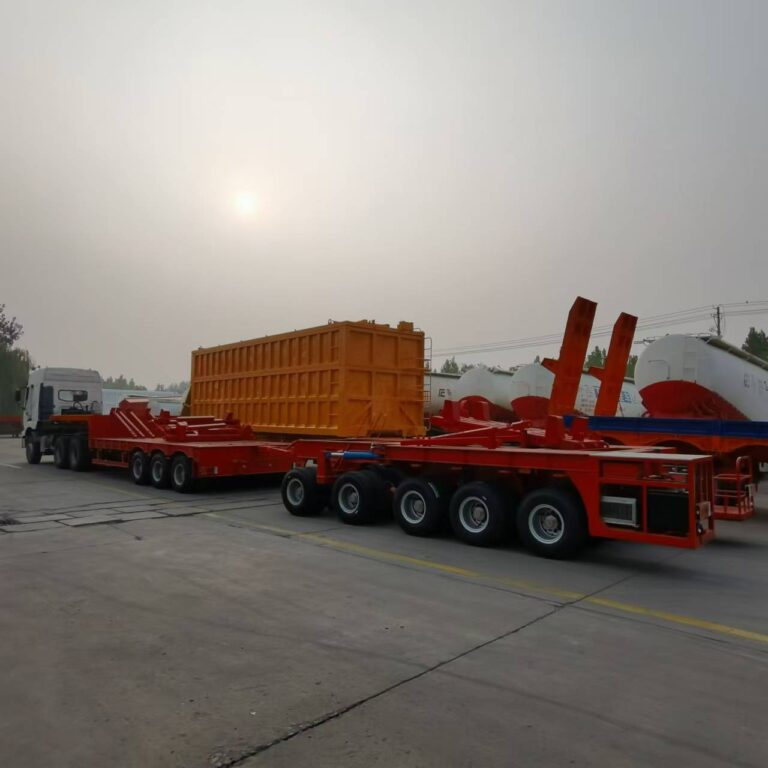
Specially designed for transporting long timber bundles, the front end is placed on the steering bearing device of the main transport vehicle (car), and the vertical load transmission belongs to the semi-trailer type.
There are single axis, double axis, and multi axis options to meet different load requirements.
Applicable scenarios:
The forest areas in Northeast China and Inner Mongolia mainly rely on raw material production, with a high proportion of long trailer trucks (80% -90%).
Transportation of extra long timber (such as logs over 10 meters in length) requires the use of specialized towing vehicles.
Advantage:
Strong professionalism: specially designed for the transportation of long materials, with a stable structure and strong load-bearing capacity.
Adapt to complex road conditions: Multi axis design improves passability and is suitable for rugged roads in forest areas.