

Stake and Fence Semi-Trailers Are About to Boom — Here’s Why AfCFTA’s Freight Doubling Changes Everything for Bulk Cargo Transport
Introduction: The Trailer Type Most Buyers Overlook
When procurement managers and fleet operators think about Africa’s logistics transformation, container trailers and tankers tend to dominate the conversation. But the real workhorse of intra-African freight — and across much of Southeast Asia, the Middle East, and South America — is far less glamorous and far more essential: the stake and fence semi-trailer.
As the African Continental Free Trade Area (AfCFTA) enters its operational phase and cross-border road freight volumes begin their projected doubling, buyers who haven’t secured reliable stake cargo and warehouse grid semi-trailer capacity are already falling behind. This article explains why, and what smart procurement teams are doing about it right now.
AfCFTA’s Freight Revolution: By the Numbers
The statistics are staggering. According to the United Nations Economic Commission for Africa, implementing AfCFTA will double road freight from 201 million to 403 million tonnes across the continent. The UN Conference on Trade and Development estimates that the agreement will increase intra-African trade in transport services by nearly 50 percent, with over 25 percent of all trade gains in services going directly to the transport sector.
But perhaps the most eye-opening figure comes from fleet projections: AfCFTA requires an estimated 1,844,000 trucks for bulk cargo and 248,000 trucks for container cargo by 2030. If planned infrastructure corridors are completed, those numbers climb to 1,945,000 and 268,000 respectively. Western Africa alone accounts for 39 percent of that vehicle demand.
Here’s the critical insight for trailer buyers: a large portion of that bulk cargo — agricultural commodities, building materials, consumer goods, bagged cement, livestock, and manufactured products — moves on stake and fence semi-trailers, not inside enclosed boxes or on flatbeds.
Why Stake and Fence Trailers Dominate Bulk Transport
The global semi-trailer market was valued at $34.76 billion in 2025 and is projected to reach $57.48 billion by 2035, growing at a 5.16 percent CAGR according to Precedence Research. Within that market, open-deck and stake configurations are expected to grow at an above-average 6.5 percent annually, outpacing enclosed trailer segments.
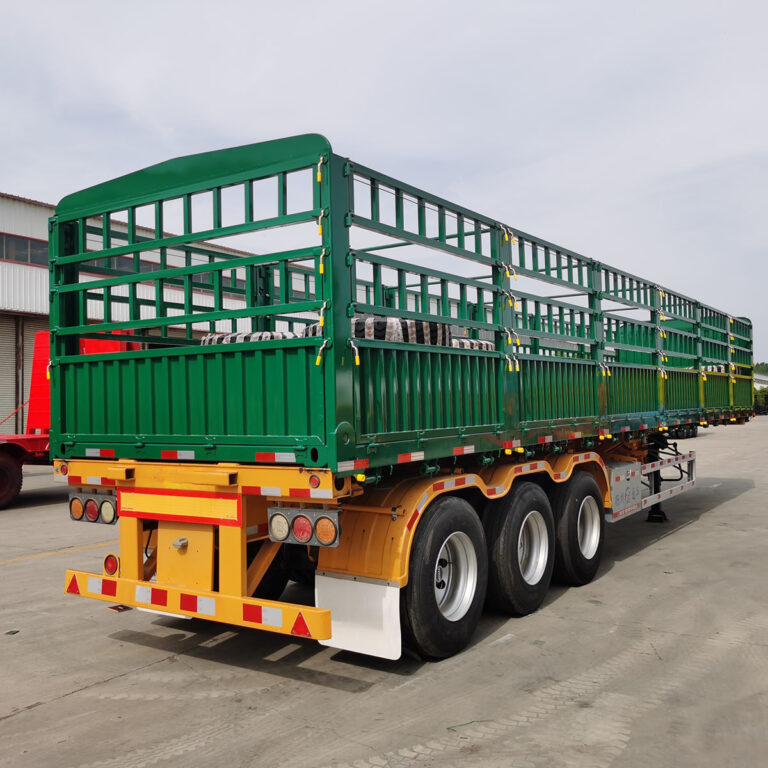
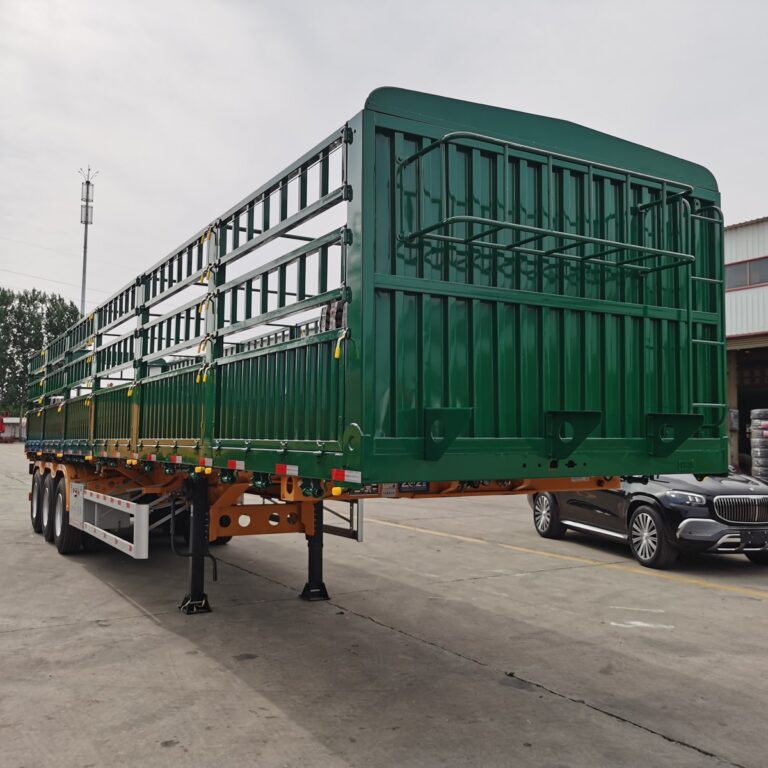
The reasons are practical and economic. Fence semi-trailers offer the ideal balance between cargo security and loading flexibility. The vertical side walls — typically 600mm to 1,800mm high with removable stakes or welded mesh panels — prevent cargo shift during transit while allowing crane loading from above and forklift access from the side. For operators hauling diverse freight across multiple routes, this versatility translates directly into higher utilization rates and faster payback.
Warehouse grid semi-trailers (also called barn-type or stake-cage trailers) take this concept further with full-height enclosed mesh sides, making them the preferred choice for bagged goods, packaged consumer products, and any freight where theft prevention matters during long-haul transit.
What Smart Buyers Are Specifying in 2026
Based on current export orders and market demand, here’s what procurement teams in high-growth markets are prioritizing:
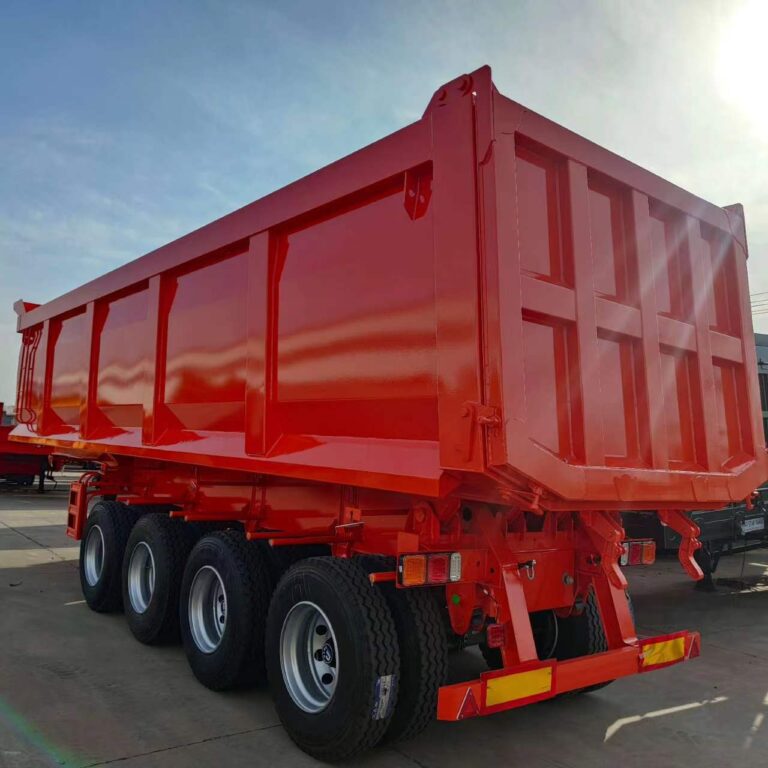
Axle configurations: Three-axle models remain the volume leader for standard freight corridors, while four-axle variants are gaining traction for heavier bulk loads and regions with higher gross vehicle weight allowances. Nanou’s 3-axle fence semi-trailer and 4-axle warehouse semi-trailer are engineered for both configurations, with reinforced main beams rated for 40 to 80 tonnes of payload.
Side wall design: Removable stake configurations offer the most flexibility — operators can run the trailer as a flatbed when stakes are removed, or as a fenced cargo carrier when stakes are installed. For dedicated bulk routes, welded warehouse grid designs like the 3-axle warehouse semi-trailer provide maximum security and structural rigidity.
Suspension and braking: With Africa’s road conditions ranging from modern highways to unpaved rural tracks, mechanical leaf-spring suspension with heavy-duty shock absorbers remains the default choice. Air suspension is gaining ground for operators hauling fragile or high-value goods. Dual-line air braking systems with WABCO valves are increasingly specified as standard.
Livestock transport capability: The barn transport semi-trailer configuration — with ventilated mesh sides, anti-slip flooring, and adjustable internal partitions — serves the growing demand for livestock transport across West Africa and the Sahel region, where cattle trade is a multi-billion dollar cross-border industry.
The Africa-Specific Challenge: Infrastructure and Cost
Africa’s infrastructure funding gap runs between $68 billion and $108 billion annually, according to the African Development Bank. The continent has less than 25 percent of the paved road density found in South Asia, and cargo transport costs inflate merchandise prices by up to 75 percent. At maritime ports, cargo dwell times of 15 to 20 days remain common.
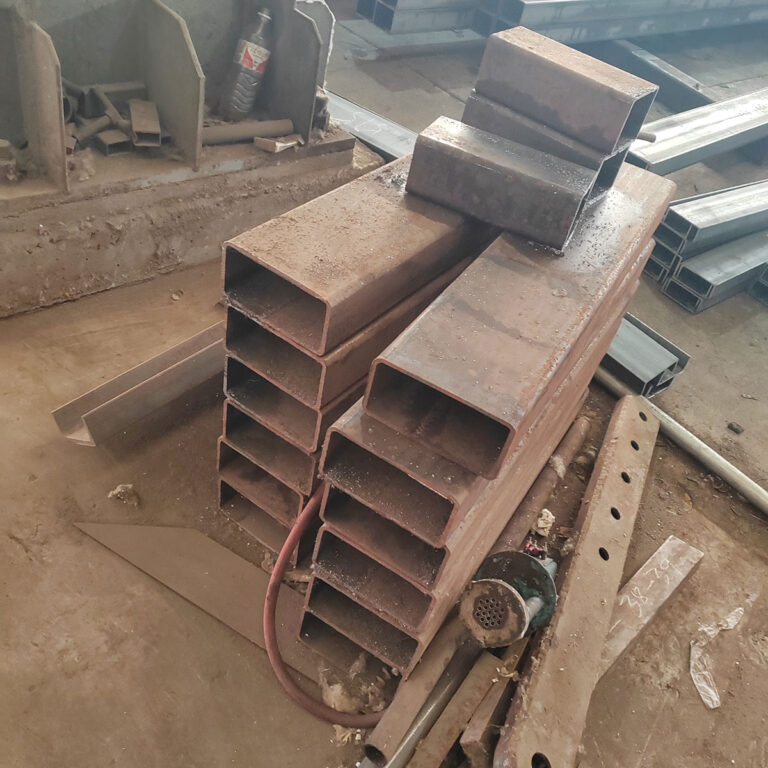
For trailer buyers, this translates into specific engineering requirements: trailers must withstand rough road conditions, carry heavier individual loads (since consolidation is limited), and be maintainable with locally available parts. Shandong Nanou’s fence semi-trailer range addresses these realities with Q345B high-strength steel chassis, JOST landing gear, and standardized axle assemblies that can be serviced across most African markets.
How to Choose the Right Stake or Fence Trailer: A Buyer’s Checklist
Before placing an order, consider these five factors:
First, define your primary cargo type. Loose bulk materials like gravel and aggregates need lower side walls with reinforced floors. Bagged goods and packaged freight benefit from full-height warehouse grid sides. Livestock requires ventilation, anti-slip surfaces, and partition systems.
Second, match axle count to your route conditions. Three-axle trailers suit most standard freight corridors with paved roads. Four-axle models distribute weight more evenly on mixed-surface routes and are required in several African countries for loads above 40 tonnes.
Third, verify compliance with destination-country regulations. Gross vehicle weight limits, axle spacing requirements, and braking standards vary significantly between markets. Nanou provides market-specific compliance documentation for over 40 countries.
Fourth, prioritize serviceability. Choose trailers with widely available components — BPW or FUWA axles, standard tire sizes (12R22.5 or 315/80R22.5), and common brake chamber specifications. This ensures you can maintain uptime in remote operating areas.
Fifth, request real-world loading data. Ask your supplier for payload capacity charts at different axle loads, turning radius data, and fifth-wheel height compatibility with your tractor fleet.
Why Timing Matters Now
With AfCFTA’s freight volume projections driving a wave of fleet expansion orders, lead times for semi-trailers are already extending. Manufacturers in Shandong — China’s trailer production hub — are reporting order backlogs of 45 to 60 days for standard configurations, with custom builds extending to 90 days. Buyers who finalize specifications and place orders in Q2 2026 will secure delivery before the Q4 shipping surge that typically accompanies year-end budget cycles.
Get a Quote for Your Stake or Fence Semi-Trailer
Shandong Nanou Automobile Co., Ltd. manufactures over 230 semi-trailer configurations at its facility in Liangshan, Shandong — China’s commercial vehicle capital. Our fence and stake semi-trailer lineup includes 3-axle and 4-axle models in both removable-stake and warehouse-grid configurations, with payloads from 30 to 80 tonnes.
Contact us for pricing, specifications, and delivery timelines:
- Website: www.nanou-trailer.com
- Email: nanou@nanou-trailer.com
- WhatsApp: +86 158 6456 0025
- Factory: Liangshan Industrial Zone, Shandong Province, China