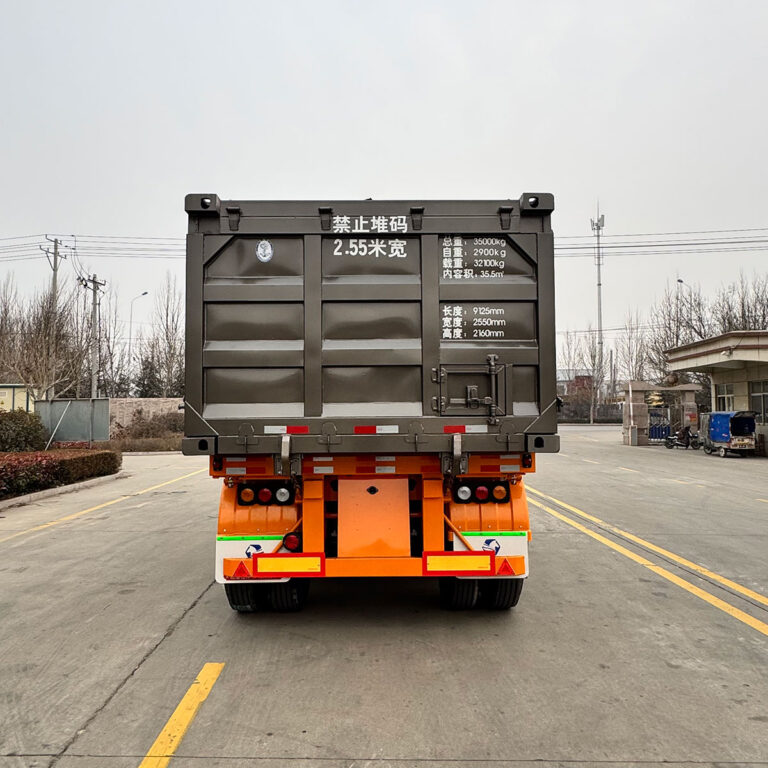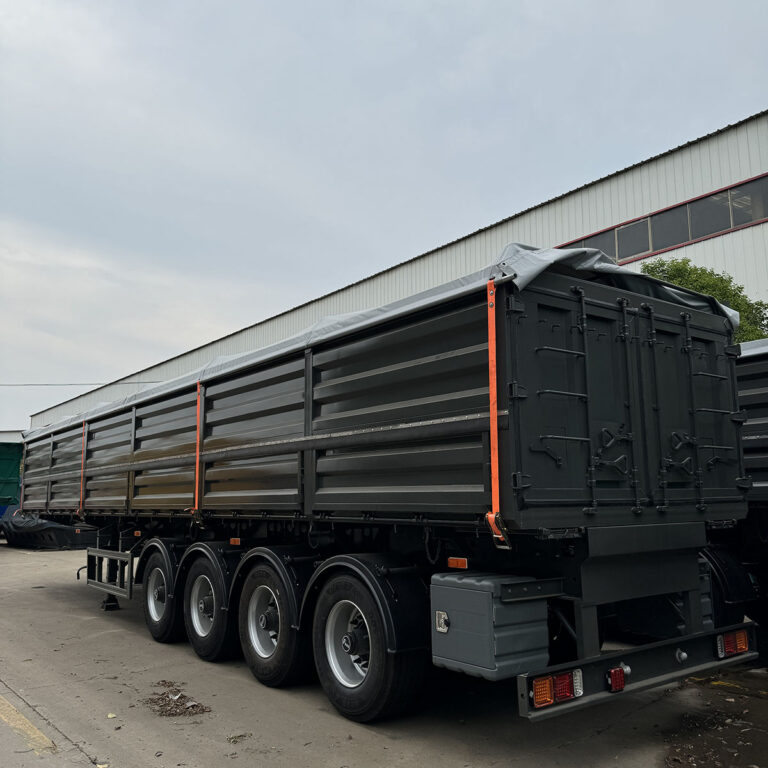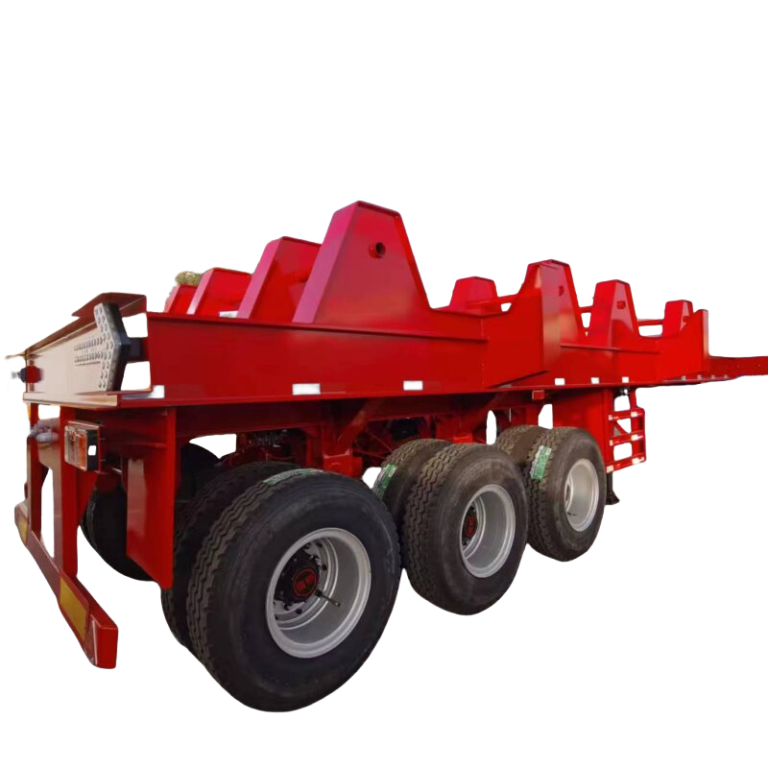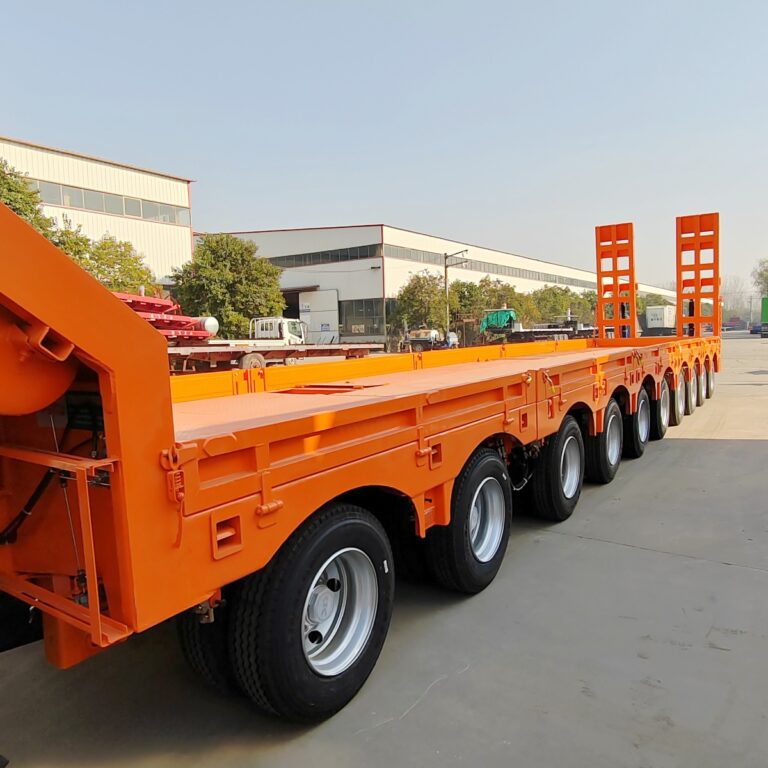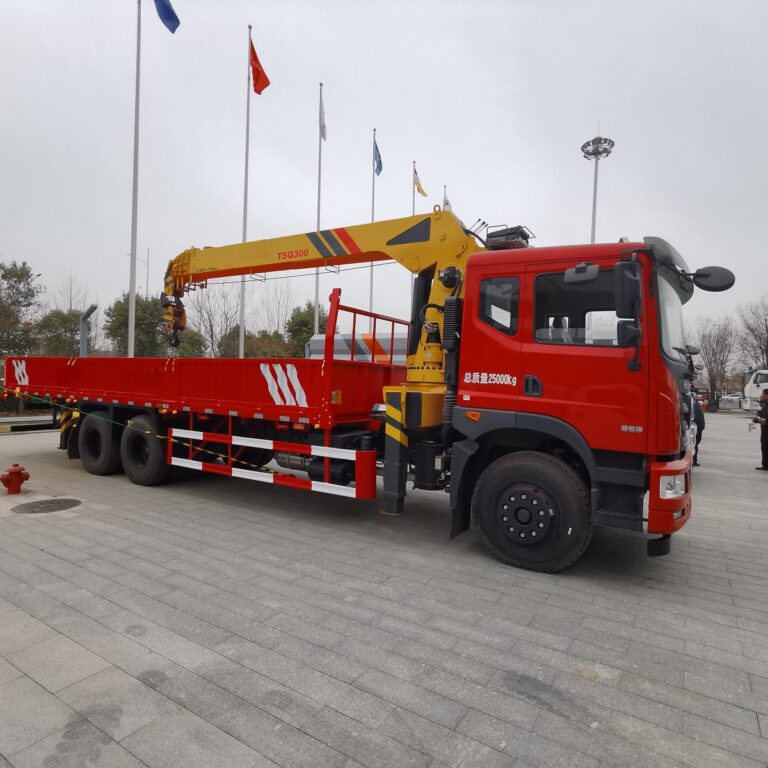


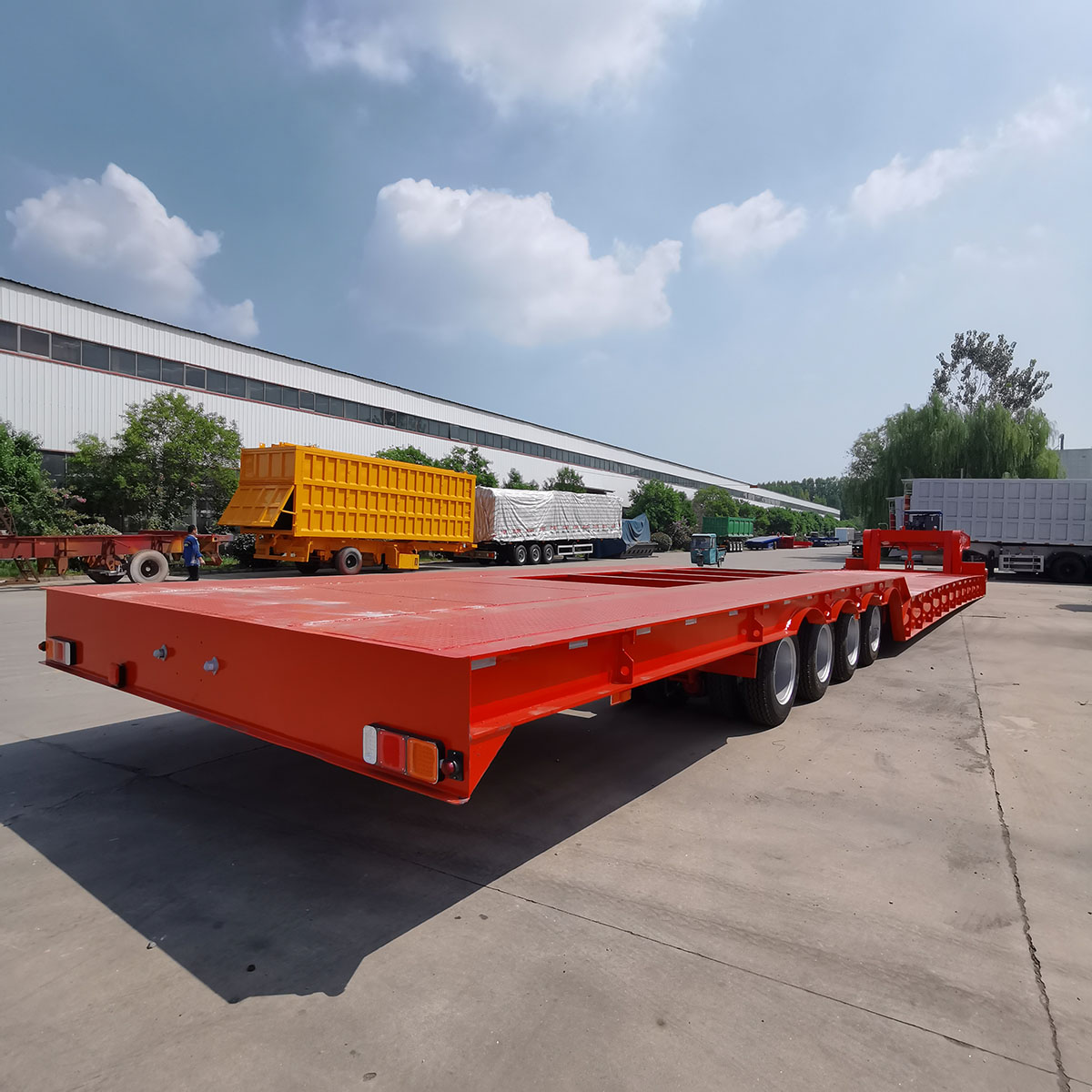
4-axis large cargo transportation high-low flatbed semi transporter application scenarios
With its unique structural design (such as low chassis, high load-bearing capacity, open cargo platform) and technical advantages of four axle dispersed load, the 4-axis large cargo transport high and low plate semi-trailer has demonstrated irreplaceable transportation value in multiple industries. The following are its core application scenarios and specific analysis:
1、 Transportation of construction machinery and heavy equipment
Typical goods: large construction machinery such as excavators, rollers, cranes, bulldozers, etc.
Scenario advantages:
Low chassis design: The height of the cargo platform can be as low as 0.8-1.2 meters, reducing loading and unloading slopes. Combined with hydraulic lifting devices, it can achieve fast loading without the need for additional lifting equipment.
High bearing capacity: The four axis layout makes the load distribution more balanced, and the single transportation capacity can reach 80-100 tons, meeting the single piece transportation needs of heavy equipment.
Open structure: Three sided unobstructed design supports forklifts and cranes to operate from multiple directions, reducing loading and unloading time. For example, when transporting a 36 ton excavator, the loading and unloading efficiency is 40% higher than that of a closed truck.
2、 Transportation of oversized goods and irregular equipment
Typical goods: wind turbine towers, transformers, generator sets, steel structures, and other goods with height or width exceeding the limit.
Scenario advantages:
Submerged cargo platform: By using a sunken design, the height limit of goods is raised from 2.8 meters for standard flat plates to 3.2 meters, allowing for the legal transportation of oversized equipment.
Detachable guardrail: The side guardrail can be quickly disassembled to meet the fixed needs of irregular goods (such as circular wind turbine towers).
Compliance: In conjunction with 2-inch or 3.5-inch interchangeable towing pins, it can adapt to different towing heads and meet the over limit permit requirements for inter provincial intermodal transportation.
3、 Intermodal transportation of containers and special containers
Typical cargo: 20 foot/40 foot standard containers, refrigerated containers, open top containers and other special containers.
Scenario advantages:
Modular design: The 40 foot platform can simultaneously load 2 20 foot containers or 1 40 foot oversized box, improving the efficiency of single transportation.
Axis adjustment: Choose a 4-axis (intra provincial transportation) or 8-axle combination vehicle (inter provincial over limit transportation) according to the route weight limit standard, and flexibly respond to different road rights requirements.
Sea land intermodal transportation: Open cargo platforms support direct roll on/roll off of containers from ships to semi trailers, reducing the cost of secondary lifting.
4、 Energy and Infrastructure Construction Projects
Typical goods: long and large goods such as oil pipelines, electrical equipment, bridge components, and prefabricated cement parts.
Scenario advantages:
Long cargo transportation capacity: The length of the cargo platform can reach 12-16 meters, supporting the full transportation of ultra long goods (such as 40 meter wind turbine blades).
Structural stability: The torsional stiffness of high-strength steel main beams (such as Q690) and cross beam structures is increased by 50%, reducing the risk of deformation during long-distance transportation.
Economy: The combination transportation plan of three flatbed semi trailers can reduce packaging costs, and a case study of a wind power project shows that the cost per kilometer is reduced by 18%.
5、 Agriculture and logistics field
Typical goods: large agricultural machinery (combine harvesters, seeders), raw materials (steel, wood), bulk goods (grain, ore), etc.
Scenario advantages:
Open cargo platform: supports direct loading and unloading from the side or top, adapting to the fast transportation needs of agricultural machinery.
High efficiency: In logistics parks or ports, multiple goods can be loaded and unloaded simultaneously, reducing vehicle turnover time.
Low cost: The naked wax spraying process reduces packaging material waste and lowers transportation costs.