

微信图片_20241204093743_副本.jpg)
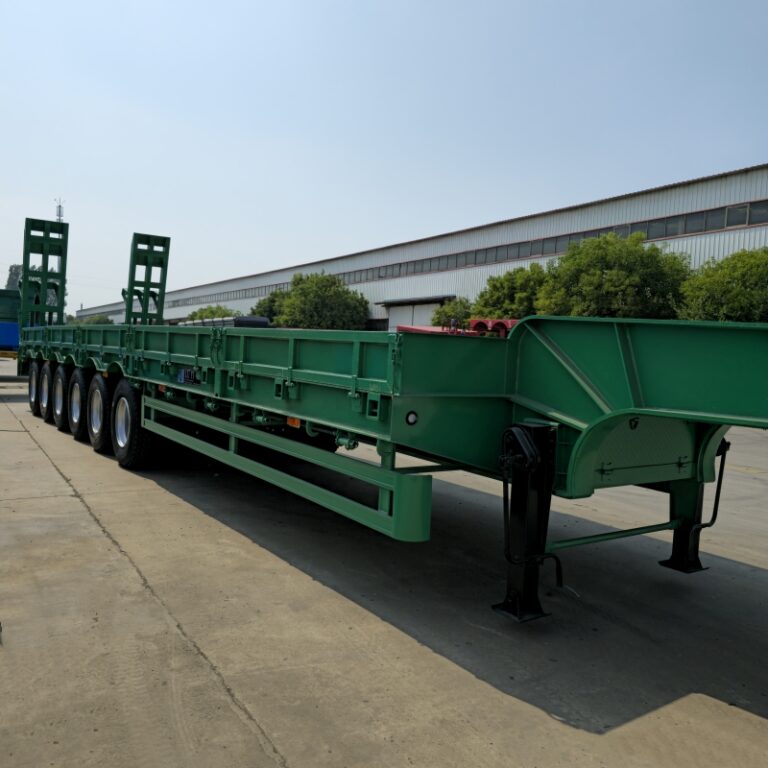
Typical application scenarios of track board semi-trailer
Scenario 1: Port Container Dredging
Scenario description: After the container ship docks, empty and heavy containers are transported from the dock yard to the hinterland logistics park, or returned in the opposite direction. 2-4 round trips per day, with bicycles traveling 200-400 kilometers per day.
Why use track board flat: The cargo platform is flat, and the four corner twist lock can directly lock a 40ft box without additional reinforcement; Empty containers can be loaded with loose cargo on the return journey, improving the utilization rate of the return journey.
Typical configuration: 3-axle, 13.75m, 40ft twist lock x 4, vacuum tire, Foshan/Shunde Fuhua Bridge
Customers: Port towing companies, freight forwarding fleets
Scenario 2: Steel market delivery to construction site
Scenario description: Steel market loads H-shaped steel, steel pipes, and steel sheet piles and transports them to construction sites or processing plants 50-200 kilometers away. The goods are long and heavy at a single point, supported by longitudinal beams.
Why use track slab flat plate: The longitudinal beam of the track slab directly supports the steel section, which has strong local load capacity; There is no fence on the side to cover it, and the crane can be directly lifted into place from both sides; The binding ring is evenly arranged on both sides, and the steel wire rope is easy to fix.
Typical configuration: 3 bridges, 12-13m, Q355B reinforced longitudinal beams, 6-8 tie rings on each side, optional side guardrails
Customers: Steel traders, steel structure factories, building materials delivery fleets
Scenario 3: Construction Machinery Site Transfer
Scenario description: A 20 ton excavator is completed from construction site A and transferred to construction site B, with a distance of 30-100 kilometers. The equipment weighs about 20 tons and needs to be towed by oneself.
Why use track boards and flat plates: equipped with hydraulic ladders at the rear, the excavator tracks can be driven up by themselves; The low cargo platform design reduces the overall height, making the height limit poles and bridge openings safer; There are no railings on both sides of the flat panel, which does not affect the movement of the excavator arm.
Typical configuration: 3-axle, 10-11 meter low platform, hydraulic folding ladder, parking wedge, reinforced suspension
Client: Equipment Department of Engineering Company, Engineering Machinery Rental Company
Scenario 4: Mainline transportation of agricultural products
Scenario description: After harvesting cucumbers/tomatoes in a vegetable greenhouse in Shandong, they are loaded onto a semi-trailer and transported to wholesale markets in Beijing, Xi’an, and Guangzhou, 800-1500 kilometers away. The entire process takes 1-2 days and requires ventilation and anti stuffiness measures.
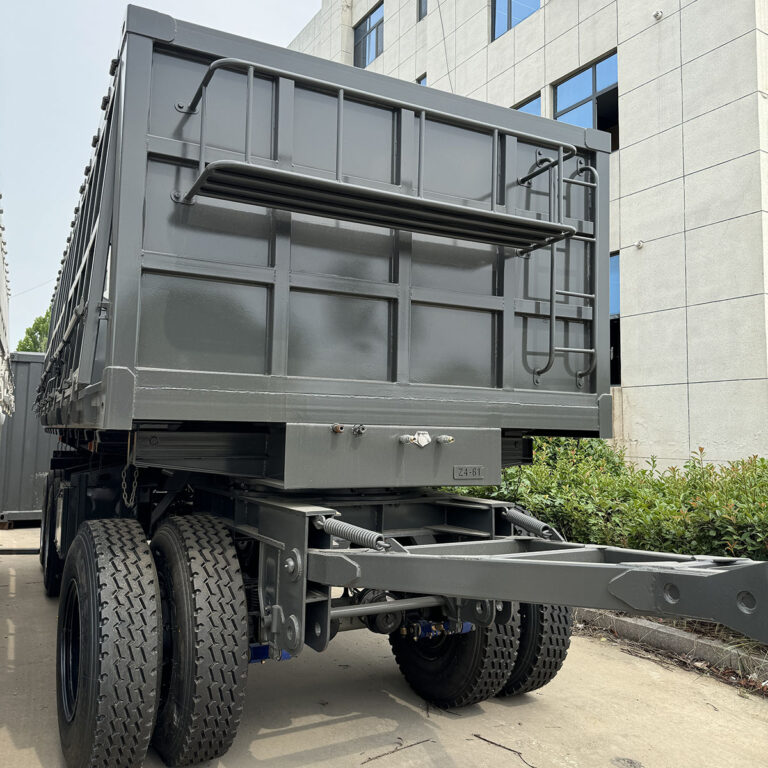
Why use track board flat: The fence board is a detachable grille type with good breathability, and vegetables are not covered to rot; Top canopy cloth for rain protection; The side door is fully open, allowing the forklift to quickly load and unload, reducing the exposure time of goods. Bring back department stores or industrial products to reduce the empty driving rate.
Typical configuration: 3 bridges, 13m, high railing 0.6-0.8m, tarpaulin pole, double-sided door opening
Customers: Agricultural product logistics park, cold chain/greenway fleet, individual retail investors
Scenario 5: Factory finished products delivered to distributors
Scenario description: The finished goods warehouse of the home appliance/furniture factory ships the refrigerator, washing machine, and sofa loaded on pallets, which are then loaded onto trucks by forklifts and sent to distributors or regional warehouses within the province. One way 100-500 kilometers.
Why use track boards and flat plates: the cargo platform is completely flat, and forklifts can directly fork pallets up and down; The fence board is detachable, and large furniture is not stuck; Foam goods can be stacked on shelves, with one truck carrying two layers to increase loading efficiency.
Typical configuration: 3 bridges, 13m, flat panel with 10cm edge beam, optional double-layer shelves, anti slip bottom plate
Customers: Home appliance/furniture manufacturing companies, third-party logistics (3PL), regional distribution fleets
Scenario 6: Large scale transportation of wind and photovoltaic projects
Scenario description: A section of wind turbine tower is 25-30 meters long and weighs 40-60 tons, transported from the manufacturing plant to the wind farm site; Or photovoltaic brackets can be bundled and transported to power plant construction sites.
Why use track plates and flat plates: Multiple bridges (4-6 bridges) distribute axle loads to meet highway weight restrictions; The cargo platform can be extended to accommodate oversized goods; The goose neck low cargo platform lowers the center of gravity and has good stability in bends. Need to apply for an over limit transportation permit.
Typical configuration: 4-6 axles, extendable cargo platform (13m → 22m), gooseneck structure, hydraulic steering
Customers: Wind power EPC companies, large logistics companies, power construction companies
Scenario 7: Multi purpose transportation for cross-border/export trade
Scenario description: Customers in Africa, Southeast Asia, and the Middle East purchase a flatbed semi-trailer and request that it be versatile – capable of carrying both containers and steel, building materials, and agricultural products, with poor road conditions (rural dirt roads, gravel roads).
Why use track plates and flat plates: simple structure, sturdy and durable, easy to maintain; Not picking goods, return journey is not empty; The accessories are universal and can be repaired by local repair shops.
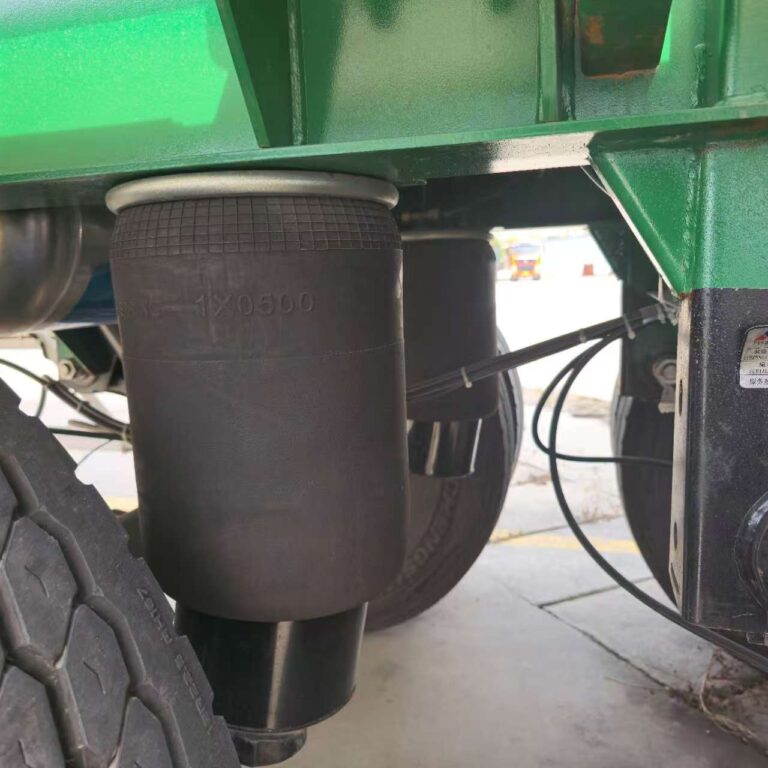
Typical configuration: 3-axle, 12.5-13m, thick suspension, desert/mining tires, spare tire rack, manual support legs
Customers: Overseas distributors, engineering contracting companies, local logistics companies