

Suez Canal Reopening Triggers a Container Logistics Surge: Why Intermodal Operators Are Scaling Skeleton Trailer Fleets in 2026
Suez Canal Reopening Triggers a Container Logistics Surge: Why Intermodal Operators Are Scaling Skeleton Trailer Fleets in 2026
The global container shipping industry is standing at a pivotal inflection point. After more than eighteen months of Red Sea disruptions that forced vessels to divert around the Cape of Good Hope, adding ten to fifteen days to Asia-Europe voyages and pushing maritime emissions up by roughly 46 percent, the prospect of a full Suez Canal reopening in 2026 is rewriting logistics strategies worldwide. According to supply-chain analysts at Zencargo, releasing the diversion would return approximately 6 percent of global fleet capacity to the market almost overnight. European ports are bracing for arrival surges of 10 to 39 percent, triggering two to three weeks of congestion, while Asia is expected to face equipment shortages eight to nine weeks after normal routing resumes. For intermodal operators, freight forwarders, and port-based logistics companies, this seismic shift means one thing above all: the inland leg of container movement, the skeleton trailer, is about to become the tightest bottleneck in the supply chain.
From Maritime Crisis to Inland Capacity Crunch
The numbers reveal the scale of the challenge. Global Maritime Hub reported that Suez Canal container transits dropped to just 150 crossings in January 2026, the weakest traffic observed in any January of the past decade and a 16.7 percent year-over-year decline. Vessels under 4,000 TEU led the collapse with 86 passages, down 33.8 percent annually. While Megamax ships have begun transiting again for the first time in over twenty months, overall volumes remain well below pre-crisis peaks and recovery is still developing.
When the canal fully reopens, the surge will not be gradual. Hundreds of vessels that have been routed via the Cape of Good Hope will suddenly revert to the shorter Suez passage, concentrating arrivals in Rotterdam, Hamburg, Antwerp, and Mediterranean hubs within a compressed window. Terminal yards that have operated at manageable levels during the diversion period will face container stacks multiple layers deep. The problem is not vessel capacity; it is the ability to move those containers from quayside to inland distribution centers, rail terminals, and final consignees before demurrage charges accumulate and delivery commitments collapse.
This is precisely where intermodal skeleton trailers determine operational success or failure. Unlike standard flatbeds, purpose-built container skeleton semi-trailers are engineered to lock securely onto ISO corner castings, maintain tare weight below regulatory thresholds, and maneuver efficiently in congested port environments where every meter of yard space carries a premium.
Intermodal Asia 2026: The Industry Consensus on Capacity Expansion
The urgency of inland container logistics was a dominant theme at Intermodal Asia 2026, held April 22-24 in Shanghai with more than 7,000 professionals in attendance. Produced by Informa Markets alongside the China Container Industry Association and supported by CIMC Group, the gathering examined intelligent cargo systems, Middle Corridor connectivity, and emerging safety standards. Event director Fan Landers noted that the global supply chain continues to face significant challenges and that container transport is at a pivotal moment.
Panel discussions on the supply-chain hotspot forum made clear that port congestion relief depends less on building new berths and more on accelerating container velocity through the hinterland. In emerging markets across Africa and Southeast Asia, where port infrastructure expansion has outpaced inland connectivity, the gap is even more pronounced. The Africa Finance Corporation estimates that the continent’s infrastructure pipeline exceeds $180 billion, with port modernization and logistics corridors representing priority investments. Moving containers from expanded port terminals to inland industrial zones and project sites requires fleets of lightweight, high-cube skeleton trailers capable of handling 20-foot, 40-foot, and 45-foot containers across varying road conditions.
Product Spotlight: Container Skeleton Trailers Built for Post-Crisis Throughput
For logistics directors evaluating fleet expansion ahead of the Suez reopening surge, Shandong Nanou Automobile Manufacturer offers a complete range of container transport solutions engineered for high-frequency port operations and long-haul intermodal corridors. Manufactured in Liangshan, China’s dedicated commercial vehicle cluster, these configurations balance structural durability with minimized tare weight to maximize payload compliance.
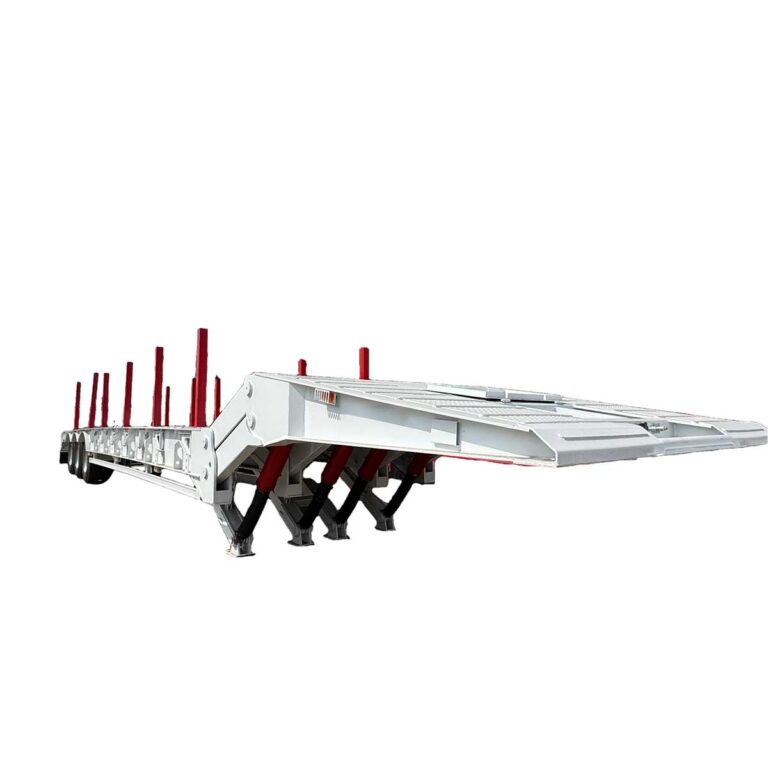
The 3-axle gooseneck skeleton semi-trailer serves as the workhorse for standard 40-foot container movements. The gooseneck design reduces overall deck height, improving stability under high-cube containers and allowing compliance with restrictive bridge clearance regulations on key European and Asian corridors. Twist-lock fittings are positioned for both 20-foot and 40-foot container configurations, enabling dispatch flexibility when yard allocations shift between box lengths.
For operators serving ports with aggressive weight enforcement or running high-value lightweight cargo, the 3-axle 40-foot small gooseneck skeleton semi-trailer offers a refined profile that trims tare weight without compromising structural integrity. The reduced gooseneck projection improves turning radius in congested terminal yards where maneuvering space is limited, while maintaining the load distribution balance required for safe highway operation.
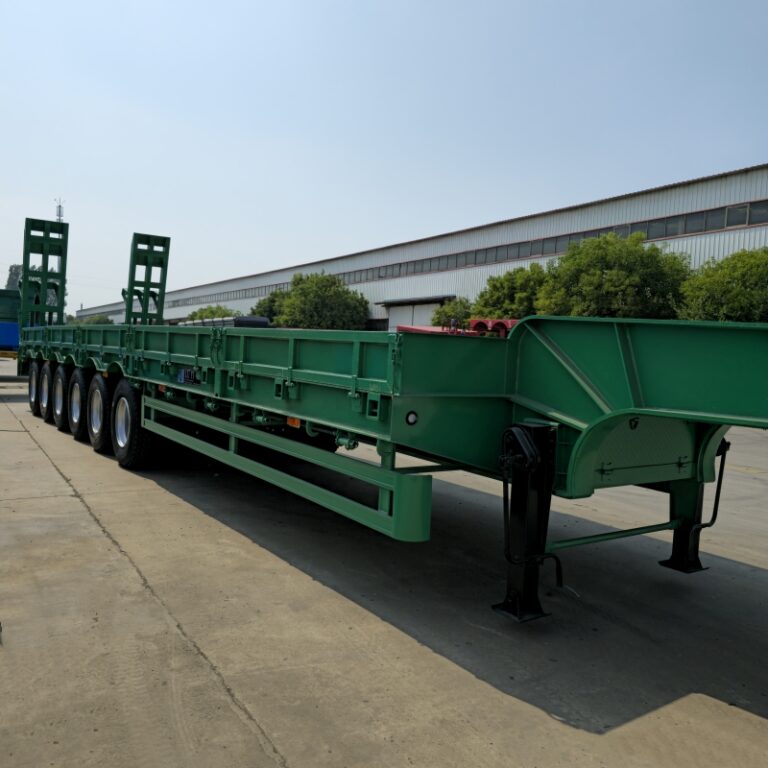
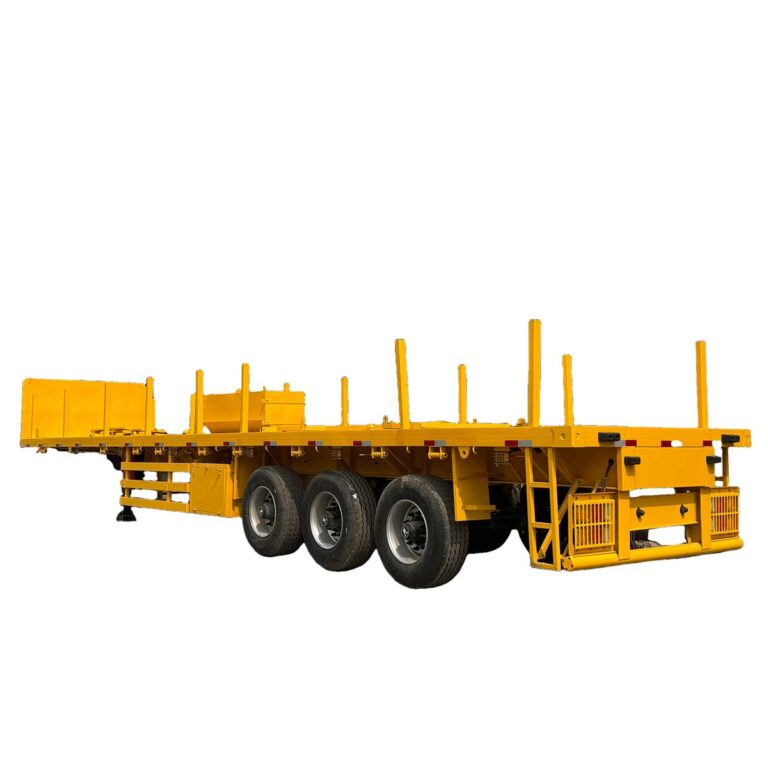
When payload density demands additional capacity, the 4-axle container flatbed semi-trailer distributes gross weight across an extra axle pair, reducing per-axle ground pressure and extending compliance into jurisdictions with stringent weight-bridge enforcement. The flatbed configuration adds versatility for containers with out-of-gauge top loads, project cargo with side access requirements, or combined container-and-machinery moves that pure skeleton trailers cannot accommodate.
For emerging market corridors where multi-purpose assets improve fleet utilization, the 3-axle gooseneck container transport vehicle bridges the gap between dedicated port shuttle and long-distance intermodal service. Reinforced frame rails and heavy-duty suspension configurations handle the transition from paved port access roads to secondary highways and construction site approaches without frame fatigue or alignment drift.
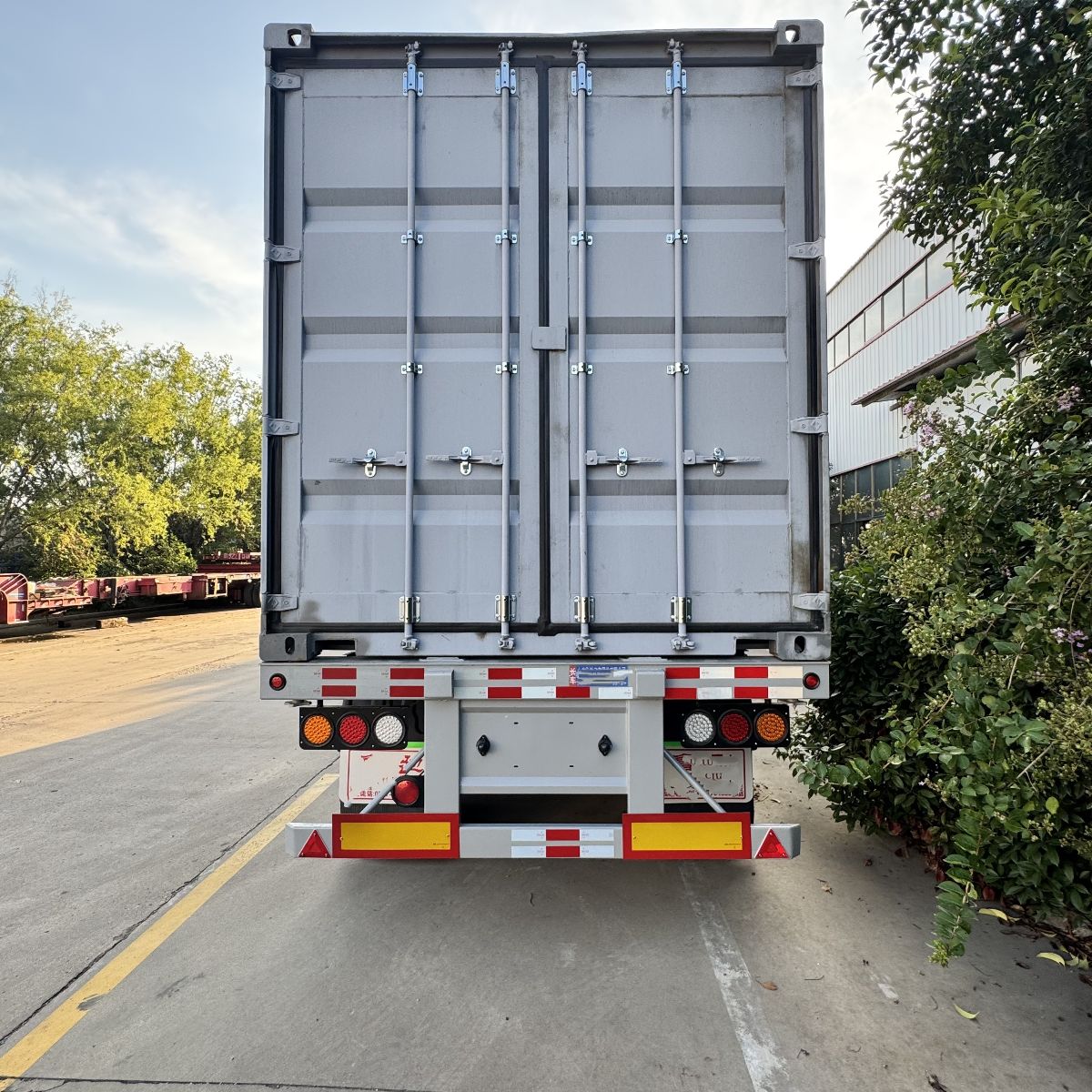
Finally, the foundational 3-axle container semi-trailer provides a cost-efficient entry point for operators building new fleet capacity quickly. With delivery cycles measured in weeks rather than the months typical of European manufacturers, Chinese producers enable logistics companies to position assets ahead of demand surges rather than chasing them.
Procurement Checklist: Selecting Skeleton Trailers for the 2026 Surge
Fleet managers facing compressed procurement timelines should evaluate container skeleton trailers against four criteria that determine operational availability and regulatory compliance during peak congestion periods.
First, confirm twist-lock certification and container corner casting compatibility. Not all twist-lock assemblies meet ISO 1161 standards for 40-foot high-cube containers under dynamic loading. Request test documentation showing lock engagement force, wear tolerances after 10,000 cycles, and corrosion resistance ratings for salt-air port environments.
Second, verify tare weight against target market axle-load regulations. A skeleton trailer that adds unnecessary structural mass consumes payload capacity that could otherwise generate revenue. European operators face particularly tight enforcement on the 44-tonne gross vehicle weight limit, while African and Asian regulators apply varying standards by corridor. Request certified weighbridge documentation for the exact configuration ordered, not a generic model specification.
Third, specify brake and suspension systems matched to duty cycles. Port shuttle operations involve frequent stop-start driving, tight turns, and uneven terminal surfaces that accelerate wear on standard highway components. Air-ride suspensions with lift axles improve maneuverability and reduce tire scrub during yard positioning, while ABS and EBS configurations should align with target market homologation requirements.
Fourth, assess manufacturer delivery capacity and parts support. With demand for container transport equipment rising across multiple regions simultaneously, production slots are tightening. Manufacturers with established export volumes and regional parts distribution can deliver within four to six weeks and support ongoing maintenance with replacement twist-locks, landing legs, and suspension components.
Secure Capacity Before the Wave Hits
The Suez Canal reopening will not distribute container arrivals evenly across months or quarters. When vessel routing normalizes, the cumulative backlog of diverted sailings will concentrate in European and Asian ports within a narrow window, testing every link in the inland logistics chain. Operators that add skeleton trailer capacity now will capture rate premiums during peak congestion and retain customer relationships when competitors cannot meet delivery commitments.
Shandong Nanou Automobile Manufacturer invites fleet operators, freight forwarders, and port logistics coordinators to review detailed specifications for our complete range of container skeleton trailers, flatbeds, and intermodal transport solutions. Our engineering team can customize axle configurations, twist-lock spacing, gooseneck profiles, and suspension specifications to match the exact requirements of your operating corridors and regulatory environments.
Contact our export team today for fleet pricing, technical drawings, and delivery scheduling. With over 230 trailer configurations and export experience across more than forty countries, we provide the equipment velocity that intermodal operations demand.
Website: nanou-trailer.com
Company: Shandong Nanou Automobile Manufacturer Co., Ltd.
Location: Liangshan County, Shandong Province, China
Tags: skeleton trailer, container semi trailer, intermodal transport, Suez Canal reopening, port logistics, freight forwarder, gooseneck skeleton trailer, container transport, multimodal logistics, Shandong Nanou